← All women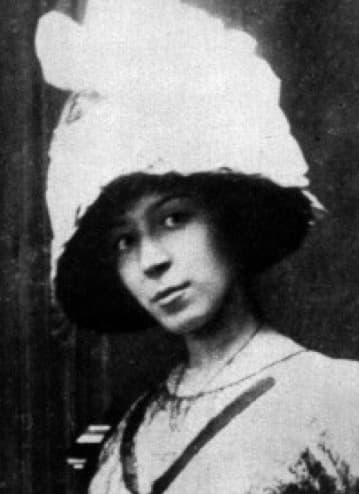
French · Arts · Literature
Marie Laurencin
October 31, 1883 – June 8, 1956
Early life and background
Marie Laurencin was born in Paris on 31 October 1883. Biographical sources identify her as a French painter, printmaker, illustrator, poet, and stage designer, and her career unfolded in the artistic center of modern Europe. She grew up in a city that was rapidly changing in the decades after the Franco-Prussian War, when Paris became a laboratory for new ideas in art, literature, fashion, and performance.
Laurencin’s family background was unconventional for the period. Standard reference works describe her as the illegitimate daughter of Pauline Laurencin and Alfred Toulet. She was raised by her mother in a bourgeois setting, and later accounts emphasize both the discipline and the social constraints that shaped her early development. Like many young women of her generation who wanted artistic careers, she had to find a route into training that was not designed around women’s professional ambitions.
Her early education included a period at the Manufacture de Sèvres, where she learned porcelain painting. This training was important because it gave her technical discipline and an eye for refined surface effects, qualities that later appeared in the delicate handling of color and contour that became characteristic of her mature work. She then studied drawing in Paris, including at the Académie Humbert, where she entered a circle connected to the avant-garde.
Paris at the turn of the century was a difficult but productive environment for women artists. They could study, exhibit, and meet patrons, but they were still excluded from many formal structures of authority and from the presumption of seriousness that male artists enjoyed. Laurencin’s early training therefore mattered not only as artistic preparation but also as a kind of practical negotiation with the barriers of her time.
Entry into the avant-garde
Laurencin came into contact with artists and writers who would help define modernism in Paris. She was associated with Guillaume Apollinaire, whose support and critical enthusiasm helped bring her into discussions about new art. She also moved among figures linked to Cubism and the broader Parisian avant-garde. Reference sources describe her as part of the Section d’Or milieu and as one of the women associated with the emergence of modern art in France.
Her early reputation developed through exhibitions and through the distinctiveness of her style. While Cubism is often associated with fractured geometry and analytical structure, Laurencin developed a more lyrical and intimate language. Her figures, especially women and girls, are frequently rendered with pale colors, soft contours, and a mood of dreamy reserve. That approach set her apart from many of her contemporaries and became one of the reasons her work remained recognizable.
Biographical sources note that she exhibited at the Salon des Indépendants and other important venues. These exhibitions placed her within the major circuits of modern art at a time when public visibility mattered as much as studio production. For a woman artist, participation in such exhibitions was not merely routine career building; it was a way of claiming professional legitimacy in a field where women were often marginalized or interpreted through romantic stereotypes.
Major artistic development
Laurencin’s work is now most closely associated with portraits of elegant, often wistful women, but her output was broader than that. She worked as a painter and printmaker, and she also illustrated books and designed stage settings and costumes. This range of work reflects both her adaptability and the practical realities of artistic life in early twentieth-century Paris, where artists often moved between fine art, publishing, and performance.
Her mature style became increasingly individual during the 1910s and 1920s. Rather than pursuing the hard-edged visual language often linked to orthodox Cubism, she developed a more fluid and decorative idiom. Scholars and critics have long noted the importance of her restrained color palette, especially pale pinks, grays, and soft blues, which gave her compositions a hushed and lyrical mood. Her art has often been discussed in relation to femininity, but it is more accurate to say that she created a world of her own rather than simply illustrating a gendered theme.
Laurencin’s work also intersected with literary culture. She was a poet as well as an artist, and she moved in circles where painting, literature, and theater overlapped. That interdisciplinarity was significant in the modernist period, when artists frequently collaborated across media and when visual art was often bound to publishing, performance, and salon culture.
Marriage, wartime displacement, and return
On 21 June 1914, Laurencin married Baron Otto von Waëtjen. The marriage took place just before the outbreak of World War I, and later accounts note that it ended in divorce in 1921. The timing of the marriage made it especially consequential: within weeks, Europe entered a war that disrupted personal lives, artistic networks, and national identities.
During the war years, Laurencin’s life was shaped by this upheaval. Standard biographical sources report that she lived in Spain during the conflict and later returned to Paris. The period mattered not only because it interrupted her career, but also because it placed her, as a French artist married to a German nobleman, in a complicated social and political position. In wartime Europe, such circumstances could be professionally and personally destabilizing.
Her return to Paris after the war marked a new phase of work. She continued to paint portraits and to expand her career in illustration and design. That postwar continuity is important in assessing her career as a whole: Laurencin was not simply a prewar avant-garde figure preserved in memory, but an artist who adapted to changing cultural conditions and maintained a presence in French art after the collapse of the prewar modernist world.
Illustration, stage design, and later career
In addition to painting, Laurencin became known for illustration and stage design. Reference works describe her as a book illustrator and set designer, and her involvement with theater included costume and set work for productions associated with the Ballets Russes. Such work was artistically important because it brought her visual imagination into dialogue with movement, music, and performance.
Her illustration work broadened her audience beyond gallery visitors. Illustration in the early twentieth century was a major avenue for artists to reach readers, and it required a different balance of clarity, line, and narrative sensitivity than easel painting. Laurencin’s graceful figures and controlled palette translated well into this medium, allowing her to sustain a versatile career.
By the 1930s, as the art market and modernism itself changed, Laurencin also worked as an art teacher. Teaching provided income and offered another way for a woman artist to maintain professional life during periods when critical fashions shifted or financial security became difficult. Her career therefore combined independent artistic production with practical adaptation, a pattern shared by many women artists of her generation.
Recognition and honors
Laurencin received public recognition during her lifetime, including the Légion d’honneur in 1937, according to standard biographical references. That award signaled official recognition from the French state and is especially notable given the era’s uneven treatment of women in the arts. Being honored by the state did not erase broader gender barriers, but it did mark her as an artist of national significance.
Her recognition also came from the art world itself. She was collected, exhibited, and discussed by major institutions and galleries, and she remained a figure of interest in the evolving story of modernism. Unlike some contemporaries whose reputations were eclipsed after their deaths, Laurencin’s work continued to attract attention for its distinctive visual language and for its place in the Paris avant-garde.
Personal life
Laurencin’s personal life has often been discussed alongside her art because she moved within literary and artistic circles where relationships were publicly visible and culturally meaningful. She was closely associated with Guillaume Apollinaire, and biographical accounts also note romantic connections with other figures in the modernist milieu. Such relationships were part of the social fabric of the avant-garde, where friendships, affection, and artistic exchange often overlapped.
What is historically important is not gossip but context. Women artists were frequently interpreted through their relationships to men, especially famous men. Laurencin’s career has sometimes been framed in those terms, but that framing is incomplete. She maintained her own artistic identity, developed a recognizable style, and continued working across media for decades. Standard reference sources note that she had no children.
Later in life, she also adopted Suzanne Moreau in 1954, a fact recorded in reference accounts. This late-life personal decision adds another dimension to her biography, showing that her private life continued to evolve even after her artistic reputation had been established.
Legacy and historical impact
Marie Laurencin’s historical importance lies in her role as one of the best-known women associated with early modern French art. She was connected to Cubist and Section d’Or circles, but she did not simply imitate the dominant male styles of her environment. Instead, she created a visual vocabulary defined by softness, atmosphere, and emotional restraint. That originality has made her a continuing subject of scholarly and curatorial interest.
Her career also illustrates the position of women in modernism. Laurencin had to work within systems that often treated women as exceptions or accessories, yet she succeeded in becoming a professional artist with a durable name and a recognizable body of work. She crossed disciplinary boundaries, moved between fine art and applied arts, and maintained relevance across several decades of cultural change.
Her legacy has been strengthened by posthumous reassessment. Later exhibitions and museum holdings have emphasized her contribution not only as a “muse” or companion figure in avant-garde mythology, but as an independent creator who helped broaden what modern art could look like. In this sense, Laurencin’s significance extends beyond her individual paintings: she represents a wider history of women claiming artistic authority in a field that was slow to grant it.
Later life and death
Marie Laurencin died in Paris on 8 June 1956. Her death closed the career of an artist whose life had spanned the transformation from fin-de-siècle Paris to mid-century modernism. The same city where she was born remained central to her identity and to the mythology of her work.
By the time of her death, Laurencin had become a respected and recognizable figure in French art. Her paintings continued to be valued for their lyrical atmosphere and their refusal to conform to the harder edges of many contemporaneous modernist styles. That refusal was itself historically meaningful, because it expanded the range of acceptable modern art and affirmed that modernity could be subtle, intimate, and feminine without being minor.
Laurencin’s life and career remain important for women’s history because they demonstrate how a woman artist could build a lasting reputation despite social constraint, wartime disruption, and critical categorization. She left behind a body of work that continues to be studied for its place in the history of modern art and for the way it reimagined the visual possibilities open to women artists in the twentieth century.
Dated achievements
3 indexed.
- Oct311883Arts
Birth of Marie Laurencin in Paris
Marie Laurencin was born in Paris, France, on 31 October 1883, later becoming a leading painter of the Cubist and modernist avant-garde.
View details Marie Laurencin - Britannica - Jun211914Arts
Marriage to Baron Otto von Waëtjen
On 21 June 1914, Laurencin married German-born painter Baron Otto von Waëtjen, a union that would soon force her into wartime exile.