Marianna Auenbrugger died in Vienna on 25 August 1782, likely of tuberculosis, at just 23 years old, shortly after being honored by Haydn's dedication.
Marianna Auenbrugger died in Vienna on 25 August 1782, at the age of just twenty-three. Biographical sources, including the Sophie Drinker Institut and German Wikipedia, indicate that her death likely resulted from consumption (tuberculosis), a common and often fatal illness in eighteenth-century Europe.
Her death came only about a year after Joseph Haydn's celebrated dedication of six keyboard sonatas to her and her sister Katharina, a recognition that had marked her as one of the most admired keyboardists among Vienna's musical elite. Her premature death cut short what appeared to be a promising musical trajectory, at a time when she had already distinguished herself as a performer of considerable skill within the demanding musical culture of Vienna.
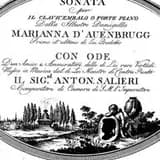
Her early death is emblematic of the fragility of life in the pre-modern era, even among the educated and comparatively privileged classes; her father Leopold Auenbrugger, despite being a pioneering physician, could not save her from the widespread scourge of tuberculosis. Her passing also meant that her only known published composition, a Sonata in E-flat major, appeared posthumously or very close to her death, leaving her documented compositional legacy limited to this single surviving work. Her life, though brief, remains a notable data point in the history of women's participation in Viennese Classical music.