← All women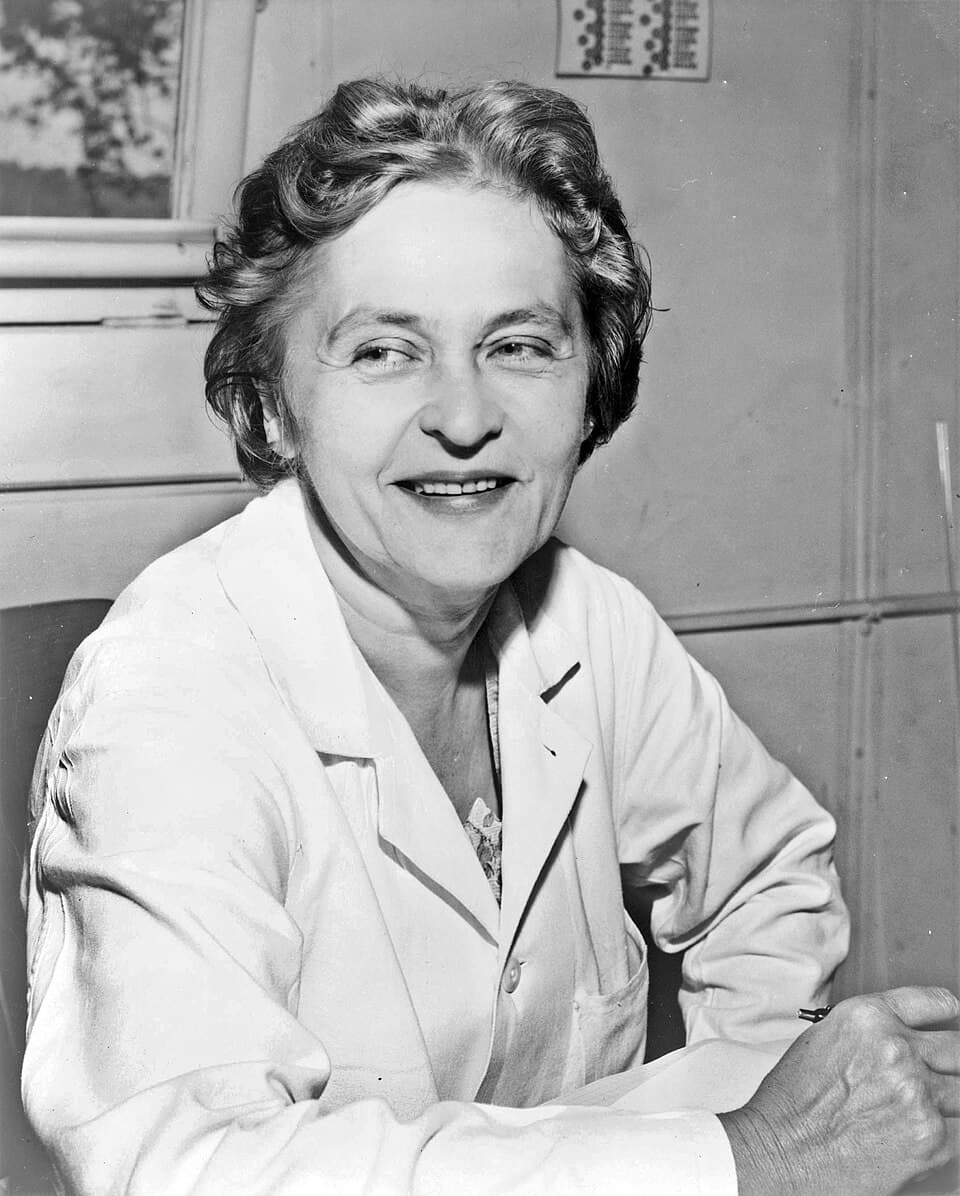
Hungarian, American · Science
Maria Telkes
December 12, 1900 – December 2, 1995
Early Life and Background
Mária Terézia Zsófia Telkes, later widely known as Maria Telkes, was born on 12 December 1900 in Budapest, then part of the Austro‑Hungarian Empire.[1][3][2] She grew up in an urban, intellectually active milieu that fostered her interest in science and technology. Several accounts note that she became interested in solar energy while still in high school, intrigued by the prospect of harnessing the sun’s power for practical human needs.[2][12]
Telkes attended the University of Budapest (today Eötvös Loránd University), where she studied physical chemistry. She earned a B.A. in physical chemistry in 1920 and completed her Ph.D. in 1924.[2][12][8] Achieving a doctorate in the natural sciences was rare for women in Central Europe at the time, reflecting both her academic talent and determination. The Spanish and Portuguese‑language biographical entries emphasize her background in a Jewish family and the support that enabled her advanced education in a period when higher learning for women was still contested.[6][8]
Her early exposure to both rigorous scientific training and the emerging discourse on alternative energy sources laid the groundwork for her later reputation as a pioneer of solar technology. These formative years also instilled in her an interdisciplinary perspective: she was trained as a physical chemist, but her curiosity extended into biophysics, engineering, and materials science, fields she would later combine in novel ways.
Emigration to the United States and Career Beginnings
In 1925, shortly after completing her doctorate, Telkes emigrated to the United States.[2][3][7][12] She accepted a position as a biophysicist at the Cleveland Clinic Foundation
After several years at Cleveland Clinic, she joined Westinghouse Electric as a research engineer, focusing on electron imaging and photoelectric devices.[7][2] While details of her Westinghouse projects are less extensively documented than her later solar work, this phase allowed her to engage directly with electrical engineering and industrial innovation. It also exposed her to technological systems that converted light into electrical signals, a theme that resonated with her longstanding interest in solar energy. Telkes’s move into American industry occurred against the backdrop of the interwar years, when women with advanced scientific training were still unusual in corporate research laboratories. Her presence as a woman scientist at both a leading medical center and a major electrical company reflected her ability to navigate institutions that were only slowly opening to female professionals. By the late 1930s, Telkes had turned decisively toward solar energy. In 1939 she began working at the Massachusetts Institute of Technology (MIT) on the Solar Energy Conversion Project.[3][7][12] At MIT she joined a small group of researchers exploring how sunlight could be converted into usable heat and electrical power through advanced materials and system designs. Her work at MIT quickly focused on practical applications of solar heat, particularly in the domain of residential heating and desalination. Drawing on her background in physical chemistry, she studied the thermodynamic properties of various substances, with an eye toward phase‑change materials that could store thermal energy when the sun was shining and release it when needed. This focus on energy storage would become a defining theme of her career.[6][8][12] Telkes’s arrival at MIT coincided with growing but still marginal interest in renewable energy. Most scientific and industrial attention in the late 1930s was directed toward coal, oil, and emerging nuclear technologies. In choosing to specialize in solar energy, she positioned herself at the edges of mainstream engineering, taking on both scientific uncertainty and institutional skepticism. Nonetheless, MIT’s Solar Energy Conversion Project offered her a platform to pursue the long‑term vision that had fascinated her since youth: using the sun to secure basic human needs such as heat, light, and water. During World War II, Telkes’s solar research acquired urgent practical significance. Working under U.S. government contracts, she developed a compact solar still designed to convert seawater into potable water using the sun’s heat and condensation.[1][3][7][12] The device consisted of a transparent cover, a blackened basin of seawater, and a collection trough for condensed fresh water. Sunlight heated the water, which evaporated and then condensed on the underside of the cover, running down into the trough as drinkable water. The solar still was incorporated into emergency kits for lifeboats and survival gear, particularly for downed airmen and torpedoed sailors who would otherwise face life‑threatening dehydration at sea.[1][7][12] Accounts indicate that the still could produce approximately a liter of fresh water per day, enough to sustain an individual in emergency conditions. Its design exploited abundant solar energy in open‑ocean environments, providing a robust, low‑maintenance solution without fuel or complex machinery. For this work, Telkes received a Certificate of Merit from the U.S. Office of Scientific Research and Development (OSRD), awarded in 1945.[3][12] The distinction signaled official recognition of her contribution to wartime survival technology. It also highlighted the practical potential of solar energy at a time when the field was still considered experimental. As a woman scientist in a military‑technical context dominated by men, Telkes’s role was unusual, underscoring the breadth of her expertise and the high stakes of her inventions. In 1948, Telkes collaborated with architect Eleanor Raymond on one of the most famous early solar‑heated residences, the Dover Sun House in Dover, Massachusetts.[3][4][6][7] Funded in part by philanthropist Amelia Peabody, the experimental house was designed to use solar energy as its primary heating source. Telkes provided the engineering concept and system design, while Raymond handled architectural integration. The Dover Sun House employed Glauber’s salt (sodium sulfate decahydrate) as a phase‑change material. Solar collectors mounted on the building heated air, which transferred heat to containers filled with the salt. As the salt melted, it absorbed large amounts of heat; when it solidified as temperatures fell, it released that stored heat back into the house.[12][7] This approach sought to overcome the intermittency of sunlight by storing energy during sunny periods for use at night and on cloudy days. Although the Dover Sun House faced technical challenges—the salt deteriorated with repeated cycles, and the system eventually failed—it was historically significant as one of the earliest attempts to create a fully solar‑heated home.[1][3][7][12] The project attracted widespread media attention and public interest, making Telkes a recognizable figure and earning her the informal title of the “Sun Queen.”[11][12] It also exposed the engineering difficulties of early solar architectures, influencing later research into more stable thermal storage materials and more reliable system configurations. In the early 1950s, Telkes continued to explore socially focused applications of solar heat. In 1953, she received support from the Ford Foundation to develop a solar oven designed for use in regions lacking conventional fuel supplies.[12][2] The oven aimed to convert abundant sunlight into cooking heat, improving health and reducing deforestation by replacing wood and charcoal. Her solar oven designs used reflective surfaces and insulated chambers to concentrate and retain heat. Some accounts credit her with inventing one of the first successful solar ovens, which found use in developing regions and among communities seeking low‑cost, fuel‑free cooking methods.[2][7] The project demonstrated Telkes’s commitment to applying solar technology to everyday needs, not only to experimental houses or specialized equipment. Throughout the 1950s and beyond, she remained involved in research and consulting roles focused on solar heating systems and thermoelectric devices. Spanish‑language sources emphasize her creation of a thermoelectric generator in 1947 and a thermoelectric refrigerator in 1953, highlighting her breadth as an inventor of solid‑state devices as well as thermal systems.[6] These works reflect her broader interest in both thermal and electrical manifestations of solar energy. Telkes secured a substantial portfolio of patents, many of them centered on the storage and management of heat. On 6 May 1952, she was granted U.S. Patent No. 2,595,905, “Radiant Energy Heat Transfer Device,” detailing a method for capturing and transferring solar radiation as heat.[3][2] On 4 May 1954, three closely related patents were granted: No. 2,677,367, “Heat Storage Unit,” No. 2,677,664, “Composition of Matter for the Storage of Heat,” and No. 2,677,243, “Method and Apparatus for the Storage of Heat.”[3][2] These patents collectively addressed device design, material composition, and system integration for thermal energy storage. They drew heavily on her expertise in phase‑change materials, especially salts that could absorb and release heat through melting and solidification.[2][12] By formalizing these concepts in patented inventions, Telkes helped establish a technical foundation for later work on thermal storage in solar‑heated buildings and concentrated solar power plants. On 1 October 1957, she received U.S. Patent No. 2,808,494, “Method and Apparatus for Storing and Releasing Heat,” which refined her earlier concepts and offered improved mechanisms for controlled heat release.[3] Across her career, sources credit her with more than twenty patents related to solar energy, thermoelectric devices, and materials for energy storage.[6][12] In an era when patenting was dominated by male inventors, Telkes’s record stands out as a notable achievement for a woman scientist in the mid‑20th century. Telkes’s work earned her significant professional recognition. On 15 March 1952, she became the first recipient of the Society of Women Engineers (SWE) Achievement Award.[3][13] The award cited her wartime development of a method to distill fresh water from seawater using solar heat, a technology that had saved lives during World War II.[3][12] As SWE’s inaugural honoree, she set a precedent for celebrating women’s technical achievements and provided a visible role model for younger women engineers. In 1977, Telkes received the Charles Greeley Abbot Award from the International Solar Energy Society (ISES), one of the field’s highest honors.[7][13] She also received a lifetime‑achievement–style recognition from the Building Research Advisory Board around the same time.[12] These awards acknowledged decades of contributions to solar heating, desalination, thermoelectric devices, and thermal storage, and placed her among the leading figures in solar engineering internationally. Posthumously, her legacy has continued to attract attention. In 2012, Telkes was inducted into the National Inventors Hall of Fame (NIHF) in the United States, recognized for her innovative work in solar energy and thermal storage.[7][13] In 2022, Google honored her with a Google Doodle on 12 December, marking her birthday and celebrating her role as a pioneer of solar technology.[5][9] These tributes reflect growing contemporary appreciation of early renewable‑energy research and of women’s contributions to science and engineering. Available biographical sources focus primarily on Telkes’s professional life and provide limited detail about her personal relationships. The Spanish and Portuguese entries note that she was born into a family of Jewish origin in Budapest, mentioning her parents Aladár and Mária Laban de Telkes.[6][8] However, major English‑language references such as Britannica, Lemelson‑MIT, and the National Inventors Hall of Fame do not discuss marriage or children, and no widely cited documentation indicates that she married or had a family of her own.[1][2][7] This absence of personal detail in the historical record may itself be telling. For many women scientists of her generation, professional accomplishments were often recorded separately from domestic life, and institutional narratives tended to frame them mainly through their work. Telkes’s public persona as the "Sun Queen" suggests a figure strongly identified with her scientific mission, media presence, and advocacy for solar energy.[11] She appeared on television and in numerous newspaper and magazine stories, serving as a press‑friendly intellectual who championed solar heating as a practical, humane technology. Without reliable evidence, it is not possible to reconstruct a detailed account of her private relationships or daily life. What can be said with confidence is that her career required persistence in the face of institutional resistance, and that she navigated male‑dominated research environments across three major sectors: medical science, industrial engineering, and academic research. In the latter part of her career, Telkes continued to work on solar‑energy projects but also encountered significant professional challenges. The U.S. Patent and Trademark Office’s historical profile notes that, despite her public visibility and widely reported successes, she "struggled to have her aspirations and work taken seriously by her colleagues and collaborators" throughout her career.[11] Some of her projects, including experimental solar houses, faced technical difficulties and budgetary constraints, which critics used to question the viability of solar heating at the time. Nonetheless, she remained active in solar research and consulting into the 1960s and 1970s. She participated in professional societies, published on solar heating, thermoelectric generators and distillers, and on the electrical conductivity of solid electrolytes.[7] Her engagement with both scientific and engineering communities helped keep solar energy on the agenda during decades when it was overshadowed by cheap fossil fuels. As environmental awareness and energy crises grew in the 1970s, many of the issues Telkes had long highlighted—resource scarcity, pollution, and the need for alternative energy sources—gained broader public and policy attention. Her awards in that decade, including the Abbot Award, reflect a warming reception for solar research and for her early contributions. Telkes spent her final years with a legacy established across continents. On 2 December 1995, she died in Budapest, Hungary, at the age of ninety‑four.[1][2][3][7] She thus passed away in the same city where she had been born and educated, closing a life trajectory that had taken her from Central Europe to the forefront of American scientific and engineering innovation and back. At the time of her death, her work was known within specialized solar‑energy circles but had not yet achieved the broad public recognition it would later gain. Subsequent decades, marked by intensified interest in renewable energy and climate change mitigation, have brought renewed attention to her inventions and ideas. As a result, contemporary assessments tend to view her death not as the end of her influence, but as a point after which her contributions could be reassessed in light of the world’s growing reliance on solar power. Mária Telkes is now widely regarded as one of the founders of solar‑thermal energy storage systems and a key figure in the history of solar technology.[6][8][7][12] Her work on phase‑change materials, solar distillers, solar ovens, and solar‑heated buildings helped define technical pathways for using the sun’s energy in everyday life. Spanish and Portuguese sources explicitly refer to her as one of the founders of solar energy storage systems and note her nickname, the “Sun Queen.”[6][8] Her innovations demonstrated that solar energy could serve critical functions—such as providing drinking water to shipwrecked sailors, heating homes, and cooking food—long before large‑scale photovoltaic or solar‑thermal power plants became common. The Dover Sun House, despite its technical problems, proved that a house could be conceived around solar heating as a core design principle.[3][4][7][12] Her patents on heat storage units and materials informed later research into molten salts and other thermal storage media used in modern solar power systems. Telkes’s career also carries significant gender and professional implications. As a woman who earned a doctorate in physical chemistry in the early 1920s, worked in industrial and medical laboratories, and held more than twenty patents, she challenged contemporary stereotypes about women’s capacities in advanced science and engineering.[2][12] Her SWE Achievement Award in 1952 provided an early institutional affirmation of women’s engineering achievements, and her subsequent honors further cemented her status as a trailblazer. In recent years, cultural and educational institutions have taken steps to make her story more widely known. Her National Inventors Hall of Fame induction in 2012 placed her alongside some of the most influential inventors in American history.[7][13] The Google Doodle dedicated to her on her birthday in 2022 introduced a global audience to her work.[5][9] Articles from organizations such as the Lemelson‑MIT Program, the U.S. Patent and Trademark Office, and professional societies highlight her persistent advocacy for solar power and her struggles in gaining full acceptance for her ideas.[2][11][12] Through these recognitions, Telkes’s legacy has come to symbolize both the promise of renewable energy and the contributions of women scientists whose work anticipated later technological transitions. Her life and career demonstrate how persistent vision and technical creativity can help reshape the energy systems on which societies depend.Transition to Solar Energy Research at MIT
World War II and the Solar Still
The Dover Sun House and Solar Heating
Ford Foundation Solar Oven and Later Engineering Projects
Patents on Heat Storage and Thermoelectric Devices
Awards, Honors, and Recognition
Personal Life
Later Career and Challenges
Death
Legacy and Historical Impact
Dated achievements
10 indexed.
- Dec121900Science
Birth of Mária Telkes
Birth of Mária Telkes in Budapest, Hungary, future “Sun Queen” of solar energy.
View details Mária Telkes – biographical overview - Jan011945Science
OSRD Certificate of Merit for solar still work
OSRD awards Maria Telkes a Certificate of Merit for her solar distillation work (year documented; exact day not).