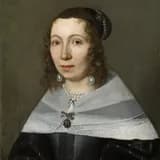
Maria Sibylla Merian died in Amsterdam on January 13, 1717, leaving behind a legacy of groundbreaking natural history illustration and observation.
Maria Sibylla Merian died on January 13, 1717, in Amsterdam, where she had lived and worked for many years following her return from Suriname. By the time of her death she had become one of the most celebrated natural history illustrators in Europe, admired by collectors, scientists, and even royalty — Tsar Peter the Great of Russia purchased a significant collection of her watercolors shortly after her death.
In her final years, Merian continued to work despite declining health, reportedly suffering a stroke that partially paralyzed her but did not stop her from producing art and preparing further publications. Her daughter Dorothea Maria Graff continued her legacy, later publishing further editions of her mother's work and herself becoming a court painter in Russia.
Merian's death marked the end of a career that had defied the conventions of her time: she had traveled independently to South America for scientific research, published meticulously observed studies of insect metamorphosis, and produced artwork that combined aesthetic beauty with rigorous empirical documentation. Her contributions were foundational to the emerging discipline of entomology and to the broader scientific understanding of ecological relationships between insects and their host plants.
Though her scientific contributions were sometimes overlooked or diminished in the centuries following her death — often being recategorized merely as 'artwork' rather than science — modern scholarship has restored her reputation as a pioneering naturalist. Her image later appeared on German currency and postage stamps, and numerous species and even a research vessel have been named in her honor.