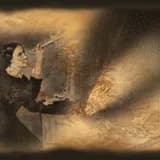
Kirch discovered the comet of 1702, becoming the first woman known to discover a comet.
On 21 April 1702, Maria Margaretha Kirch discovered the comet of 1702 (C/1702 H1) while carrying out routine astronomical observations. This event became the defining scientific achievement of her career and, according to standard biographies, made her the first woman to discover a comet.
The discovery was significant not only because it identified a new celestial object, but because it exposed the gendered assumptions of contemporary science. At first, her husband Gottfried Kirch received credit for the find, a common pattern in which a woman’s labor was absorbed into a male colleague’s public reputation. Later biographical sources make clear that Maria was the true discoverer and that Gottfried ultimately acknowledged her role.
In the early eighteenth century, astronomy depended on meticulous nightly observation, mathematical calculation, and access to instruments and publishing networks. Kirch’s discovery showed that she was fully competent in all three. Its legacy extends beyond the comet itself: it remains one of the clearest early examples of a woman’s scientific achievement being both real and initially obscured, and then gradually restored to the historical record.