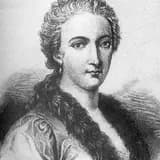
Agnesi published her comprehensive calculus textbook, one of the first of its kind, gaining international acclaim and papal recognition.
In 1748, Maria Gaetana Agnesi published her masterwork, Instituzioni analitiche ad uso della gioventù italiana ("Analytical Institutions for the Use of Italian Youth"), a two-volume, nearly thousand-page treatise that systematically covered algebra, analytic geometry, calculus, and differential equations. It is widely regarded as one of the first comprehensive textbooks on calculus and the first surviving mathematics book written by a woman.
The work was praised across Europe for its clarity and pedagogical organization, unifying the mathematical advances of Newton, Leibniz, and their successors into an accessible curriculum for students. It was translated into French and English and used as a standard university text well into the following century, including at institutions such as Cambridge.
The book brought Agnesi extraordinary recognition in an era when women were almost entirely excluded from formal mathematical and scientific circles. Pope Benedict XIV, upon learning of the work, sent her a laudatory letter and a gift, and later helped secure her appointment to a university chair. The treatise remains her most enduring legacy, cementing her reputation as one of the most important women in the history of mathematics and a symbol of the possibilities open to women in Enlightenment-era scholarship, despite the immense societal barriers of her time.