← All women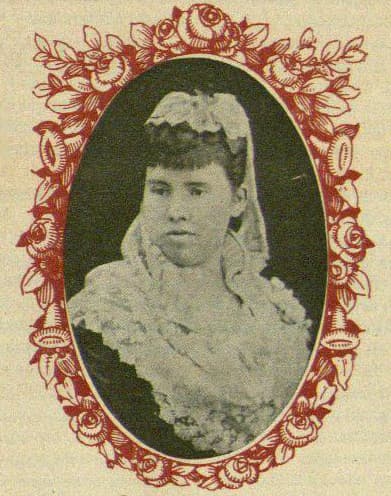
Spanish · Medicine · Activism
María Elena Maseras
May 25, 1853 – December 4, 1905
Early life and background
María Elena Maseras Ribera (often referred to simply as Elena Maseras) was born on 25 May 1853 in Vila-seca, a town in the province of Tarragona, Catalonia, Spain.[6][1][3] She grew up in a family closely linked to both the medical and educational professions. Her father, Miquel Maseras Gassó, worked as a veterinarian, while her mother, Francisca Ribera Gil, was a primary school teacher.[4][2] Several of her brothers, including Agustín Alfonso and Miguel, became physicians, and other siblings included Trinidad, Rosa, and José María.[4] This domestic environment immersed her in the values of learning, scientific practice, and public service from an early age.
Maseras’s childhood unfolded in the context of mid‑19th‑century Spain, a society marked by political instability, the legacy of the Carlist wars, and slow modernization. Educational opportunities for girls were limited and focused mainly on basic literacy and domestic skills. However, the fact that her mother was a professional teacher and her father a trained veterinary practitioner gave Elena a model of women’s and men’s work that extended beyond the purely domestic sphere.[2] This combination of influences made it more plausible for her to imagine a future in which she might pursue advanced studies.
After completing her initial schooling, she undertook secondary studies at the Instituto de Barcelona (Barcelona secondary school), an unusual path for a young woman at the time.[4] Access to secondary education was a prerequisite for university entrance and therefore a critical step. These studies in Barcelona not only prepared her academically but placed her in a city with an important intellectual and political life, exposing her to new ideas about science, reform, and women’s roles.
Entry into university and pioneering status
The decisive turning point in Maseras’s life came in the early 1870s. In 1872, her family and supporters petitioned for permission for her to study medicine at the University of Barcelona, at a time when regulations did not contemplate the presence of women in university classrooms.[13][4] The request ultimately reached the Ministry and the Crown. That same year, King Amadeo I issued a Real Orden (royal order) authorizing her enrollment in the Faculty of Medicine, thereby opening the possibility—at least under exceptional circumstances—for women to study medicine.[13][2]
Following this royal authorization, Maseras enrolled for the 1872–73 academic year in the Faculty of Medicine at the University of Barcelona.[6][11] University and archival sources consider her to be the first woman officially matriculated at a Spanish university as a woman, distinguishing her from earlier exceptional cases such as Concepción Arenal, who had attended law classes in Madrid disguised as a man.[5][14] She began her studies as a free student, registered in the faculty’s records of September 1872.[9] This act of formal matriculation marked the beginning of a new chapter in Spanish higher education, in which women’s presence, though still extraordinary and contested, acquired legal recognition.
Despite the royal order, the university initially imposed strict limitations on her access. Contemporary and later accounts emphasize that Maseras was not allowed to attend classes in person during the first years, being permitted only to enroll and sit examinations under special arrangements.[11][1] Her situation highlighted the tension between formal authorization and practical exclusion, and illustrated how institutions responded hesitantly to the idea of women sharing intellectual space with men. Nevertheless, she persisted, following the curriculum and preparing for exams even without routine attendance at lectures.
Formal admission to classes and progression of studies
By 1875, Maseras obtained formal admission to attend classes in the Faculty of Medicine.[11] This change, achieved after years of negotiation and adaptation, allowed her to move from nominal enrollment to full participation in lectures and practical instruction. While some sources present the date in general terms, the consensus is that by this year she was physically present in university classrooms alongside male students.[1][5]
Her admission to classes was a significant development in the normalization of women’s presence in higher education. Professors and fellow students now had to adjust to the reality of a woman consistently attending courses designed for men, which likely generated both curiosity and resistance. Academic narratives indicate that she followed the same study plan, sitting exams and progressing through the medical curriculum in parallel with her male peers.[2] Over time, she completed the subjects required for the medical degree, demonstrating competence in disciplines ranging from anatomy and physiology to clinical practice.
Maseras’s participation in lectures also had symbolic and social consequences. It demonstrated that women could inhabit professional spaces previously reserved for men without undermining academic standards. Her case became part of a broader conversation about the modernization of Spanish society, in which access to education was increasingly seen as central to national progress.
Completion of medical studies and first university degree
In 1878, the University of Barcelona recognized that Maseras had passed all the subjects required for the medical degree.[6][2] Institutional histories and cultural commemorations agree that at this point she became the first woman in Spain to officially complete a university degree.[2][15] This distinction is based on the fact that she met all academic requirements for the medical licentiate, even though administrative and political obstacles delayed the formal granting of her title.
Her achievement challenged prevailing notions of women’s intellectual capacity and social roles. In a context where women were largely confined to domestic duties or low-level teaching, the completion of a rigorous medical curriculum was a powerful counterexample to claims that women were unsuited to complex scientific study.[13][8] For the university, it meant confronting the implications of having a female graduate on record: if one woman could complete the course, others might claim the same right.
Maseras’s success laid the groundwork for other pioneering women in Spanish medicine, including Dolors Aleu and Martina Castells, who would later obtain doctorates and practice medicine. Although historiography often credits these later figures as the first female doctors in Spain in the sense of holding doctorates and engaging in clinical practice, specialists recognize that Maseras’s completion of the degree in 1878 was an essential precedent. Her case established that a woman could navigate the full path from enrollment to graduation within the university system.
Medical licentiate and barriers in Madrid
Following the completion of her studies in Barcelona, Maseras sought official recognition of her qualifications at the Universidad Central de Madrid, where final examinations and thesis defense were required to obtain the title of Licenciada en Medicina. The process was arduous. Archival and biographical sources describe how she faced repeated obstacles from academic authorities, who delayed or refused authorization for her exams and thesis defense.[2][4]
These impediments were closely tied to her status as a woman. The Central University and the relevant ministries had little precedent for women obtaining professional medical titles, and institutional resistance reflected broader social anxieties about women assuming roles traditionally reserved for men. According to Spanish archival records, despite having completed the necessary studies, Maseras was unable to secure the doctorate; obstacles from the institution prevented her from achieving that final degree.[4]
Nonetheless, in 1882 she was finally allowed to sit examinations and was granted the title of Licenciada en Medicina.[11][8] This formal recognition made her one of the earliest women in Spain to hold an official medical licentiate. While some sources emphasize 1878 as the year of her graduation in terms of completed studies, others highlight 1882 as the moment when bureaucratic recognition caught up with academic reality.[2] Together, these milestones confirm her status as a trailblazer in the history of women in Spanish medicine and higher education.
Shift to pedagogy and teaching career
Despite having obtained a medical licentiate, Maseras ultimately did not practice medicine professionally. Archival entries and biographical studies indicate that she renounced the exercise of medicine, discouraged by the bureaucratic difficulties and discrimination she had experienced.[4][13] Instead, she turned decisively toward pedagogy, a field that, while also marked by gender hierarchies, offered more stable opportunities for women.
She pursued further training in education, obtaining the titles of Maestra Elemental and Maestra Superior (elementary and superior teacher).[4] From the 1880s onward, she worked as a teacher in various locations. Biographical accounts and institutional histories note that she taught in Barcelona and in Vilanova i la Geltrú, and later moved to Maó (Mahón) in Menorca.[9][15] In Maó, she is remembered for her role in the first public girls’ school, contributing to the expansion and improvement of education for girls in the city.[9]
Her choice of pedagogy as a primary career can be interpreted both as a pragmatic response to structural barriers and as an extension of her commitment to women’s access to knowledge. By teaching girls and young women, Maseras helped to cultivate the next generation of female students who might aspire to higher education. In this sense, her teaching career complemented her earlier pioneering role in the university, translating symbolic victories into everyday educational practice.
Major accomplishments and recognition
Maseras’s most significant accomplishments center on her role as a pioneer of women’s access to Spanish universities. Her key achievements include:
- Being the first woman officially matriculated as a woman at a Spanish university, specifically in the Faculty of Medicine of the University of Barcelona (course 1872–73).[6][11]
- Becoming the first woman in Spain to officially complete a university degree, having passed all medical subjects at the University of Barcelona by 1878.[2][6]
- Obtaining the title of Licenciada en Medicina in 1882, making her one of the earliest women formally recognized with a medical licentiate in Spain.[11][8]
These accomplishments had broad historical significance. By testifying that women could enroll, attend classes, complete rigorous scientific curricula, and obtain official degrees, Maseras’s case helped dismantle arguments that excluded women from higher education. University histories and cultural commemorations now present her as a foundational figure in the story of coeducation at the University of Barcelona and in Spain more generally.[2][15]
Recognition of her work has grown over time. Spanish cultural institutions, including the Ministry of Culture and regional archives, have highlighted her biography in commemorative materials and efemérides devoted to notable women.[2][4] Scientific outreach projects and women-in-science initiatives also use her story to illustrate the historical barriers faced by female students and the importance of individual pioneers.[13][8] Exhibitions, such as those of the University of Barcelona’s virtual museum, feature Maseras as "la primera de moltes"—the first of many women who would follow in successive generations.
Personal life
Compared with her public role, the surviving documentation about Maseras’s personal life is limited. Archival records and biographical summaries focus primarily on her family of origin and professional activities.[4][2] They note her parents’ professions and list her siblings by name and occupation, underscoring the family’s strong association with medicine and teaching.[4]
Existing sources do not provide clear information on whether Maseras married or had children, and major reference works such as Wikipedia, the PARES authority file, and institutional biographies are silent on these aspects.[11][6][4] This absence itself reflects the priorities of historical documentation, which often preserved records of women’s public roles while leaving their private lives underdocumented, or vice versa. In Maseras’s case, the emphasis lies on her pioneering position in education and medicine rather than on domestic details.
What can be stated with confidence is that she spent the last part of her life residing in Maó, where she worked as a teacher and integrated into the local community.[9] Accounts from medical and educational galleries portray her as a cultured woman with wide interests, dedicated to her pupils and to the intellectual life of her surroundings.
Later life and death
From the 1880s until her death in 1905, Maseras’s professional activity centered on teaching. She worked first in Catalonia—among other places, in Barcelona and Vilanova i la Geltrú—and later settled in Maó on the island of Menorca.[9][15] In Maó she is associated with the first public school for girls, where she served as a teacher and contributed to the development of female education in the town.[9]
Maseras died in Maó on 4 December 1905, at around 52 years of age.[1][3][4] Archival sources and biographical notes specify that the cause of death was a cardiac ailment or heart disease.[1][4][9] Her death closed a career that had moved from medical studies and bureaucratic battles in major cities to everyday teaching work in a smaller community. Some later accounts, such as a popular video narrative, mention a different death date, but this is not supported by standard reference works or archival records, which consistently give 4 December 1905.[10][4]
She was buried in Mahón, and contemporary documentation records her age and cause of death, underlining the abrupt end of a life marked by pioneering efforts and sustained dedication to education.[1][4] There is no evidence that she resumed attempts to practice medicine in her later years; rather, she appears to have accepted teaching as her principal vocation.
Legacy and historical impact
Maseras’s legacy lies above all in her role as a trailblazer for women’s access to higher education in Spain. By securing royal permission to enroll in the Faculty of Medicine in 1872, attending classes from 1875, completing her degree in 1878, and obtaining a licentiate in 1882, she transformed the legal and institutional landscape for female students.[6][11][2]
Historians of the University of Barcelona and of Spanish education now treat her case as a crucial precedent that enabled the admission of other women to universities.[2][15] Her path demonstrated that existing legal frameworks could be interpreted—or reinterpreted—to allow women to enroll, and that universities could adapt to women’s presence, despite initial resistance. Later pioneers, such as Dolors Aleu and Martina Castells, built on the precedents she helped establish, attaining doctorates and practicing medicine.
Beyond medicine, Maseras’s story has become emblematic of broader struggles for women’s rights and equality in Spain. Her experience illustrates the intersection of individual ambition, family support, institutional inertia, and state power, showing how change often emerges from the negotiation between these forces. She challenged a system that considered women unfit for university study and, through persistence, demonstrated that such exclusion lacked legal and intellectual justification.
Her legacy is also evident in the field of pedagogy. By dedicating much of her life to teaching, particularly in girls’ schools, she contributed to expanding the educational horizon for women and girls.[9][13] In this way, she not only opened doors at the university level but also helped prepare younger generations to walk through them.
In recent decades, renewed interest in women’s history and gender studies has brought Maseras back into public view. Articles in specialized platforms on women in science and education, institutional commemorations from the Spanish Ministry of Culture, and exhibitions by the University of Barcelona all underline her importance.[13][2][8] She is frequently referred to as "la primera universitaria española"—the first Spanish female university student—and "la primera de moltes," signaling her position at the beginning of a long trajectory of women in higher education.
Maseras’s life, therefore, stands as a case study in both the possibilities and limits of pioneering work. She broke barriers in study and qualification, but was still prevented from fully realizing a medical career, and chose the more accessible path of teaching. Her story reminds contemporary audiences that formal achievements do not automatically translate into equal opportunities, and that legal and institutional change must be accompanied by shifts in social attitudes and professional practices.
Dated achievements
6 indexed.
- May251853Medicine
Birth of María Elena Maseras Ribera
María Elena Maseras Ribera was born in Vila-seca, Tarragona, Spain, a future pioneering medical student and pedagogue.
View details Wikipedia - María Elena Maseras - Sep011872Medicine
First woman enrolled in a Spanish university
In September 1872, María Elena Maseras enrolled in the Faculty of Medicine at the University of Barcelona, becoming the first female university student in Spain.