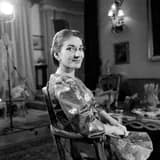
Official contracted La Scala debut as Princess Elena in Verdi’s I Vespri Siciliani, beginning her dominant decade at the theater.
On 7 December 1951, Maria Callas made her official contracted debut at La Scala in Milan as Princess Elena in Verdi’s I Vespri Siciliani. This performance inaugurated her central role in the artistic life of the theater and, by extension, postwar Italian opera.
The date coincided with La Scala’s traditional season opening, an evening of enormous symbolic weight in Italian cultural life. Being cast in a new production for this occasion signaled that Callas was no longer a promising outsider but a chosen artistic partner of the house. Under the musical leadership of eminent conductors and directors, she would go on to dominate La Scala’s repertory during the 1950s, appearing in works by Bellini, Donizetti, Verdi and Puccini, and collaborating with stage innovators such as Luchino Visconti.
This debut is historically significant because it marked the start of what many critics regard as Callas’s "golden" period. At La Scala she refined the synthesis of vocal technique, textual precision and psychological insight that redefined operatic acting for the mid‑20th century. Productions created for her there—Norma, La traviata, Lucia di Lammermoor, Medea—became templates for later interpretations. The 7 December 1951 I Vespri Siciliani thus represents not just a personal triumph, but the beginning of a transformative collaboration between singer and institution that helped revive and reshape the bel canto and Verdian repertories.