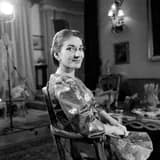
Begins first commercial recording sessions at RAI Auditorium in Turin, launching her international recorded legacy.
On 8 September 1949, Maria Callas began her first commercial recording sessions at the Auditorium RAI in Turin, sessions that lasted until 10 September. These early discs introduced her voice to listeners who had never seen her on stage and marked the beginning of her monumental recording legacy.
The late 1940s saw rapid growth in the postwar record industry, with Italian radio and labels eager to document emerging stars. Callas had already electrified audiences in Verona and other Italian houses, but opera remained geographically limited, dependent on live attendance. By recording arias and scenes under studio conditions, she could reach an international public, including critics and opera lovers in the Americas who knew little of her apart from scattered press reports.
These Turin sessions captured both her dramatic power and the unusual flexibility of her soprano, challenging prevailing notions that heavy dramatic voices could not manage intricate coloratura. Over time, recordings from this period would be studied for their daring phrasing, incisive diction and emotional immediacy. Historically, 8 September 1949 is significant because it marks the transition of Callas from a primarily theatrical phenomenon into a modern media artist whose impact was amplified through technology. The global fame and posthumous influence she enjoys today—via LP, CD and digital formats—trace back to this first step into the recording studio.