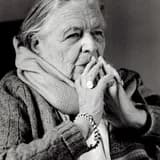
Yourcenar became the first woman ever elected as a full member ('immortelle') of the Académie française, ending 345 years of exclusively male membership.
On March 6, 1980, Marguerite Yourcenar was elected to the Académie française, becoming the first woman in the institution's 345-year history (founded in 1635) to be admitted as a full member, or 'immortelle.' She was formally received in a ceremony on January 22, 1981, seated in the fauteuil (chair) previously held by Roger Caillois.
This achievement was a landmark moment for women in French letters and international literary culture. The Académie française, one of the most prestigious and conservative cultural institutions in France, had for over three centuries limited its forty seats to men, despite the contributions of countless distinguished French women writers and thinkers throughout history. Yourcenar's election shattered this barrier and opened the door for subsequent women, including Jacqueline de Romilly and others in later decades.
Her election was widely seen as recognition not only of her towering literary achievement—particularly novels like Memoirs of Hadrian and The Abyss—but also as a symbolic reckoning with the Academy's historic exclusion of women. Yourcenar, who had lived for decades as an expatriate on Mount Desert Island in Maine with her partner and translator Grace Frick, became a celebrated figure in France despite her long physical distance from Parisian literary life. Her acceptance speech and the ensuing global press coverage cemented her status as a trailblazer, marking a definitive symbolic shift in the institutional history of French letters.