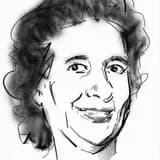
Marguerite Perey died of cancer, aged 65, in Louveciennes, France, an illness likely linked to decades of radiation exposure during her research.
Marguerite Perey died on 14 May 1975 in Louveciennes, France, at the age of 65, after a prolonged battle with cancer. Her illness is widely believed by historians of science to have been a direct consequence of decades of occupational exposure to radioactive materials, particularly the actinium and radium isotopes she handled during her groundbreaking research at the Radium Institute and later at Strasbourg.
Perey was among a generation of pioneering radiochemists—including her own mentor Marie Curie—who paid a severe physical price for scientific discoveries made before the full dangers of ionizing radiation were understood or adequately protected against. Her death, like Curie's, has since become a poignant symbol of the human cost borne by early nuclear scientists, and it has informed subsequent generations' emphasis on radiological safety protocols in laboratories worldwide.
At the time of her death, Perey was remembered not only as the discoverer of the element francium but as a trailblazer who had shattered gender barriers within the French scientific establishment, having become the first woman elected to the Académie des Sciences in 1962. Her legacy endures through her scientific contributions, through the element she discovered and named for her homeland, and through the doors she opened for women in nuclear science and French academia more broadly.