← All women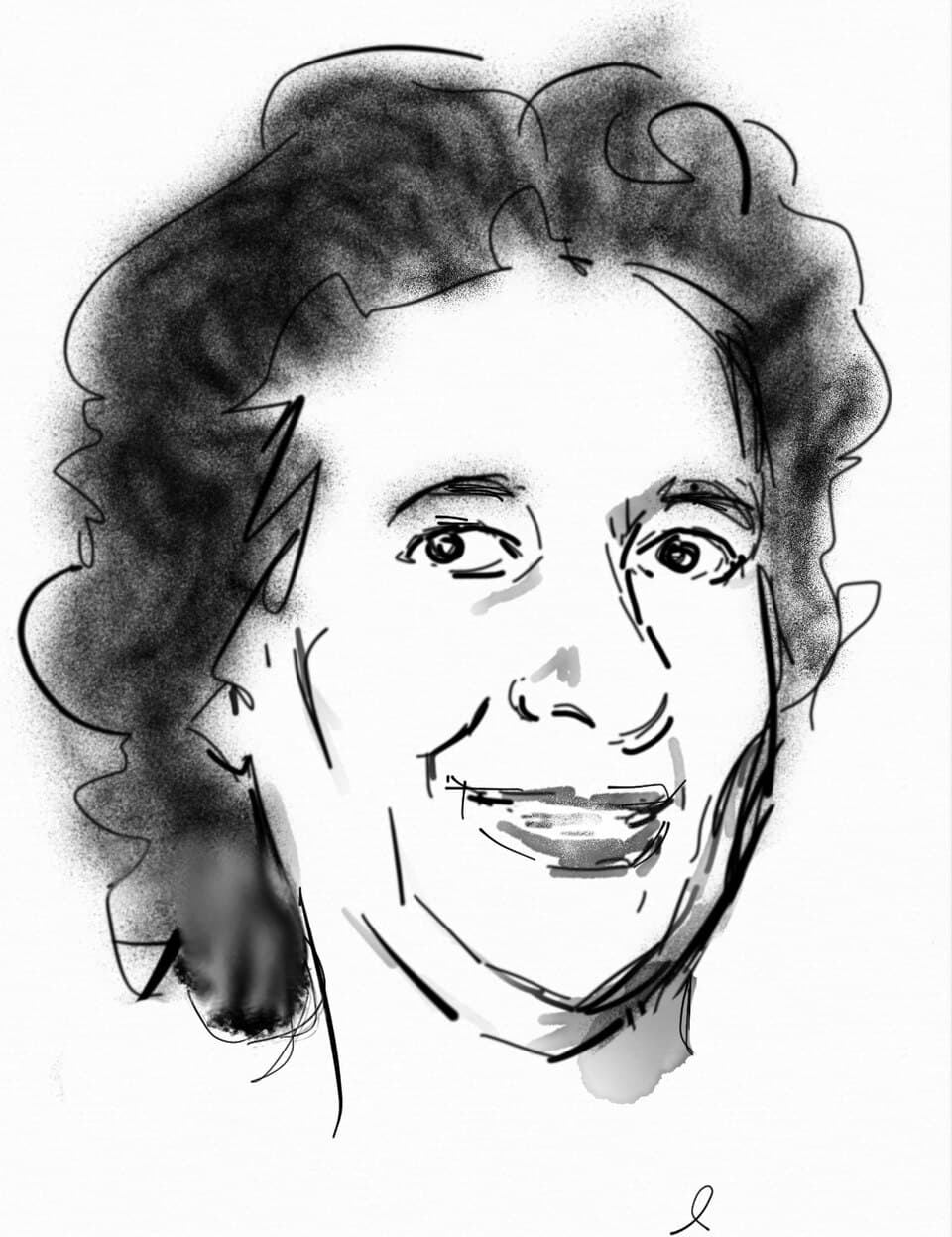
French · Science
Marguerite Perey
October 19, 1909 – May 14, 1975
Early Life and Background
Marguerite Catherine Perey was born on 19 October 1909 in Villemomble, a small town east of Paris, France.[2][11][15] She was the youngest of five children in a middle-class family; her father was described as an industrialist.[2][15] Growing up on the outskirts of Paris placed her within reach of France’s emerging scientific institutions, even though her family’s resources and expectations did not initially point toward a research career.
As a child and adolescent, Perey showed strong academic ability and an interest in the sciences. She originally hoped to study medicine and become a physician.[11][12] However, the cost of medical training was beyond her family’s means in the interwar years, a time when higher education remained both expensive and socially restricted for women. Instead, she pursued a more accessible path by enrolling in a vocational school for laboratory technicians, focusing on chemical techniques.[11]
In 1929, Perey completed her training as a laboratory technician, graduating with a specialty in chemical techniques.[11] This qualification, although far below a university degree, would prove decisive. It gave her practical skills in chemical analysis and radioactivity work, just as French research on radium and nuclear phenomena was gathering momentum around the figure of Marie Skłodowska Curie.
Career Beginnings at the Radium Institute
Shortly after qualifying as a technician, Perey applied for a position at the Institut du Radium in Paris, an institution co-directed by Marie Curie and central to French research on radioactivity.[8][15] Around age nineteen or twenty, she was interviewed and hired by Curie as a personal laboratory technician, becoming part of the small inner circle working with the Nobel laureate.[7][8]
Perey’s early tasks involved the laborious purification of radioactive substances, particularly actinium
These years at the Radium Institute were formative. Perey was immersed in a research culture that combined cutting-edge physics and chemistry with relatively primitive safety protocols. She worked long hours with poorly shielded radioactive materials, a circumstance that would later contribute to her chronic health problems.[2][7][15] At the same time, she absorbed the intellectual atmosphere of the Curie laboratory and learned to think independently about decay series and the possibilities of undiscovered elements. By the late 1930s, Perey had become the Radium Institute’s leading specialist in actinium chemistry. In late 1938, while studying actinium’s decay, she noticed that some of her carefully purified actinium samples emitted an unexpected type of radiation.[2][10][15] The radiation did not match the known beta emissions associated with actinium’s established decay products. Perey began a systematic investigation into this anomaly. She performed repeated chemical separations, measured radiation intensities over time, and compared results with theoretical expectations for known decay chains.[7][10] Her goal was to determine whether the unusual radiation indicated an impurity, an error in purification, or the presence of a previously unknown radioelement. These studies unfolded against the backdrop of intense international interest in heavy elements and nuclear reactions. Several groups had already searched for a missing element with atomic number 87, predicted to be an alkali metal analogous to cesium. Exploratory claims had been made but not widely accepted. Perey, working largely alone as a technician, approached the problem through careful observation rather than bold theoretical conjecture. Her investigations in late 1938 set the stage for a definitive identification. On 7 January 1939, Perey’s work reached a decisive turning point. Through precise measurements and repeated chemical separations, she established that the anomalous radiation arose from a new radioelement produced in the decay of actinium, which she initially designated actinium K.[7] The observed beta emission and decay behavior indicated an element with atomic number 87, filling the then vacant place in the periodic table. Perey’s discovery was formally announced in 1939 and quickly recognized by the scientific community.[2][7][10] She was given the privilege of naming the new element. Following the precedent of Marie Curie, who had named polonium after her native Poland, Perey chose the name francium (symbol Fr) in honor of France.[7][11] With this naming, she asserted both her national identity and the French contribution to nuclear chemistry. The discovery of francium was notable in several respects. It was the last chemical element to be discovered in nature, that is, identified in naturally occurring radioactive decay rather than produced through artificial nuclear reactions.[2][7][10] Francium also completed the family of alkali metals in the periodic table and clarified the terminal stages of the actinium decay series. Moreover, Perey’s work was published under her name alone, making her the only woman to publish the discovery of a chemical element as sole author.[10][13] This sole-authored discovery occurred while she was still officially categorized as a technician without a university degree, highlighting the exceptional nature of her achievement. Francium’s extreme radioactivity and short half-life made it scientifically challenging to study in bulk. Nonetheless, Perey continued to investigate its physical, chemical, and biological properties, contributing to a deeper understanding of heavy alkali metals.[5][13] Her discovery quickly entered textbooks and reference works, completing a decades-long search for element 87. Perey’s discovery of francium greatly enhanced her reputation, but formal academic recognition came slowly. In the years following 1939, she continued research on radioelements and pursued further education to regularize her scientific status.[2][10][15] She ultimately obtained the qualifications necessary to move from technician to academic staff. In 1949, Perey was appointed full professor and holder of the chair of nuclear chemistry at the Université de Strasbourg, within its Institut de recherche nucléaire.[5][9][15] This position placed her among the early pioneers of nuclear chemistry in the postwar period and gave her responsibility for teaching and research in a rapidly growing field. She remained at Strasbourg for the rest of her career, directing research on the physical, chemical, and biological properties of natural and artificial radioactive substances.[5][6][9] At Strasbourg, Perey supervised students, built laboratory capabilities, and contributed to France’s broader nuclear research infrastructure. Her work extended beyond francium to other radioelements, including studies relevant to health physics and radiobiology.[5][10] At a time when nuclear science was increasingly linked to both civilian power and military technologies, she focused largely on fundamental properties and the medical and biological implications of radioactivity. Perey’s scientific contributions were recognized through multiple honors. In 1960, she received the Leconte Prize from the French Academy of Sciences, an award acknowledging her work in nuclear chemistry.[9] Her discovery of francium and subsequent research also led to international recognition. She was nominated multiple times for the Nobel Prize in Chemistry, specifically in 1952, 1958, 1961, 1965, and 1966.[7] These nominations, though never culminating in an award, underscore the high regard in which her peers held her work. They also reflect the broader context of mid-20th-century chemistry, in which discoveries in nuclear and radiochemistry competed with advances in organic and theoretical chemistry for top honors. In addition to formal prizes, Perey’s status as discoverer of francium brought her invitations to conferences and participation in international networks of nuclear scientists. Her work was cited in standard handbooks and monographs on radioelements, and her research at Strasbourg contributed to France’s standing in nuclear chemistry. One of Perey’s most historically significant honors was her election to the French Académie des Sciences. On 18 December 1962, the Académie elected her as a corresponding member, making her the first woman ever admitted to the institution.[5][10][13] For over three centuries, the Académie had formally and informally excluded women, even when they were Nobel laureates or internationally renowned scientists. Perey’s election was based on her discovery of francium, her leadership in nuclear chemistry at Strasbourg, and her recognized expertise in radioelements.[5][10] Yet her membership status—corresponding rather than full titular—also revealed the continued reluctance of the institution to fully integrate women. Nonetheless, historians emphasize that she was broadly recognized from 1962 onward as the first woman elected to the Académie, a barrier-breaking achievement that drew attention to the issue of gender in French scientific life.[10][13] This event has been extensively discussed in studies of women in science and in institutional histories of the Académie des Sciences. It stands as a milestone in the gradual opening of elite French scientific bodies to women, following decades in which figures like Marie Curie and Irène Joliot-Curie were denied similar honors.[5][7][10] Unlike many contemporaries, Perey never married and had no children.[2][15] Her personal life was closely intertwined with her scientific career, from her early years working alongside Marie Curie to her later leadership roles at Strasbourg. Biographical accounts describe her as meticulous, determined, and modest, qualities that shaped both her laboratory work and her interactions with colleagues.[2][15] Perey’s long exposure to radioactive materials had serious consequences for her health. Like many early workers in radiochemistry, she conducted experiments under safety standards that would later be considered insufficient. Over time she developed chronic health problems and, eventually, cancer.[2][7][9][15] Her illness was widely regarded as likely related to her prolonged contact with radioactive substances, paralleling the fates of Marie Curie and other pioneers of radioactivity. Despite declining health, Perey continued to work, teach, and publish for many years. Her perseverance in the face of illness is frequently noted in biographical tributes, which emphasize both her dedication and the human cost of early nuclear research.[2][15] In her later years, Perey remained associated with the Université de Strasbourg and continued her involvement in nuclear chemistry, even as her illness progressed.[5][9][15] She maintained her status as a corresponding member of the French Academy of Sciences and remained a reference figure in discussions of francium and radioelement research. Perey died on 14 May 1975 in Louveciennes, a town west of Paris.[2][15] She was 65 years old. Her death followed a long illness, described as cancer and considered probably a consequence of many years working with radioactive products.[2][9][15] French- and English-language sources differ slightly on whether the date was 13 or 14 May, but detailed biographical tributes and encyclopedia entries support the 14 May 1975 date.[2][15] Her passing marked the end of a career that had extended from the last years of Marie Curie’s life through the era of postwar nuclear expansion. Shortly after her death, colleagues and former students published retrospective accounts of her life and work, emphasizing both her scientific achievements and her personal qualities.[15] Marguerite Perey’s legacy rests on several intertwined achievements. Scientifically, she is best known as the discoverer of francium (element 87), the last naturally occurring element to be identified and a key component of the alkali metal series.[2][7][10][13] Her discovery clarified the actinium decay series and contributed to a more complete understanding of radioelement behavior. Institutionally, she is remembered as the first woman elected to the French Académie des Sciences, a milestone in the history of women in science in France.[5][10][13] Her election as a corresponding member in 1962 is cited in studies of academic gender barriers and is often contrasted with the earlier exclusion of Marie Curie and Irène Joliot-Curie. Perey’s career illustrates both the possibilities and limitations faced by women scientists in mid-20th-century France. Biographical and historical works also highlight that Perey was effectively the only woman to publish the discovery of a chemical element as sole author, underscoring her unique place in the history of chemistry.[10][13] She achieved this while beginning her career as a technician rather than as a university-educated scientist, demonstrating that intellectual contribution was not always aligned with formal academic status. Perey’s life has attracted renewed attention in recent decades. Scholarly articles, institutional profiles, and museum blogs have revisited her contributions, often framing them within the broader narrative of women in nuclear science.[1][10][11][13] The Science Museum in London, for example, has used her discovery of francium to illustrate the interplay of careful laboratory work and significant theoretical advances in the history of the periodic table.[7] Her story is now frequently cited in educational materials as an example of a woman who overcame structural obstacles—limited access to higher education, institutional barriers to recognition—to make a lasting impact on science.[1][12][13] Discussions of workplace safety in radiochemistry also reference her illness and death as part of a broader pattern affecting early radioactivity workers. In sum, Marguerite Perey occupies a distinctive position in women’s and scientific history: a technician-turned-professor who completed the natural periodic table, helped build nuclear chemistry in postwar France, and broke new ground in women’s admission to elite scientific institutions.The Road to Francium: Late 1930s Investigations
Discovery and Identification of Francium
Academic Advancement and Nuclear Chemistry in Strasbourg
Awards, Honors, and Nobel Prize Nominations
Breaking Barriers: Election to the French Académie des Sciences
Personal Life and Health
Later Life and Death
Legacy and Historical Impact
Dated achievements
4 indexed.
- Oct191909Science
Birth in Villemomble, France
Marguerite Catherine Perey was born in Villemomble, a town east of Paris, France.
View details Marguerite Perey - Encyclopedia.com - Jan071939Science
Experimental proof of new element 87 (francium)
Perey experimentally established that anomalous radiation in her purified actinium samples was caused by a new element, atomic number 87, later named francium.