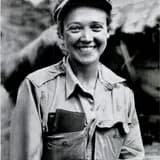
The Associated Press selected Higgins as its Woman of the Year for 1951, recognizing her acclaimed Korean War reporting.
In recognition of her landmark reporting from the Korean War front lines throughout 1951, the Associated Press named Marguerite Higgins its Woman of the Year. This honor came in the same year she won the Pulitzer Prize for International Reporting, marking a period in which Higgins achieved unprecedented visibility and acclaim as a woman succeeding in one of journalism's most dangerous and male-dominated specialties: war correspondence.
The distinction underscored not only her individual journalistic achievements but her symbolic importance as a role model for women seeking careers in fields traditionally closed to them. At a time when women journalists were frequently relegated to society pages or domestic reporting, Higgins had proven herself under fire in an active war zone, filing dispatches that rivaled or exceeded those of her male peers in both quality and immediacy.
Being named AP Woman of the Year placed Higgins in the company of other prominent women recognized for extraordinary achievement in their fields, and it helped cement her national reputation as a public figure, not merely a byline. This recognition, combined with her Pulitzer win, established her as one of the most famous American journalists—male or female—of the early 1950s, and opened further doors for her subsequent career, including her later appointment as a Moscow bureau chief.