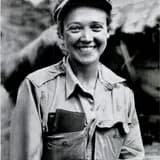
As New York Herald Tribune correspondent, Higgins went ashore with U.S. forces during the Incheon amphibious landing and reported from the front lines.
On September 15, 1950, Marguerite Higgins accompanied United Nations forces during General Douglas MacArthur's daring amphibious assault at Incheon, one of the most consequential military operations of the Korean War. Reporting for the New York Herald Tribune, she waded ashore alongside U.S. Marines, coming under fire as she filed dispatches describing the chaos and courage of the invasion.
Higgins's presence at Incheon was itself an act of defiance: earlier that year, General Walton Walker had ordered all women correspondents out of the Korean combat zone, deeming the front unsuitable for women. Higgins successfully appealed directly to MacArthur, who overturned the ban and allowed her to remain—a decision that opened the door for future generations of female war correspondents.
Her vivid, boots-on-the-ground reportage from Incheon and other major engagements of the war distinguished her from correspondents who relied on official briefings far from the action. This firsthand, danger-embracing style became her hallmark and set a new standard for war journalism.
The Incheon coverage was central to the body of work that earned her the Pulitzer Prize the following year, cementing her reputation as one of the era's foremost battlefield reporters, male or female.