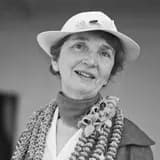
Margaret Sanger died in Tucson, Arizona, at age 86, having lived to see both the birth control pill and Griswold v. Connecticut.
Margaret Sanger died on September 6, 1966, in Tucson, Arizona, at the age of 86, just eight days before what would have been her 87th birthday. She passed away in a nursing home, having spent her final years witnessing the remarkable fruition of her decades-long crusade for reproductive rights.
In her last years, Sanger saw two pinnacle achievements of the movement she had founded and led: the 1960 FDA approval of Enovid, the first oral contraceptive pill, whose development she had personally organized and funded; and the 1965 Supreme Court decision in Griswold v. Connecticut, which established a constitutional right to marital privacy and struck down bans on contraceptive use for married couples.
Sanger's death marked the end of a life that had spanned from an era when discussing contraception could result in arrest and imprisonment to one in which birth control was becoming legally protected and increasingly accessible. Her legacy lived on through the Planned Parenthood Federation of America, the organization that grew from her pioneering clinics, and through the countless women worldwide whose reproductive autonomy was expanded by her tireless activism, legal battles, and scientific patronage. She remains one of the most influential—and controversial—figures in the history of women's reproductive rights, remembered both for her groundbreaking advocacy and for aspects of her association with the eugenics movement, which continue to be examined critically by historians.