← All women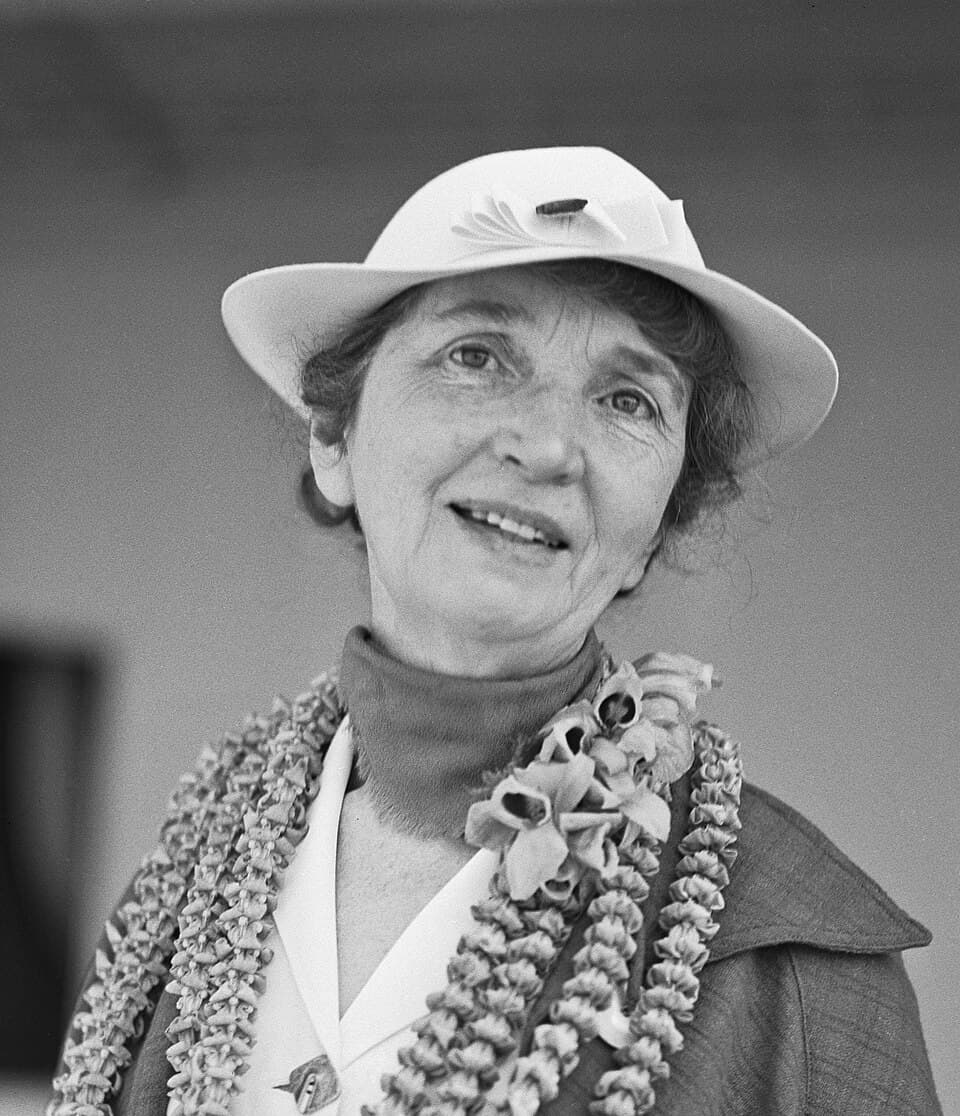
American · Activism · Medicine · Law
Margaret Sanger
September 14, 1879 – September 6, 1966
Early Life and Background
Margaret Louise Higgins, later known as Margaret Sanger, was born on 14 September 1879 in Corning, New York, into a poor Irish American family.[4][1][3] She was the sixth of eleven children of Michael Hennessy Higgins, a stonemason and free thinker, and Anne (Anna) Purcell Higgins, a devout Roman Catholic from Ireland.[1][3][14] The large family lived with chronic financial instability, and Sanger’s childhood was marked by overcrowding, hard labor, and her mother’s declining health.
Anne Higgins suffered from tuberculosis and the strain of eighteen pregnancies, eleven of which resulted in surviving children.[1][11][14] Sanger later argued that her mother’s early death illustrated the destructive consequences of uncontrolled fertility on women’s bodies and lives. Growing up in this environment, Margaret observed how repeated pregnancies exacerbated poverty and limited women’s autonomy, experiences that deeply influenced her later advocacy for birth control.[1][11]
Michael Higgins encouraged his children to question religious authority, and family tensions between his radical views and Anne’s Catholic piety exposed Margaret to conflicting ideas about morality and social order.[3][11] She showed academic promise and eventually attended Claverack College and the Hudson River Institute, though finances prevented her from completing a formal degree.[3][11][14] In the late 1890s she trained as a nurse, first enrolling in a nursing program at White Plains Hospital and later working as a visiting nurse in New York City.[3][6][11] These experiences would become crucial to her understanding of women’s health.
Career Beginnings and Development
By the early 1900s, Sanger was working as a nurse among poor immigrant families in New York City, particularly in the Lower East Side.[3][1][11] She treated women suffering from complications of repeated pregnancies, miscarriages, and unsafe abortions. Many begged for advice on how to avoid further childbearing, but the Comstock laws—federal and state statutes that defined contraceptive information and devices as "obscene"—made it illegal for physicians and nurses to provide explicit guidance.[2][4][11] Sanger later recalled being haunted by cases in which women, desperate to avoid another pregnancy, resorted to self-induced abortions and died as a result.
These encounters convinced her that access to effective contraception was essential to women’s health and autonomy, not merely a moral or religious question. Around this time she became involved with socialist and labor circles in New York, including the Industrial Workers of the World and the Socialist Party, and wrote for radical publications.[3][11][14] Her political activism linked the struggles of working-class women to broader critiques of capitalism, militarism, and religious conservatism.
In 1902, Margaret married architect and artist William Sanger
In 1914, Sanger moved from private nursing advocacy to public agitation. That year she published a pamphlet titled Family Limitation, which provided explicit instructions on contraceptive methods and was distributed widely among working-class women.[6][12][11] Because the Comstock laws prohibited distributing such information through the mails, the pamphlet was illegal, but its accessibility made it influential. Also in 1914, Sanger launched the monthly newspaper The Woman Rebel, produced in New York City and aimed at working women.[11][4] The paper combined socialist critique with frank discussions of sex and reproduction. In its pages Sanger popularized the term "birth control", framing contraception as a political right and a means for women to assert autonomy over their bodies and futures.[4][8][11] Federal authorities considered the publication obscene. A grand jury indicted Sanger on multiple counts for violating postal obscenity statutes, prompting her to flee to Europe to avoid arrest.[11][14] While in England, Sanger met British sex reformers and neo-Malthusian activists who advocated voluntary limitation of births. She studied European contraceptive techniques and theories, including the use of diaphragms and other barrier methods, and drew inspiration from their more open debates on sexuality.[11][14] This transatlantic exposure strengthened her determination to challenge American laws. Back in New York, Sanger’s work continued to attract legal attention. On 13 March 1915, her husband William was arrested and later convicted for distributing Family Limitation, turning the pamphlet into a cause célèbre.[4][6] The case brought widespread publicity, and Margaret returned from Europe to support him. Shortly afterward, sympathizers formed the Birth Control League in May 1915 to organize support for legal reform.[4] Sanger’s most dramatic early initiative came in 1916, when she decided to test the law directly by opening a public clinic. On 16 October 1916, she, her sister Ethel Byrne, and activist Fania Mindell opened a storefront facility in the Brownsville section of Brooklyn, New York.[5][3][6][15] This clinic, explicitly dedicated to providing contraceptive information and devices to working-class women, is widely recognized as the first birth control clinic in the United States.[4][5] The clinic offered free consultations, distributed pessaries and other contraceptive devices, and explained their use. Local women—many Jewish and Italian immigrants—queued for hours. Sanger and her colleagues deliberately operated in defiance of New York’s interpretation of the Comstock laws, intending to provoke a test case. Within days, newspapers reported the clinic as "the first out-and-out birth control clinic in the United States," bringing the experiment nationwide attention.[4] After ten days of operation, police raided the clinic, arrested Sanger and her staff, and seized materials.[3][5] Sanger was charged with maintaining a public nuisance and distributing contraceptive information. She used the courtroom as a platform, arguing that the law endangered women’s lives by denying them the means to prevent unwanted pregnancies. Although she was convicted and briefly jailed, public opinion increasingly favored her position, particularly among progressive physicians and social workers. The Brownsville clinic was forced to close, but it demonstrated both the demand for birth control services and the possibility of organizing them on a clinical model. In the years that followed, Sanger helped establish a series of clinics staffed by physicians, attempting to operate within the law by framing contraception as legitimate medical care rather than obscenity.[3][11] In the early 1920s, Sanger shifted from local confrontations to building national and international organizations. In 1921, she organized the first American birth control conference and founded the American Birth Control League (ABCL), a national body dedicated to promoting contraceptive access and legislative reform.[4][8][12] The League sought to gain support from physicians, scientists, and social workers, positioning birth control as a progressive public health measure. Throughout the 1920s, Sanger lectured widely, wrote books and articles, and established clinics that operated under medical supervision.[3][11] Her writings included works such as Woman and the New Race and Motherhood in Bondage, which argued that women’s emancipation depended on their ability to control reproduction. She cultivated alliances with eugenicists who believed in limiting births among the "unfit" in order to improve the population, a stance that later generated intense controversy.[5][15][13] Sanger distinguished her advocacy of "voluntary" birth control from coercive sterilization, but she sometimes used eugenic rhetoric and supported policies that prioritized contraception in poor and minority communities.[15][11] During this period, she also helped initiate birth control efforts abroad. Sanger engaged with activists in Europe and Asia, promoting family planning as a tool for women’s rights and social stability.[6][13] Her international travel contributed to the emerging global network of birth control reformers. By the 1930s, Sanger’s strategy increasingly emphasized legal test cases and medical endorsement. One of the most important legal victories was United States v. One Package of Japanese Pessaries, decided by the U.S. Court of Appeals for the Second Circuit in 1936.[12][14] Working with sympathetic physicians, Sanger helped orchestrate the importation of contraceptive pessaries ordered by a New York doctor. Customs officials seized the shipment under the Comstock Act, providing grounds for a legal challenge. The court ultimately held that the federal government could not prohibit licensed physicians from importing contraceptive devices for legitimate medical purposes, effectively exempting medical practice from the strictures of the Comstock law.[12] This ruling enabled doctors to prescribe and obtain contraceptives more freely and legitimized contraception as part of ordinary health care. In 1937, the American Medical Association formally recognized birth control as a legitimate subject of medical practice and teaching, a major step toward mainstream acceptance.[12][6] These developments marked an important transition: birth control was beginning to be treated primarily as a medical service rather than a matter of criminal obscenity. Sanger’s long campaign against censorship had helped produce a legal environment in which physicians could openly discuss and prescribe contraceptives. Her clinics, now increasingly operated in cooperation with doctors and hospitals, multiplied across the country. Organizational consolidation followed. In 1942, the American Birth Control League and other related organizations merged into the Birth Control Federation of America, which soon adopted the name Planned Parenthood Federation of America (PPFA).[2][4][9] This new entity emphasized family planning, maternal and child health, and education, while continuing to advocate for legal access to contraception. Sanger was closely associated with the formation and early direction of Planned Parenthood. She served in leadership roles and used the organization as a vehicle for both clinical services and public advocacy.[4][5] Beyond the United States, she was instrumental in founding the International Planned Parenthood Federation (IPPF), established formally in 1952
Her international work reflected both humanitarian and eugenic concerns. She argued that birth control would reduce maternal mortality and poverty, but she also endorsed efforts to lower birth rates in populations deemed "overpopulated" or "unfit" by contemporary standards, positions later criticized as complicit in racist and classist ideologies.[15][13] In the 1950s, when Sanger was in her seventies, she played a pivotal role in initiating research that led to the modern oral contraceptive pill.[1][3][5] Long convinced that a simple, woman-controlled method would be transformative, she helped connect biologist Gregory Pincus and physician John Rock with wealthy philanthropist Katharine McCormick, who funded their work.[5][10] Pincus and Rock conducted clinical trials on progesterone-based compounds that could suppress ovulation. Sanger encouraged the research, offered strategic advice, and used her network to generate support and attention.[5][3] Although she was not a scientist herself, her advocacy ensured that the project received the resources and legitimacy needed to move forward. On 9 May 1960, the U.S. Food and Drug Administration approved Enovid as the first oral contraceptive pill.[1][2] The pill quickly became widespread, fundamentally altering patterns of reproduction, sexuality, and women’s participation in education and employment. It is often cited as one of the most influential medical innovations of the twentieth century. For Sanger, the pill represented the realization of a long-held dream: a reliable, discreet method of birth control under women’s control. The legal environment surrounding birth control also continued to evolve. On 7 June 1965, the U.S. Supreme Court issued its decision in Griswold v. Connecticut, striking down a state law that prohibited the use of contraceptives by married couples.[2][5] The Court held that the law violated a constitutional right to marital privacy derived from various provisions of the Bill of Rights. Although Sanger was not directly involved in the case, Griswold built on decades of activism by her and others. The decision transformed birth control from an issue of obscenity and commerce into a matter of fundamental civil liberties. It provided constitutional protection for married couples’ decisions about family planning and laid groundwork for later cases extending contraceptive rights to unmarried individuals and shaping abortion jurisprudence.[2][5] Sanger, then in her mid-eighties, lived long enough to see both the pill’s approval and Griswold’s recognition of a right to privacy. These developments crystallized the legal and technological achievements of the movement she had helped launch. Over the course of her life, Margaret Sanger received numerous honors from supporters of public health and women’s rights. While comprehensive lists vary, she was often celebrated in progressive circles as a pioneering advocate for family planning. Organizations such as Planned Parenthood have continued to recognize her role as founder of key institutions and as a central figure in the history of reproductive rights.[2][9][18] At the same time, recognition of Sanger has become increasingly complex. Scholars and institutions have reassessed her legacy, acknowledging both her contributions to women’s health and the troubling aspects of her engagement with eugenics and population control. Some honors and commemorations have been modified or contextualized to reflect this more critical understanding.[15][11] Sanger’s personal life was intertwined with her activism. Her first marriage to William Sanger in 1902 produced three children and connected her to artistic and radical communities in New York.[5][11] The couple’s relationship was strained by her intense commitment to birth control work and frequent travels. They eventually separated and divorced in the late 1910s.[5][11] In 1922, she married J. Noah Slee, a wealthy industrialist.[5][13][14] Slee’s financial support proved crucial to her activism; he underwrote publications, clinics, and legal challenges, and helped fund the contraceptive research that led to the pill.[5] Sanger also had close friendships and associations with other reformers, doctors, and philanthropists who shared her interest in social change. Though she devoted much of her energy to public work, Sanger’s family life remained important to her. She experienced personal tragedies, including the death of her daughter Peggy from pneumonia in 1915.[11][14] This loss deepened her commitment to improving maternal and child health. Sanger’s legacy is marked by significant controversy, particularly regarding her relationship to eugenics and race. During the 1920s and 1930s, she frequently used eugenic language, arguing that birth control could help reduce the number of children born into severe poverty or with serious hereditary illness.[5][15][13] She spoke at meetings of eugenics organizations and collaborated with some advocates of selective reproduction. Her writings sometimes portrayed large families among the poor as a social burden and endorsed efforts to encourage birth limitation in communities considered "overpopulated."[15][11] Critics have argued that this perspective contributed to policies that targeted Black, immigrant, Indigenous, and disabled populations for contraception and sterilization. Supporters contend that Sanger emphasized voluntary choice and opposed coercive sterilization, but the overlap between her ideas and broader eugenic practices remains a subject of intense scholarly debate.[15] In recent decades, historians and journalists have scrutinized Sanger’s statements and organizational partnerships. Some have accused her of racism, while others stress the complexity of her views, noting her work with African American leaders on projects like the Harlem clinic and her belief that all women, regardless of race, deserved access to contraception.[11][15] Planned Parenthood and other institutions have issued statements acknowledging the problematic aspects of her legacy while maintaining that her pioneering role in expanding access to birth control is historically significant.[15] Margaret Sanger is widely regarded as a founder and leader of the U.S. birth control movement.[4][5][1] Her activism helped transform contraception from a taboo and criminalized subject into a central component of public health, women’s rights, and everyday family life. By challenging the Comstock laws, opening clinics, organizing national and international organizations, and promoting scientific research, she contributed to a multi-decade process that made contraceptive information and services broadly available. The institutions she helped to create, including the American Birth Control League, Planned Parenthood Federation of America, and the International Planned Parenthood Federation, have played enduring roles in providing reproductive health services, advocating for legal rights, and shaping policy debates around the world.[4][6][13] Her influence is evident in the widespread acceptance of family planning, the decline in maternal and infant mortality, and the expansion of women’s opportunities in education and employment. At the same time, Sanger’s legacy is contested. Her embrace of certain eugenic ideas, her focus on controlling fertility among the poor, and the ways in which family planning programs have sometimes intersected with coercive population policies have prompted re-evaluation.[15][11] Scholars emphasize that understanding her contributions requires grappling with both the emancipatory and oppressive potentials of birth control. As debates over reproductive rights, racial justice, and medical ethics continue, Sanger remains a central, if controversial, figure in discussions of how reproductive technologies and policies shape human lives. In her later years, Sanger gradually withdrew from day-to-day organizational leadership but remained an influential voice. She continued to travel and consult on family planning initiatives, especially in the years surrounding the founding of the International Planned Parenthood Federation in 1952.[6][13] The approval of the pill in 1960 and the Griswold v. Connecticut decision in 1965 marked the realization of many of her longstanding goals. Sanger spent her final years in Arizona. On 6 September 1966, she died in Tucson at the age of 86 from congestive heart failure.[4][3][14] By the time of her death, birth control was legal for married couples in many states, widely available through clinics, and increasingly integrated into mainstream medicine. The movement she helped build was entering a new era shaped by the pill, changing sexual norms, and emerging debates over abortion. Margaret Sanger’s life, spanning from 1879 to 1966, intersected with major social transformations: industrialization, women’s suffrage, the rise and fall of eugenics, the development of modern medicine, and the sexual revolution.[2][11] Her work left a profound, complex imprint on the history of women’s health and human reproduction. Whether viewed as a courageous champion of women’s autonomy or a flawed reformer whose ideas sometimes aligned with troubling policies, she remains one of the most consequential women in twentieth-century history.The Woman Rebel and Early Birth Control Campaigns
Brownsville Clinic and Confrontation with the Comstock Laws
Organizational Leadership and National Movement Building
Legal Victories and Integration into Medical Practice
Planned Parenthood and International Work
Role in the Development of the Birth Control Pill
Griswold v. Connecticut and Legal Culmination
Awards, Honors, and Recognition
Personal Life
Eugenics, Race, and Controversy
Legacy and Historical Impact
Later Life and Death
Dated achievements
10 indexed.
- Sep141879Science
Birth of Margaret Sanger
Margaret Higgins was born in Corning, New York, later becoming the founder of the U.S. birth control movement.
View details Margaret Sanger | Britannica - Mar011914Science
First issue of The Woman Rebel published
Sanger launched her feminist newspaper The Woman Rebel, openly advocating birth control in defiance of the Comstock laws.