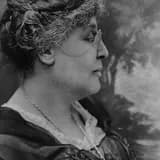
Margaret Murray Washington died on June 4, 1925, in Tuskegee, Alabama, leaving a lasting legacy in Black women's education and activism.
Margaret Murray Washington died on June 4, 1925, in Tuskegee, Alabama, at the age of 60. By the time of her death, she had spent more than three decades shaping the institutional and social landscape for Black women in the American South and beyond.
She had continued her work at Tuskegee Institute's Department of Girls' Industries and remained deeply engaged with the National Association of Colored Women's Clubs, an organization she helped found and later led as president. Her efforts in promoting education, health, and moral uplift for Black women were foundational to the broader African American self-help and civil rights movements of the early twentieth century.
Her death was mourned across the network of clubs and institutions she had built. She was buried on the campus of Tuskegee Institute, near her husband Booker T. Washington, cementing her place as one of the era's most consequential Black educators and reformers. Schools and organizations continued to bear her name and honor her legacy long after her passing, and historians consider her one of the most significant Black women leaders of the Progressive Era.