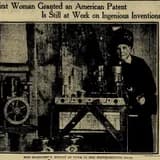
US Patent 1,015,761 for a resilient wheel design, an automotive-era invention patented when Knight was 73.
On January 23, 1912, at age 73, Margaret Knight was granted US Patent 1,015,761 for a resilient wheel — a design intended to absorb shock and vibration, an important consideration as automobiles became faster and roads remained rough and often unpaved.
This patent exemplifies the astonishing continuity of Knight's inventive career: rather than slowing down in old age, she continued to engage directly with the newest and most rapidly evolving technology of her time, the automobile. Resilient or cushioned wheel designs were an active area of innovation in the early 1910s, as engineers sought alternatives and improvements to solid rubber and early pneumatic tire technologies.
That a woman in her seventies, born decades before the automobile existed, was actively patenting components for this new transportation technology is a remarkable testament to her lifelong adaptability and technical curiosity. This invention formed part of a cluster of automotive and mechanical patents from her final years, alongside her rotary engine series and subsequent internal-combustion engine work, cementing her reputation as one of the most versatile and enduring inventors — male or female — of the late nineteenth and early twentieth centuries.