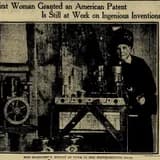
US Patents 436,358 and 436,359, sole-cutting machines granted the same day, beginning her shoe-manufacturing patent series.
On September 16, 1890, Margaret Knight was granted two patents simultaneously — US 436,358 and US 436,359 — both for sole-cutting machines used in shoe manufacturing. This marked the beginning of a new phase in her inventive career, as she turned her attention from paper-bag machinery to the booming footwear industry of late nineteenth-century New England.
Receiving two related patents on the same day reflects the systematic, engineering-minded approach Knight brought to industrial problems: rather than patenting a single device, she often developed complementary mechanisms that worked together within a larger manufacturing process. Sole-cutting machines of this era mechanized the precise shaping of leather soles, replacing labor-intensive hand-cutting with faster, more consistent industrial processes.
This entry into shoe machinery came at a pivotal moment for American manufacturing, as the shoe industry was rapidly mechanizing and centralizing in factory towns across Massachusetts and New Hampshire. Knight's willingness, in her early fifties, to master an entirely new industrial domain and secure multiple patents within it demonstrates the remarkable range and longevity of her inventive career, which would continue to evolve into entirely new fields — including automotive engineering — over the following two decades.