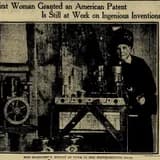
US Patent 109,224 for an 'Improvement in Paper-Feeding Machines,' issued under her full name rather than initials.
On November 15, 1870, Margaret Knight was granted US Patent 109,224 for her 'Improvement in Paper-Feeding Machines' — a suction-based, pneumatic sheet-feeding mechanism designed to automatically and precisely feed paper into presses and bag-making machines.
What made this moment notable was not only the mechanical ingenuity of the device — which used air suction to lift and separate individual sheets of paper for feeding — but the fact that it was issued under her full name, Margaret E. Knight, rather than initials that might obscure her gender. In an era when women inventors often faced skepticism or outright dismissal from patent examiners, manufacturers, and investors, having a patent registered openly under a full female name was itself a quiet act of visibility.
This patent represented the culmination of years of practical experience Knight had gained working at the Columbia Paper Bag Company in Springfield, Massachusetts, beginning in 1867. It was there she first conceived the mechanical principles that would soon lead to her most famous invention — the flat-bottomed paper bag machine — patented less than a year later. The pneumatic feeder itself became a foundational technology incorporated into subsequent bag-making and printing machinery.