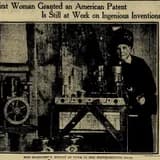
US Patent 116,842 for a machine that cut, folded and glued flat-bottomed bags, after Knight won a patent interference suit against a man who copied her design.
On July 11, 1871, Margaret Knight received US Patent 116,842 for a machine that automatically cut, folded, and pasted flat-bottomed paper bags — the square-bottomed style still used for grocery sacks today. The machine mechanized a process previously done entirely by hand, performing the work of approximately thirty manual folders and revolutionizing the paper-bag industry.
This patent came only after a hard-fought legal battle. In 1868, Knight had built a working wooden prototype of her machine. While seeking a metal version to be built for the patent application, a man named Charles Annan, who had observed her prototype, filed his own patent claim for a strikingly similar device. Knight filed a patent interference suit against him in the fall of 1870. During a grueling sixteen-day hearing — costing her roughly $100 per day, an enormous sum at the time — Annan's lawyers argued that a woman could not possibly have understood or designed such a complex mechanism. Knight prevailed by presenting detailed diaries, technical drawings, and witness testimony documenting her invention process.
This victory is widely regarded as a genuine first: one of the earliest instances of a woman successfully defending her mechanical invention against a male imitator in U.S. patent law. In 2006, this patent led to Knight's induction into the National Inventors Hall of Fame. She went on to co-found the Eastern Paper Bag Company to manufacture her machines commercially.