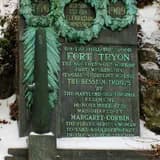
After her husband was killed manning a cannon, Margaret Corbin took his place, loading and firing until severely wounded.
On November 16, 1776, British and Hessian forces launched a major assault on Fort Washington, a Continental Army stronghold on the northern end of Manhattan Island. Margaret Corbin had accompanied her husband, John Corbin, an artilleryman in a Pennsylvania militia company, as one of many women who traveled with the Continental Army performing duties such as cooking, laundering, water-carrying, and nursing the wounded.
When John Corbin was killed while operating his cannon during the fierce fighting, Margaret did not retreat to safety. Instead, she immediately stepped into his position at the gun, continuing to load, aim, and fire the artillery piece amid the chaos of battle. Her actions continued until she herself was struck by grapeshot, suffering severe wounds to her jaw, chest, and arm that would leave her permanently disabled and unable to fully use her left arm for the rest of her life.
This act of battlefield heroism was extraordinary for the era, when women's roles in combat were essentially unrecognized and unsanctioned. Corbin's bravery under fire, taking on a traditionally male combat role in a moment of crisis, was witnessed by fellow soldiers and became the foundation for her later formal recognition by the Continental Congress. It stands as one of the earliest documented instances of a woman engaging directly in combat during the American Revolutionary War.