Margaret A. Wilcox died on March 30, 1912, in Los Angeles.
Margaret A. Wilcox died on March 30, 1912, in Los Angeles, ending a career that had produced at least seven U.S. patents and a lasting place in the history of transportation heating. Her death marks the close of a life spent working on practical mechanical solutions for domestic and vehicular problems.
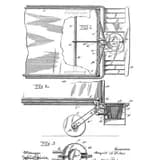
By the time of her death, Wilcox’s most famous invention—the railway-car heater—had become part of a much larger technological story about passenger comfort and the development of enclosed vehicle environments. Even if her specific design was not adopted exactly as originally conceived, her patent remains historically important as an early expression of the idea that vehicles could and should be heated from within. That concept would become standard in later automotive and rail systems.
Her death also underscores a broader historical pattern: many women inventors were underrecognized during their lifetimes and only later recovered by historians, museums, and women’s-history projects. Wilcox’s obituary-level significance lies not only in the patents she obtained but in the barriers she overcame to obtain them in a male-dominated legal and technical system. The posthumous attention she has received reflects a growing recognition of women’s contributions to engineering, household technology, and transportation history.