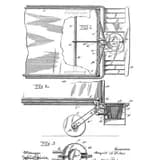
Wilcox received U.S. Patent No. 941,597 for a hot-water house heater.
On November 23, 1909, Margaret A. Wilcox was granted U.S. Patent No. 941,597 for a hot-water house heater. This late patent is important because it shows the persistence of her interest in heating technologies across nearly two decades of inventive activity.
Heating remained a central challenge in American homes, and Wilcox’s patent addresses it from the standpoint of domestic comfort and efficiency. By the early twentieth century, innovations in heating were part of a larger technological shift toward controlled interior environments. Wilcox’s work fits within that transition, extending her earlier ideas about recovering and distributing heat from one function to another.
The 1909 patent also strengthens the argument that Wilcox was not merely the inventor of a single famous device but a sustained contributor to practical engineering. For a woman to continue patenting into the 1900s meant overcoming entrenched assumptions about who could participate in invention, especially in technical fields associated with heat, machinery, and household systems. Her hot-water house heater stands as a late-career marker of endurance, expertise, and continuity in a life spent solving ordinary but important mechanical problems.