← All women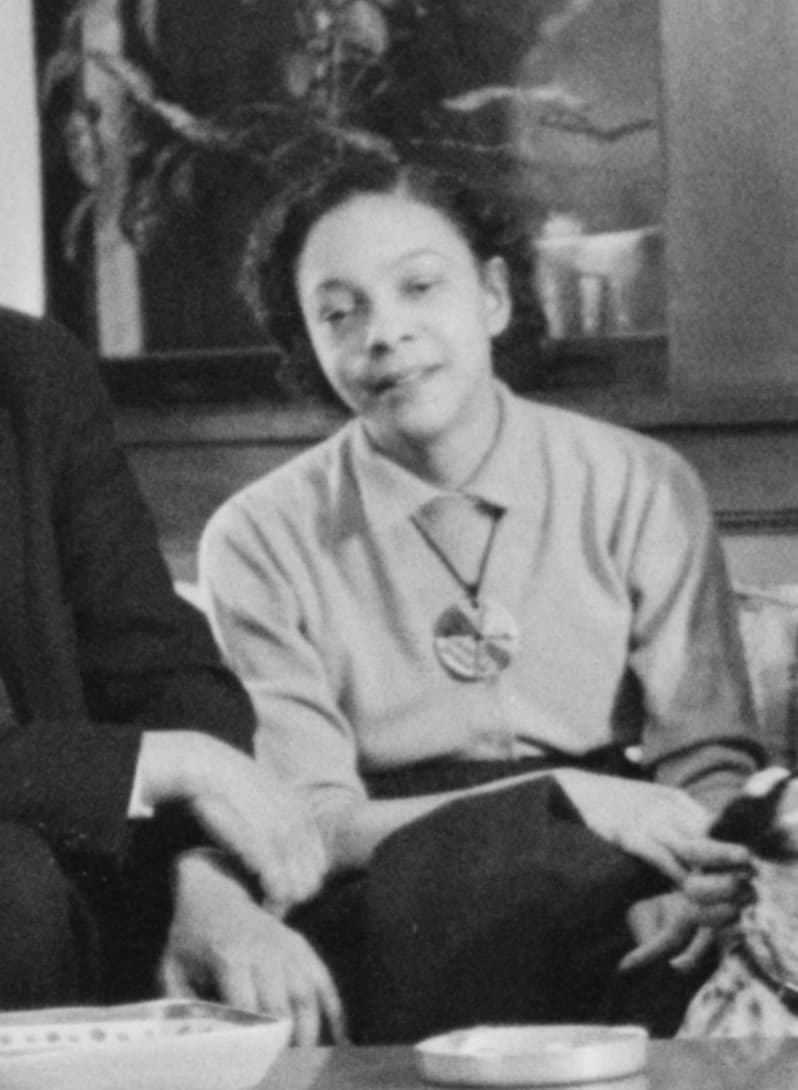
American · Science · Activism
Mamie Phipps Clark
April 18, 1917 – August 11, 1983
Early Life and Background
Mamie Katherine Phipps Clark (1917–1983) was an American psychologist whose research on Black children’s racial identity and self‑concept played a pivotal role in the dismantling of legalized school segregation in the United States. She was born on April 18, 1917, in Hot Springs, Arkansas, into a Black middle‑class family that offered both stability and strong encouragement for education.
Her father, Harold H. Phipps, emigrated from the British West Indies and worked as a physician; some accounts also describe him as a resort manager in Hot Springs.[2][7] Her mother, Kate/Katy Florence Phipps, assisted in his practice and managed the household.[1][2][7] Growing up in the segregated South, Clark experienced Jim Crow restrictions firsthand, but she also benefited from parents who valued schooling and expected their daughter to pursue advanced education.
Clark excelled academically in segregated schools and, at age sixteen, left Arkansas for Howard University in Washington, D.C., one of the leading historically Black universities.[7][10] Her decision to attend Howard reflected both her ambition and the limited options then available to African American students; southern white institutions remained closed to Black applicants, while northern universities admitted only small numbers.
Education and Formative Influences
At Howard, Clark initially majored in mathematics and physics and aimed to become a math teacher.[5][10] She graduated magna cum laude with a B.S. in mathematics and physics in 1938.[5] However, she encountered gender‑based discrimination when she sought further opportunities in mathematics, learning that women were discouraged or blocked from advanced work and teaching in that field.[10] This experience of being steered away from a desired discipline because she was a woman sharpened her interest in how social structures and prejudice shape individual lives.
While at Howard she met Kenneth Bancroft Clark, a fellow student who was initially majoring in political science before turning to psychology.[4][5] Kenneth encouraged Mamie to explore psychology, and faculty mentors supported her developing interest in child development and racial identity. Clark shifted majors and pursued graduate work in psychology at Howard.
She received her M.A. in psychology from Howard in 1939.[5][6] Her master’s thesis, "The Development of Consciousness of Self in Negro Pre‑School Children," examined how young Black children come to recognize themselves as individuals and members of a racially defined group.[3][4] Clark’s work in an all‑Black nursery school provided both inspiration and research material; she observed daily how children responded to racialized messages, and she sought to document those processes systematically.
This thesis, published in 1939, became one of the earliest empirical studies of Black preschool children’s self‑awareness and racial identification.[3] It introduced questions that would shape her entire career: at what age do children become conscious of race, and how does segregation affect their self‑esteem?
Doctoral Study at Columbia University
After completing her master’s degree, Clark enrolled at Teachers College, Columbia University, to pursue doctoral work in experimental psychology.[1][5][7] Gaining admission to Columbia in the late 1930s was itself a significant hurdle for an African American woman; elite northern universities admitted very few Black students, and women in the sciences faced entrenched bias.
At Columbia, Clark worked under prominent psychologists, focusing on experimental methods and the measurement of mental abilities. One dissertation described in institutional accounts, "Changes in Primary Mental Abilities with Age," reflected her interest in developmental changes across childhood.[7] Her earlier work on racial identity and self‑concept continued to inform her research perspective, even when her formal dissertation addressed broader cognitive development.
In 1943, Clark completed her Ph.D. in psychology, becoming the first African American woman to earn a doctorate in psychology from Columbia University.[1][2][5] Reference works note that she was also among the earliest Black Ph.D. recipients in psychology at Columbia overall.[2][4][5] This achievement gave her a powerful credential in a field that remained overwhelmingly white and male.
Her doctoral training deepened her methodological expertise and positioned her to conduct research that would bridge laboratory psychology, child guidance practice, and civil rights advocacy. The combination of quantitative rigor and sensitivity to children’s lived experiences would characterize her work for decades.
Career Beginnings and Development
After earning her Ph.D., Clark faced significant obstacles securing an academic or research position commensurate with her training. Accounts note that she applied for roles in major psychological and educational institutions but encountered both racial and gender discrimination.[1][10] Many organizations refused to hire a Black woman psychologist despite her Columbia doctorate.
Clark initially worked in positions that only partially used her expertise, including roles with the American Public Health Association and other agencies.[1] These experiences, combined with her commitment to serving Black children, led her and Kenneth Clark to create their own institutional base rather than rely on mainstream organizations.
In 1946, the Clarks founded the Northside Center for Child Development in Harlem, New York.[1][4][7] Northside was a pioneering child guidance clinic that provided psychological testing, counseling, psychiatric services, social work, and educational support to children—especially Black children—and their families.[4][7] Mamie served as executive director for many years, overseeing both clinical services and administrative operations.
Northside was the first full‑time child guidance center in Harlem offering such comprehensive services, and it quickly became an essential resource for families who had been excluded from mainstream mental health care.[4] Clark insisted on high professional standards, employing trained psychologists, social workers, and educators and integrating research findings into practice.
In addition to Northside, the Clarks helped found Harlem Youth Opportunities Unlimited (HARYOU) in the 1960s, an organization devoted to improving educational and employment opportunities for Harlem youth.[7] Through these institutions, Clark’s career moved beyond traditional academic research to encompass community‑based service and advocacy.
Major Works, Discoveries, and Accomplishments
Clark’s most famous contribution is her work on children’s racial identification and self‑concept, particularly the "doll studies" conducted with Kenneth Clark in the late 1930s and 1940s. Building directly on her master’s thesis, the Clarks designed experiments in which Black children were shown dolls identical in all respects except skin color and were asked to indicate preferences and attributions.[3][4][5]
In these studies, many Black children preferred the white dolls, described them as "nice" or "good," and rejected the brown dolls, which more closely resembled themselves.[3][4] The children’s choices and explanations provided striking evidence of internalized racism and the psychological impact of segregation. The Clarks found that the negative self‑images appeared at very young ages, demonstrating that racism’s effects on self‑esteem were both early and profound.
Clark’s earlier publication, "The Development of Consciousness of Self and the Emergence of Racial Identification in Negro Preschool Children," supplied the conceptual framework for these experiments.[3] Together, this body of research constituted some of the first systematic social science evidence showing that segregated, unequal environments harmed children’s psychological development.
The Clarks presented their findings in academic articles in 1939 and 1940 and continued to refine their methods.[3][5] Their work attracted attention from civil rights lawyers, including those associated with the NAACP Legal Defense Fund, who sought empirical support for arguments against segregation.
Clark’s research became especially significant in the series of school desegregation cases that culminated in Brown v. Board of Education of Topeka. In cases such as Briggs v. Elliott (South Carolina) and other suits consolidated into Brown, the Clarks testified as expert witnesses, explaining their doll-study results and the psychological harms of segregated schooling.[4][5]
On May 17, 1954, the Supreme Court issued its decision in Brown, holding that "separate educational facilities are inherently unequal." The Court’s opinion referenced social science evidence demonstrating that segregation generated feelings of inferiority in Black children.[4][5] Clark’s research formed a key part of this evidence, making Brown the first Supreme Court decision in which empirical social science played a central role.
Beyond the doll studies, Clark contributed more broadly to the understanding of racial identity development and child mental health. She studied when children become aware of racial categories, how they internalize societal attitudes, and how educational environments can either reinforce or mitigate harmful messages. Her work highlighted the importance of culturally responsive early childhood education and mental health services.
Teaching, Professional Service, and Honors
Although much of Clark’s career was based in community practice rather than traditional academia, she also held teaching roles and professional appointments. From 1958 to 1960, she served as a visiting professor at Yeshiva University, where she taught experimental methods and research design.[7] This position allowed her to share her methodological expertise with students in a predominantly Jewish institution, further broadening the reach of her ideas.
In 1969, Clark was appointed a Trustee of Teachers College, Columbia University, the same institution where she had earned her Ph.D.[7] Her trusteeship signaled formal recognition of her contributions by Columbia, which had earlier been reluctant to hire her in a faculty capacity. As a trustee, she had influence over institutional policy and the direction of teacher education and psychological training.
Over time, Clark’s work garnered increasing recognition from professional organizations. She has been profiled by the American Psychological Association and celebrated as a pioneering African American psychologist whose research shaped both psychology and civil rights.[4] The American Academy of Arts and Sciences lists her among distinguished figures whose work on children and race transformed public debates.[5]
Later historical accounts and commemorations—such as those by the National Women’s History Museum, NAEYC, and psychological societies—have highlighted her status as one of the earliest African American women psychologists and a pathbreaking researcher whose work was indispensable to Brown v. Board of Education.[1][3][9][10]
Personal Life
Clark’s personal and professional lives were closely intertwined. She married Kenneth Bancroft Clark, who became one of the most prominent social psychologists of the twentieth century.[4][5] The couple collaborated extensively on research, particularly the doll studies and related work on educational inequality.
Kenneth himself broke multiple barriers, becoming the first African American tenured full professor at the City College of New York and the first African American president of the American Psychological Association.[4] Together, the Clarks formed a powerful intellectual partnership dedicated to using psychological science for social change.
The couple had two children, and biographical accounts note that Mamie balanced her responsibilities as a mother with her demanding roles as researcher, clinician, administrator, and activist.[4] Their family life unfolded in Harlem and the broader New York area, where Northside and later initiatives were based.
Despite the prominence of Kenneth’s public profile, many historians emphasize that Mamie’s independent contributions were crucial. She originated the core research questions on children’s racial identity and designed the early thesis work that would become the foundation of the doll studies.[3][10] In later years, scholars have sought to correct earlier tendencies to subsume her achievements under her husband’s, underscoring her role as a co‑author, principal investigator, and institution builder.
Legacy and Historical Impact
Mamie Phipps Clark’s legacy spans psychology, education, civil rights law, and community mental health. Her research was among the first to systematically document the psychological consequences of racial segregation for young children. By showing that segregation fostered negative self‑images and preferences for whiteness among Black preschoolers, she provided evidence that "separate" was not, and could not be, "equal."[3][4]
The use of her work in Brown v. Board of Education marked a turning point in the relationship between social science and constitutional law. Brown’s reliance on psychological evidence demonstrated that courts could consider empirical data on human behavior when evaluating the constitutionality of public policies. This precedent has influenced later cases in education and beyond.
In psychology, Clark helped establish racial identity development as a legitimate domain of study. Her focus on Black children’s experiences anticipated later work in multicultural psychology, critical race studies, and social identity theory. She showed that developmental trajectories could not be understood without considering social structures of racism and inequality.
Through Northside Center, Clark also transformed models of child guidance and mental health services. Northside provided high‑quality, culturally grounded care to Black children and families at a time when such services were rare. The center influenced later approaches to community mental health and school psychology, demonstrating that psychological services could be embedded in and responsive to urban communities.
Clark’s impact is especially significant in the history of Black women in science. As one of the first African American women psychologists and the first to earn a psychology Ph.D. at Columbia, she opened doors—symbolically and practically—for later generations. Her career illustrates both the obstacles faced by Black women scholars and the transformative potential of their work when given institutional support.
Modern assessments, including biographies, scholarly articles, and commemorative pieces, increasingly highlight Clark’s role as an originator of the doll studies, a director of a major child development center, and a key figure in civil rights history.[1][3][9][10] Her work continues to be taught in psychology and education programs and cited in discussions of racism’s impacts on children.
Later Life and Death
In her later years, Clark remained active in Northside Center and in broader community initiatives. She continued to advocate for equitable educational opportunities and accessible mental health services for children, particularly in Harlem and other Black communities in New York City.[7][9]
Clark also participated in professional organizations and served on boards, including her role as a Trustee of Teachers College starting in 1969.[7] As the civil rights movement evolved in the 1960s and 1970s, her work provided a crucial historical and empirical foundation for debates over school integration, compensatory education, and the psychological costs of ongoing racism.
On August 11, 1983, Mamie Phipps Clark died of lung cancer at age sixty‑six, at her home in the New York area.[1][2][7] She was survived by Kenneth Clark and their two children.[1][4] Her death closed a chapter in the history of American psychology and civil rights, but her influence remained visible in desegregated schools, evolving psychological theory, and ongoing community mental health practices.
In subsequent decades, scholars and institutions have increasingly recognized Clark’s contributions. The National Women’s History Museum, the American Psychological Association, NAEYC, and other organizations have produced biographies and essays honoring her life and work.[1][3][4][9][10][11] Her story is now a central part of women’s history, African American history, and the history of psychology.
Today, Mamie Phipps Clark stands as a symbol of how rigorous empirical research, grounded in concern for marginalized children, can reshape law, policy, and practice. Her life demonstrates the power of Black women’s intellectual labor in struggles for justice and the importance of including their voices in the canon of scientific and civil rights history.
Dated achievements
8 indexed.
- Apr181917Science
Birth in Hot Springs, Arkansas
Mamie Katherine Phipps was born in Hot Springs, Arkansas, on April 18, 1917, to a middle-class Black family.
View details National Women's History Museum: Mamie Phipps Clark - Jun011938Science
Earned B.A. from Howard University
Mamie Phipps earned her Bachelor of Arts degree from Howard University in 1938, majoring in psychology and minoring in mathematics.