Madeleine de Verchères died on August 8, 1747, near Montreal, having spent her later life seeking recognition and pension for her wartime service.
Marie-Madeleine Jarret de Verchères died on August 8, 1747, at Chateauguay, near Montreal, at the age of sixty-nine. In the decades following the famous 1692 defense of Fort Verchères, she had married Thomas Tarieu de La Pérade in 1706, a military officer and seigneur, and helped manage his seigneury, at times defending it as well, including a notable 1722 flood rescue of tenants trapped by an ice jam.
Throughout her later life, Madeleine repeatedly petitioned French colonial authorities, including the King, for pensions and recognition of her wartime services, producing several written memoirs recounting the 1692 siege — accounts that grew more elaborate over successive retellings and are the primary (if not fully verifiable) sources historians have for the event.
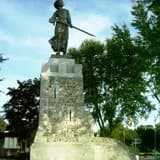
Her death marked the end of a life that straddled the roles of frontier heroine, seigneurial administrator, and self-promoting narrator of her own legend. In the centuries since, she has been mythologized as one of the iconic women of New France, commemorated with a statue erected in Verchères, Quebec in 1913, and remembered in Canadian textbooks, folklore, and popular culture as a symbol of colonial-era female bravery, even as modern historians scrutinize the reliability and self-serving nature of her own testimonies.