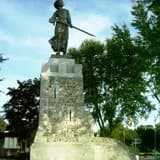
At age 14, Madeleine de Verchères organized the defense of her family's fort during a surprise Iroquois raid, becoming a celebrated heroine of New France.
On October 22, 1692, while most of the adult men of the seigneury of Verchères were working in the fields or absent, a band of Iroquois warriors launched a surprise attack. Marie-Madeleine Jarret de Verchères, then only fourteen years old, was outside the fort when the raid began. According to her own later accounts, she narrowly escaped capture, sprinted back to the fort, and took command in the absence of her parents (who were away) and most of the garrison.
Madeleine rallied the handful of remaining defenders — reportedly including her younger brothers, an elderly soldier, and a few frightened settlers — donned a soldier's hat to disguise the fort's lack of manpower, fired a cannon to signal alarm and deter the attackers, and organized a continuous watch over several days and nights until relief arrived from Montreal. Her quick thinking, composure, and leadership under extreme danger prevented the fort from falling and saved the lives of its inhabitants.
This episode became one of the foundational heroic legends of New France, later embellished and retold in various forms, including in Madeleine's own memoirs written decades afterward to petition for a pension. While historians have since debated the exact details and degree of dramatization in her later narrations, the core event — a teenage girl organizing frontier defense — remains a powerful symbol of female courage and resourcefulness in colonial Canada, later commemorated in statues, literature, and Canadian historical memory.