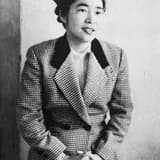
Hasegawa launched her landmark comic strip Sazae-san, becoming one of Japan's first successful female manga artists.
On 22 April 1946, in the immediate aftermath of World War II, Machiko Hasegawa began serializing Sazae-san, a four-panel comic strip depicting the daily life of a spirited, independent-minded young woman and her extended family, in the Fukunichi Shimbun newspaper in Fukuoka. The strip later moved to the Asahi Shimbun, one of Japan's most influential newspapers, where it ran for over two decades.
Sazae-san was groundbreaking for its time: it centered a female protagonist who was witty, occasionally clumsy, and navigated postwar family and social life with humor and resilience, offering Japanese readers a relatable mirror during a period of immense social upheaval and reconstruction. Hasegawa's success made her one of the earliest and most commercially successful female manga creators, paving the way for future generations of women in an industry then dominated by men.
The strip's popularity led to an anime television adaptation in 1969 that continues to air today, making it the longest-running animated television series in the world according to Guinness World Records. Hasegawa's creation became a cultural touchstone, embedding itself into Japanese daily life, language, and even public infrastructure, with statues and museums dedicated to the character and her creator.