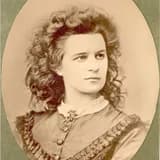
Died at age 42 in Kronstadt (near St. Petersburg), where she had lived after marrying a Russian military doctor.
Lydia Koidula died on August 8, 1886, in the naval garrison town of Kronstadt, near Saint Petersburg, Russia, at the age of 42. She had relocated there in 1873 after marrying Dr. Eduard Michelson, a military physician of Baltic German origin serving in the Russian armed forces.
Her final years were marked by illness, including struggles believed to be linked to breast cancer, as well as by profound homesickness for Estonia, a sentiment richly documented in her later correspondence and poetry. Living far from her native land and the vibrant cultural circles of Tartu and Pärnu that had nurtured her creative output, she nonetheless continued to correspond with key figures of the Estonian national movement and to reflect on national identity and exile in her writing.
Her death was deeply mourned within Estonia, where she had already attained near-legendary status as the 'nightingale of Estonia' and the mother figure of Estonian poetry. In 1946, her remains were reinterred in the Raadi cemetery in Tartu, Estonia, symbolically returning her to the homeland she had celebrated in verse. Her death marked the end of a short but transformative literary career that had helped establish Estonian-language poetry as a legitimate and powerful vehicle for national sentiment, laying essential groundwork for the flourishing of Estonian literature in the following decades and for the broader Estonian national awakening that eventually led to independence in 1918.