← All women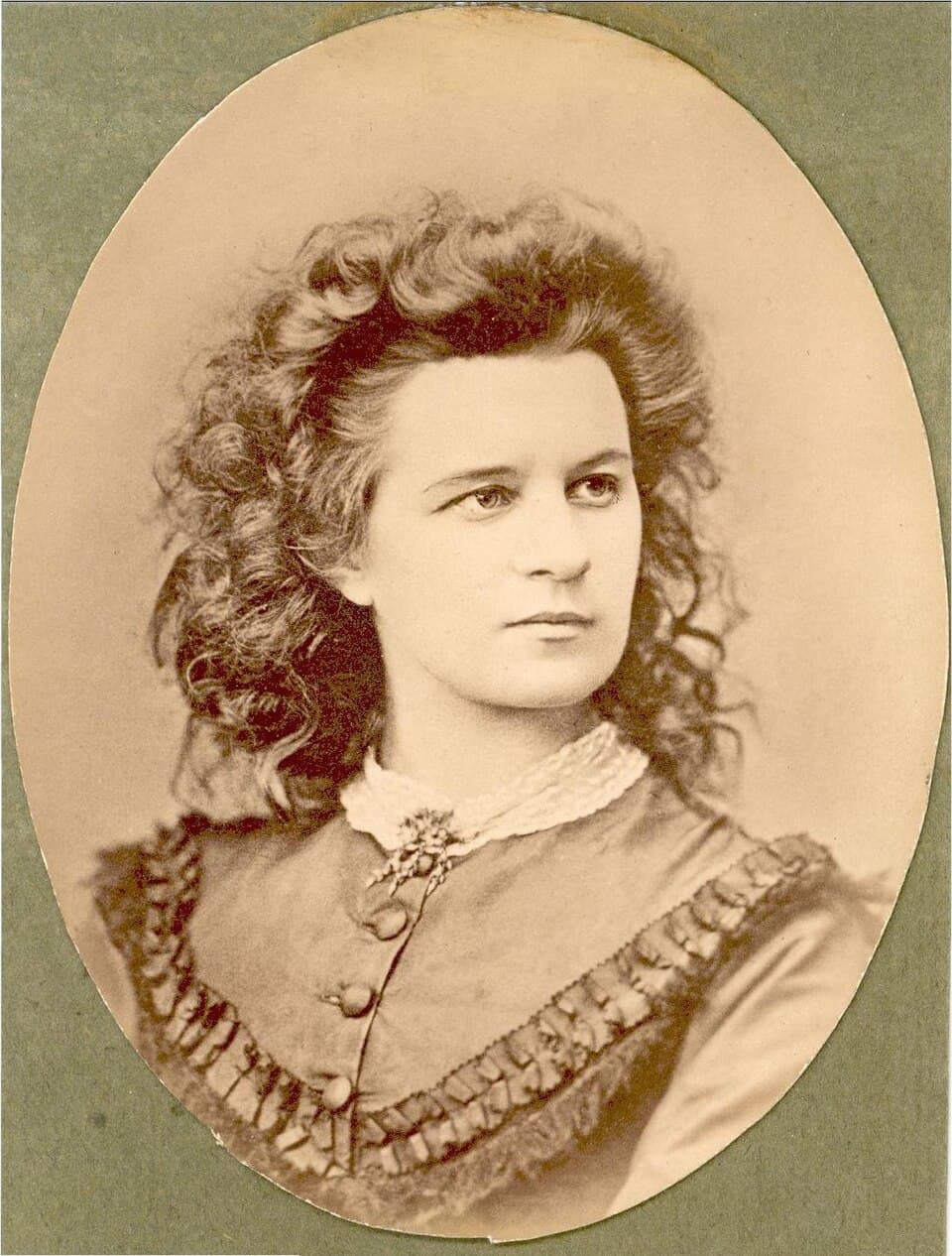
Estonian · Literature · Activism
Lydia Koidula
December 24, 1843 – August 8, 1886
Early Life and Family Background
Lydia Emilie Florentine Jannsen, who would achieve lasting fame under her literary pseudonym Koidula — meaning "of the dawn" in Estonian — was born on December 24, 1843, in the small town of Vändra in the Governorate of Livonia, then a province of the Russian Empire and now part of modern Estonia. She was the eldest daughter of Johann Voldemar Jannsen, a schoolteacher who would go on to become one of the most consequential figures in the Estonian national awakening as a journalist, publisher, and organizer of the first Estonian song festival.
Growing up in a family devoted to the elevation of Estonian language and culture, Lydia was immersed from childhood in an environment where the written word was understood as a tool of social and national transformation. At the time of her birth, Estonian-speaking peasants formed the vast majority of the population in the Baltic provinces, yet cultural, political, and economic power rested almost entirely with a German-speaking landowning and urban elite, alongside the overarching authority of the Russian imperial administration. The Estonian language itself was widely regarded — even by many Estonians — as a rustic vernacular unsuitable for serious literature, science, or public affairs.
Lydia's family moved from Vändra to Pärnu, where her father took over the local school and began publishing one of the first Estonian-language newspapers, Perno Postimees ("Pärnu Postman"), later renamed Eesti Postimees after the family's relocation to Tartu in 1857. This newspaper became an important vehicle for spreading literacy, information, and eventually nationalist sentiment among Estonian-speaking readers. Lydia grew up helping her father with editorial and translation work, gaining an intimate, hands-on education in journalism, publishing, and public communication that few women of her era — Estonian or otherwise — had access to.
Education and Formative Influences
Unlike most Estonian girls of peasant or lower-middle-class background at the time, Lydia received a relatively broad education. She attended a girls' school in Pärnu and later continued her studies in Tartu, where she was trained largely in German, the dominant language of instruction and "polite society" in the Baltic provinces. She became fluent in German alongside her native Estonian, and this bilingualism would define much of her literary career: she wrote extensively in both languages, though her most historically resonant work was composed in Estonian.
Tartu (then known by its German name Dorpat) was home to a university and a lively, if still largely German-dominated, intellectual culture. It was there, working within her father's growing publishing enterprise, that Lydia began to develop her own literary voice. She was influenced by German Romanticism, by the broader currents of European nationalism sweeping through the multi-ethnic Russian Empire, and by the emerging ideology of Estonian national self-assertion championed by figures such as her father and the linguist and folklorist Friedrich Reinhold Kreutzwald, author of the Estonian national epic Kalevipoeg.
Career Beginnings: Poetry and the Estonian National Awakening
Lydia began publishing poetry in the 1860s, initially anonymously or under her father's newspaper mastheads, gradually adopting the pen name "Koidula" — a name evocative of dawn, awakening, and new beginnings, fittingly symbolic of the broader Estonian national movement she was helping to articulate in verse. Her poetry collection Vainlilled ("Meadow Flowers"), published in 1866, is generally regarded as a landmark moment: it was one of the very first substantial collections of original poetry by an Estonian woman, and it helped establish that Estonian could serve as a language of genuine lyrical and emotional expression, not merely practical communication.
This was followed by Emmajõe Öpik ("The Nightingale of the Emajõgi," 1867), a title that cemented Koidula's popular epithet as the "nightingale of Estonia" (Eesti ööbik). Her poems combined personal, often melancholic and romantic themes with an unmistakable current of patriotic sentiment — love for the Estonian homeland, its language, its landscapes, and its people, all articulated at a moment when Estonian identity itself was in the process of being consciously constructed and championed by a small but energetic circle of intellectuals.
Major Works and Literary Achievements
Beyond her poetry collections, Koidula made significant contributions to Estonian-language drama. She is often credited as the author of the first Estonian-language play, Saaremaa onupoeg ("The Cousin from Saaremaa," 1870), a comedy that was performed in Tartu and marked a milestone for Estonian theatrical culture, which had previously been dominated entirely by German-language productions. She also wrote or adapted several other stage works, contributing to the establishment of Estonian as a language fit for public performance and entertainment, not merely private devotion or folk custom.
She was deeply involved in her father's journalistic ventures, contributing prose, translations, and editorial work to Estonian newspapers, and she played a supporting but essential role in the organization of the first Estonian national song festival (laulupidu) in Tartu in 1869 — an event of immense symbolic importance that brought together thousands of Estonian singers and listeners and is often cited as one of the founding moments of modern Estonian national consciousness. The song festival tradition continues in Estonia to this day as a UNESCO-recognized cultural practice.
Koidula's poetic style drew on both folk-song traditions (regilaul) and Western European Romantic verse forms, creating a hybrid literary voice that felt both authentically Estonian and sophisticated enough to stand alongside contemporary German and Russian literature. Her verses were frequently set to music and became embedded in the Estonian choral and popular song tradition; several of her poems remain staples of the Estonian song festival repertoire more than 150 years after they were written.
Personal Life and Marriage
In 1871, Lydia married Dr. Eduard Michelson, a physician of Baltic German descent serving in the Russian military. The marriage necessitated her relocation, around 1873, to Kronstadt, a naval garrison town on Kotlin Island near Saint Petersburg — a location far removed from the Estonian cultural and linguistic environment that had nurtured her creative output. The couple had several children together.
Life in Kronstadt proved isolating for Koidula. Though she continued to correspond extensively with friends, family, and fellow intellectuals in Estonia — including with figures central to the national movement — and continued some literary and journalistic work, her creative output slowed considerably compared to her prolific years in Tartu and Pärnu. Her letters from this period reveal a persistent homesickness and yearning for Estonia, themes that also surface in some of her later poetic fragments. She struggled with declining health in her final years, reportedly suffering from an illness widely believed to have been breast cancer.
Death and Later Recognition
Lydia Koidula died on August 8, 1886, in Kronstadt, at the age of 42. Her death was met with profound grief in Estonia, where she had already become an iconic, almost mythologized figure — the poetic voice of the national awakening, affectionately remembered as the "nightingale of Estonia" and sometimes described as a symbolic "mother of the nation" for her role in giving literary voice to Estonian identity at a pivotal historical moment.
In a powerfully symbolic act of national commemoration, her remains were exhumed and reinterred in 1946 in the Raadi cemetery in Tartu, Estonia — returning her, at last, to the homeland she had so often invoked in her poetry, decades after her death and amid the upheavals of Soviet occupation.
Legacy and Historical Impact
Lydia Koidula is remembered today as the first great female poet of Estonian literature and one of the most important cultural figures of the 19th-century Estonian national awakening (Ärkamisaeg). Her work demonstrated, at a critical juncture, that the Estonian language was fully capable of expressing complex emotional, aesthetic, and national sentiments — a demonstration that helped catalyze the broader movement toward Estonian cultural and eventually political self-determination, culminating in Estonian independence in 1918.
Her poems remain foundational texts in the Estonian literary canon and are still taught in Estonian schools. Numerous streets, schools, and cultural institutions across Estonia bear her name, and her image has appeared on Estonian currency and postage stamps. The Koidula Museum in Pärnu, housed in the building associated with her family, preserves her legacy and documents her life and work for visitors and scholars. Her poetry continues to be performed at the Estonian national song festivals she helped inspire, ensuring that her voice — quite literally — continues to resonate in Estonian cultural life more than a century after her death.
As both a literary pioneer and a symbol of Estonian national identity, Koidula occupies a place in Estonian cultural memory analogous to that of national poets in other small European nations whose 19th-century literary awakenings became inseparable from broader movements toward cultural survival and political nationhood.
Dated achievements
2 indexed.
- Dec241843Science
Birth of Lydia Emilie Florentine Jannsen (Koidula)
Born in Vändra, Estonia, as daughter of Estonian journalist and publisher Johann Voldemar Jannsen.
View details Lydia Koidula - Wikipedia - Aug081886Science
Death of Lydia Koidula in Kronstadt, Russian Empire
Died at age 42 in Kronstadt (near St. Petersburg), where she had lived after marrying a Russian military doctor.