← All women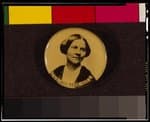
American · Activism
Lucy Stone
August 13, 1818 – October 18, 1893
Early Life and Background
Lucy Stone was born on August 13, 1818, on her family’s farm at Coy’s Hill near West Brookfield, Massachusetts.[1][5][6][9] She was the eighth of nine children of Francis Stone, a prosperous but strict farmer, and Hannah Matthews Stone, who managed the household and worked alongside her husband.[1][5][9] The family descended from long-established New England stock, deeply influenced by Congregationalist and later Baptist religious traditions.[1][4]
Stone grew up in a household that vividly illustrated the legal and economic subordination of women. Her father controlled family property and income, while her mother had no independent legal claim to the farm or the money she helped earn.[1][5] As a child, Lucy watched her mother ask for small sums from her husband and sometimes be refused, an experience she later described as central to her understanding of women’s oppression.[1][9] These early observations convinced her that law and custom, not divine will, created women’s inferior position.
Although Stone loved learning, educational opportunities for girls in rural Massachusetts were limited. She attended local district schools but quickly surpassed the curriculum; when her brothers were prepared for college with Latin and Greek, she was steered toward basic literacy and domestic skills.[1][5] Stone resolved that she would attain the same level of education as a man, even if she had to pay for it herself. By her teens she was reading widely, questioning biblical passages used to justify women’s subordination, and quietly planning a life dedicated to reform.[1][2]
Education and Formative Influences
To finance further schooling, Stone worked as a teacher in rural Massachusetts, discovering both her gift for public speaking and the stark wage disparities between male and female teachers. Men were paid significantly more than women for identical work, a concrete injustice she later used as an example in her speeches on women’s rights.[1][5] She attended several academies, including Mount Holyoke Female Seminary for a brief period, but left when she found its curriculum and rules too restrictive and focused on piety rather than intellectual independence.[1]
Stone researched colleges that admitted women and eventually chose Oberlin College in Ohio, the first coeducational college in the United States.[1][2][7] She enrolled in 1843, supporting herself through teaching and housework. Oberlin was a center of reform, with strong anti-slavery activity and a commitment to educating African American students as well as women.[2][7] Stone’s experiences there deepened her abolitionist convictions and exposed her to radical thinkers such as William Lloyd Garrison and Frederick Douglass, whom she met around the time of her graduation.[2][6]
Oberlin’s policies nonetheless reflected prevailing gender norms. Women were permitted to take many of the same classes as men but were discouraged from debate, public speaking, and certain advanced studies.[1][5] In protest, Stone refused to deliver the customary commencement address expected of outstanding graduates, objecting to institutional controls on women’s oratory.[5] Despite these tensions, she completed the "gentleman’s course" of study and on August 25, 1847, received her baccalaureate degree, becoming the first woman from Massachusetts to earn a college degree.[2][5][6][8] This achievement provided her with both a credential and a platform for her future career as a reformer.
Career Beginnings: Abolition and Public Lecturing
After graduating in 1847, Stone accepted a position as a paid traveling lecturer for the Massachusetts Anti-Slavery Society, and soon also worked with the American Anti-Slavery Society.[2][6][9] Beginning in 1848, she toured New England and the Midwest speaking against slavery and, increasingly, about women’s rights.[2][6] Her eloquence, clear logic, and emotional depth drew large audiences, though she also faced heckling, threats, and denunciations from those who believed women should not speak publicly.[1][9]
Stone’s lectures were often held in churches and town halls, where she confronted religious arguments used to justify slavery and female subordination. She reinterpreted biblical texts, insisting that "the Bible was not designed to teach that women are inferior" and challenging clergy who quoted Paul’s injunctions against women speaking in church.[1][5] These engagements forced communities to confront long-ignored questions of race, gender, and authority.
By the late 1840s, Stone’s reputation as a speaker had grown dramatically. She became one of the first women to speak professionally and full-time on women’s rights as well as abolition, a role that required constant travel and exposed her to criticism for stepping outside the "proper sphere" of women.[9] Her decision to appear on public platforms, often before mixed-gender audiences, directly contested cultural norms and provided a living model of women’s intellectual and political capacity.
Major Contributions to the Women’s Rights Movement
Worcester and the First National Woman’s Rights Convention
Although Stone did not attend the 1848 Seneca Falls Convention, she quickly became a central figure in the emerging women’s rights movement.[2][5] In 1850 she helped organize the First National Woman’s Rights Convention in Worcester, Massachusetts, serving as primary organizer and a leading speaker when the convention opened on October 23, 1850.[2][8][9] Delegates from numerous northern states attended, making it the first large-scale national gathering devoted specifically to women’s rights.[2][9]
At Worcester, Stone delivered speeches calling for women’s suffrage, equal pay, expanded educational opportunities, and reforms to marriage and property laws.[2] She argued that "the consent of the governed" must include women and criticized legal doctrines that treated wives as dependents. The convention’s proceedings were widely reported in newspapers and published in pamphlet form, extending the reach of Stone’s ideas far beyond Massachusetts. The Worcester meeting also established an annual pattern of national woman’s rights conventions, many of which Stone attended and sometimes presided over.[2][7]
Influence on Susan B. Anthony and Other Reformers
Stone’s impact on fellow activists was substantial. At the National Woman’s Rights Convention in Syracuse in 1852, her speech is credited with converting Susan B. Anthony to the women’s rights cause.[2][5] Anthony, already an abolitionist temperance reformer, later recalled that Stone’s argument and example convinced her that women must organize specifically for their own rights. This encounter helped seed the later partnership—sometimes rivalrous—between Stone’s wing of the movement and that led by Anthony and Elizabeth Cady Stanton.
Stone participated in several subsequent conventions, including those held in 1852, 1853, and 1855, and served as president of the 1856 National Woman’s Rights Convention in New York City.[2] Through these meetings she advanced proposals for married women’s property acts, divorce law reform, and women’s admission to professions such as law and medicine. Her speeches emphasized both natural rights philosophy and practical injustices faced by women, from wage discrimination to custody laws.
Marriage, Name Retention, and Personal Protest
On May 1, 1855, Lucy Stone married Henry Browne Blackwell, a fellow abolitionist and women’s rights supporter.[5][7][10] The ceremony was notable for the couple’s unconventional vows, which publicly denounced existing marriage laws that gave husbands legal control over wives’ property, wages, and even their children.[1][5] Stone declared that she and Blackwell would live in "equal relation" and that she would not thereby lose her individual identity.
Most famously, Stone refused to take Blackwell’s surname, continuing to be known as Lucy Stone.[5][7][8] This decision, widely reported and discussed, challenged the doctrine of coverture and the custom that a woman’s legal and social identity should be absorbed into her husband’s. Although earlier isolated cases of name retention may have occurred, Stone became the most prominent and emblematic example, leading newspapers to coin the term "Lucy Stoner" for women who similarly kept their names.[8][9]
The couple’s stance drew mockery and criticism but also sparked public debate about women’s legal rights within marriage. Their household became a laboratory for egalitarian practices, including shared decision-making and cooperation in reform work. Stone’s marriage did not slow her activism; she continued lecturing extensively and used her own experience to illustrate how marriage law could be reformed to respect women’s autonomy.
Frontier Speaking and Combined Reform Advocacy
Stone’s commitment to reaching new audiences took her beyond the Northeast. On July 4, 1856, she delivered what is recognized as the first women’s rights and anti-slavery speech by a woman in Viroqua, Wisconsin.[5] Speaking on Independence Day, she juxtaposed patriotic celebrations with the realities of slavery and women’s legal subordination, arguing that American freedom was incomplete so long as millions remained in bondage and half the population lacked citizenship rights.
This frontier address exemplified Stone’s strategy of linking causes: she saw abolition and women’s rights as intertwined struggles against arbitrary power and unjust law. Her presence in western communities demonstrated that women reformers could travel, speak, and influence opinion far from established urban centers. The speech helped extend suffrage and anti-slavery networks into the Midwest, a region whose emerging political influence would be critical in the Civil War and Reconstruction eras.
Organizational Leadership: NEWSA and AWSA
After the Civil War, debates over the Fourteenth and Fifteenth Amendments fractured the women’s movement. Stone supported enfranchising Black men through the Fifteenth Amendment, even though it did not include women, believing that securing voting rights for formerly enslaved men was an urgent priority and could create momentum for women’s suffrage.[1][9]
In this context, Stone and Julia Ward Howe co-founded the New England Woman Suffrage Association (NEWSA) in November 1868, regarded as the first major political organization focused specifically on women’s suffrage.[1][8] NEWSA concentrated on lobbying state legislatures, organizing campaigns for school suffrage and municipal voting rights for women, and electing sympathetic officials. Its formation signaled a shift toward sustained, regionally structured political work rather than sporadic conventions.
At the Eleventh National Woman’s Rights Convention in 1866, Stone joined Lucretia Mott, Stanton, and Anthony in transforming the convention into the American Equal Rights Association (AERA), intended to promote universal suffrage regardless of sex or race.[1][5] However, disagreements over the Fifteenth Amendment and relations with political parties led to AERA’s collapse. In 1869, Stone helped found the American Woman Suffrage Association (AWSA), based in Boston, which became the principal organization representing her strategic approach: working with Republicans and focusing on state-level campaigns.[2][7][8]
AWSA contrasted with the National Woman Suffrage Association (NWSA), led by Stanton and Anthony, which prioritized a federal amendment and adopted a more confrontational stance. While the two organizations sometimes competed, both contributed significantly to the eventual success of the suffrage movement. Stone’s leadership in AWSA included organizing state campaigns, editing publications, and coordinating with local suffrage societies across the country.[2][8]
The Woman’s Journal and Editorial Work
Recognizing the need for a consistent national voice, Stone became central in founding the weekly newspaper The Woman’s Journal in Boston in 1870.[1][2][8] With her husband Henry Blackwell and later her daughter Alice Stone Blackwell, she edited the paper, which quickly became the leading suffrage publication in the United States.[2][7][9] The Woman’s Journal reported on legislative campaigns, suffrage meetings, and women’s achievements, and published essays on legal reform, education, and labor issues.
Stone used the Journal to keep activists informed and to counter hostile portrayals of suffragists in mainstream newspapers. The paper printed speeches, convention proceedings, and international news about women’s rights, fostering a sense of shared movement identity.[2][8] Its wide circulation helped normalize the idea of women voting and participating in public life, reaching readers who might never attend a suffrage meeting.
By the early 1870s, Stone had shifted much of her energy from itinerant lecturing to editorial and organizational work, though she continued to speak at major conventions. The Woman’s Journal remained a central institution of the movement for nearly fifty years, well beyond Stone’s lifetime, illustrating the enduring impact of her decision to invest in print culture as a tool for reform.[2][8]
Address to the U.S. House Judiciary Committee
In 1871, Stone broke new ground by becoming the first woman to address the U.S. House Judiciary Committee on the topic of women’s suffrage.[1][8] Appearing before this congressional committee, she argued that the denial of the vote to women was inconsistent with American republican principles and with recent constitutional developments expanding citizenship.
Stone’s testimony marked a significant step in the movement’s strategy: suffragists were no longer petitioning only state legislatures or holding independent conventions, but directly engaging with committees in Congress. Although the committee did not immediately endorse suffrage, her presence signaled growing recognition of women as legitimate interlocutors in national policymaking. Later suffrage leaders who lobbied Congress built on this precedent of women speaking formally within the halls of power.
Awards, Honors, and Recognition
During her lifetime, Stone did not receive the kind of official state honors that later activists would enjoy, in part because women’s suffrage remained controversial. However, she was widely respected within reform circles and was often introduced at meetings as the "morning star" of the women’s rights movement, a phrase highlighting her role as an early herald of change.[9]
Her prominence led to frequent coverage in newspapers and reform periodicals, and she was repeatedly invited to speak at major national gatherings, including the World’s Columbian Exposition in Chicago in 1893, where she delivered one of her last public addresses.[1] Posthumously, Lucy Stone has been honored by historical societies, women’s organizations, and government agencies. The National Park Service includes her among key figures in its Women’s Rights National Historical Park materials.[2][6] The Boston Women’s Heritage Trail features her biography and highlights sites connected to her life.[4]
Modern encyclopedias, including Encyclopaedia Britannica, and institutions such as the National Women’s History Museum have published detailed profiles of Stone, recognizing her as a pioneer of both abolition and women’s rights.[1][3][9] These later honors reflect the long-term reevaluation of her contributions, especially her organizational work and her insistence on linking personal choices—such as name retention—to broader legal reforms.
Personal Life and Family
Lucy Stone’s marriage to Henry Browne Blackwell was both a personal partnership and a political alliance. Blackwell, a British-born abolitionist and reformer, strongly supported women’s rights and agreed to the egalitarian framework Stone insisted on.[5][7] The couple collaborated closely in suffrage campaigns and in editing the Woman’s Journal, often sharing the burdens of travel and organizational work.[2][8]
In 1857, they had a daughter, Alice Stone Blackwell, who later became a prominent suffragist and journalist in her own right.[5][7] Alice grew up immersed in reform discussions and eventually joined her parents in editing the Woman’s Journal, translating works by foreign feminists and advocating for a broad range of women’s causes.[2]
Stone’s personal life reflected the challenges of balancing domestic responsibilities with public activism in an era when women were expected to remain in the home. She often arranged childcare and household management around lecture tours and editorial deadlines. Nevertheless, she maintained close ties with her extended family and used her experiences as a wife and mother to argue that women’s insight into family life strengthened their claim to a voice in lawmaking.
Later Life and Death
In her later years, Stone increasingly focused on editing the Woman’s Journal and advising younger activists rather than undertaking the grueling lecture tours of her youth.[2][8] She remained active in suffrage conventions and continued to advocate for legal reforms concerning married women’s property, divorce, and child custody.
In 1893, Stone traveled to Chicago to speak at the World’s Columbian Exposition, where she reviewed the progress of the women’s movement and called for renewed efforts to secure the vote.[1] Shortly afterward, she fell ill with stomach cancer. According to accounts, she faced her illness calmly, expressing confidence that the movement would ultimately succeed even if she did not live to see it.
On October 18, 1893, Lucy Stone died at her home in Dorchester, Massachusetts, at age seventy-five.[3][5][6][9] She was buried at Forest Hills Cemetery in Jamaica Plain, Boston, and was the first person in Massachusetts to be cremated, a choice consistent with her willingness to challenge tradition.[4][6] Her death came twenty-seven years before the ratification of the Nineteenth Amendment, but many contemporaries acknowledged that her decades of organizing, lecturing, and editing had laid crucial groundwork for that victory.
Legacy and Historical Impact
Lucy Stone’s legacy is multi-faceted. As an abolitionist, she helped galvanize public opinion against slavery through hundreds of lectures across the North and Midwest, often facing hostile crowds and social ostracism.[2][9] Her insistence on connecting racial justice and gender equality influenced the broader reform culture of the nineteenth century, in which many activists crossed boundaries between causes.
As a women’s rights advocate, Stone pioneered both the rhetoric and the organizational forms that would sustain the movement. Her role in organizing the 1850 Worcester convention, her presidency of later national meetings, and her co-founding of NEWSA and AWSA helped transform scattered grievances into a coherent political campaign.[2][7][8] She demonstrated that women could lead complex organizations, manage finances, edit newspapers, and engage with legislators on equal terms, challenging stereotypes of women as unsuited to public leadership.
Stone’s personal choices—especially her refusal to take her husband’s surname—had symbolic power beyond their immediate circumstances. The figure of the "Lucy Stoner" became a reference point in debates about women’s legal identity, inspiring generations of women who chose to retain their names or otherwise assert autonomy within marriage.[8] Her marriage vows and writings helped push states toward reforms that recognized married women’s property and contract rights.
Through the Woman’s Journal, Stone shaped public discourse for decades. The paper provided continuity to the movement, preserving its history and connecting activists across time and space. By documenting campaigns, publishing arguments, and highlighting women’s achievements, the Journal helped ensure that the suffrage cause remained visible even during periods when legislative progress was slow.[2][8]
Historians now recognize Lucy Stone as one of the central architects of the U.S. women’s rights movement, alongside figures such as Stanton, Anthony, and Mott. Her strategic choices—supporting the Fifteenth Amendment, emphasizing state campaigns, and prioritizing organizational stability—sometimes put her at odds with other leaders, but they also broadened the coalition for women’s rights and anchored the movement in everyday political processes.[1][2][9]
Modern scholarship and public history initiatives, including biographies, museum exhibits, and heritage trails, continue to highlight Stone’s contributions. She is remembered not only for her firsts—such as being the first Massachusetts woman to earn a college degree and the first woman to address the House Judiciary Committee on suffrage—but also for her perseverance, intellectual rigor, and commitment to linking personal life with political principle.[2][3][4][8][9] Her life story remains a powerful example of how one individual’s refusal to accept injustice can help transform law, custom, and culture.
Dated achievements
8 indexed.
- Aug131818Activism
Birth of Lucy Stone
Lucy Stone was born in West Brookfield, Massachusetts.
View details Britannica: Lucy Stone Biography - Aug251847Activism
First Massachusetts woman to earn a college degree
Lucy Stone graduates from Oberlin College, becoming the first Massachusetts woman to earn a college degree.