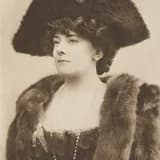
The Houston–Mount Everest Flight Expedition, financed by Lady Houston, achieved the first flight over Everest's summit with pilots Douglas-Hamilton and McIntyre.
On 3 April 1933, aircraft from the Houston–Mount Everest Flight Expedition achieved a landmark first in the history of aviation and exploration: flying over the summit of Mount Everest, the highest point on Earth. The expedition was conceived and almost entirely financed by Lucy, Lady Houston, who was drawn to the daring and patriotic nature of the endeavour at a time when Everest's summit had not yet been reached on foot.
Two modified Westland Wallace biplanes took part, fitted with superchargers and special oxygen equipment to cope with the extreme altitude and thin air above 29,000 feet. The lead aircraft was flown by the Marquess of Clydesdale, Douglas Douglas-Hamilton, with observer Colonel Stewart Blacker, while a second aircraft carried pilot David McIntyre and photographer Sidney Bonnett.
The flight required extraordinary courage: the pilots faced violent turbulence, extreme cold, and the constant risk of engine failure at altitudes where a forced landing would have been fatal. Aerial photographs taken during the flight provided valuable scientific and cartographic data about the Himalayan region years before the mountain was successfully climbed in 1953. The achievement stands as a testament to British aeronautical engineering and to Houston's willingness to fund audacious, nationally significant projects that furthered exploration and technology.