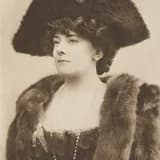
Lady Houston's £100,000 donation enabled the Supermarine S.6B to win the Schneider Trophy at Calshot, securing it permanently for Britain.
On 13 September 1931, the British team flying the Supermarine S.6B won the Schneider Trophy race at Calshot, achieving the third consecutive victory needed to win the trophy outright for Britain. This triumph would not have been possible without the extraordinary intervention of Lucy, Lady Houston, who personally donated £100,000 (an immense sum equivalent to millions today) after the British Government withdrew funding for the team amid the economic pressures of the Great Depression.
Houston was outraged that a Labour government would deny Britain the chance to compete, declaring she would rather sell her jewels than see the country humiliated. Her donation allowed Supermarine, under chief designer R.J. Mitchell, to complete and race the S.6B, which not only won the trophy but also set a world air speed record shortly afterward.
The technological lessons learned from the S.6B's high-speed engine and airframe design directly informed Mitchell's subsequent work on the Supermarine Spitfire, the fighter aircraft that would prove pivotal in the Battle of Britain less than a decade later. Houston's single act of philanthropy is therefore widely credited with an outsized impact on British aviation history, earning her the popular epithet 'the woman who saved Britain' or 'the mother of the Spitfire.'