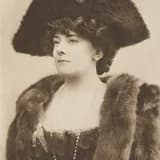
Lucy, Lady Houston died in Highgate, London, aged 79, reportedly after refusing food following the abdication crisis.
Lucy, Lady Houston died on 29 December 1936 at her home in Highgate, London, at the age of 79. Her death came shortly after the abdication crisis of King Edward VIII, an event that reportedly distressed her deeply given her fierce patriotism and monarchist sympathies; some accounts suggest she refused food in the weeks preceding her death as a result of her despair over the crisis.
By the time of her death, Houston had become one of the most colorful and controversial figures in interwar Britain: a former chorus girl turned multi-millionairess, a committed suffragette, a decorated philanthropist, and a fierce, often abrasive critic of the National Government through her ownership of the Saturday Review. Her financial interventions in aviation, most notably her funding of the Schneider Trophy team and the Houston–Mount Everest Flight Expedition, had already cemented her reputation as an eccentric but historically consequential patron of British aeronautical achievement.
Her death marked the end of a life that spanned dramatic social transformation, from Victorian music halls to the front lines of technological and imperial ambition in the 1930s. She left behind a substantial fortune and a legacy inseparably tied to the development of the Supermarine Spitfire, the aircraft that would prove indispensable to Britain's survival in the Second World War, a conflict she did not live to see.