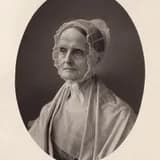
Mott and other female American delegates were denied full participation at the World Anti-Slavery Convention in London due to their gender.
On June 12, 1840, Lucretia Mott traveled to London as a delegate to the World Anti-Slavery Convention, only to be informed—along with other female American delegates—that women would not be permitted to take their seats on the convention floor or participate in debate. Instead, women were relegated to a segregated gallery, permitted only to observe the proceedings in silence.
This blatant exclusion, despite the delegates' credentials as accredited representatives of American abolitionist societies, was a galvanizing injustice. It was at this convention that Mott first met Elizabeth Cady Stanton, who had accompanied her new husband to the meeting. The two women, outraged by their treatment, walked the streets of London discussing the need for a movement dedicated specifically to women's rights.
This encounter is widely credited by historians as the spark that would, eight years later, lead to the organization of the Seneca Falls Convention of 1848—the first women's rights convention in American history. The London exclusion thus stands as one of history's great ironies: an event meant to advance human freedom became the catalyst for a new front in the fight for equality, illustrating how the abolitionist movement's own internal contradictions helped birth organized American feminism.