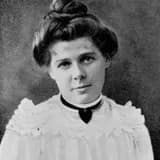
Louise Mack died on 23 November 1935 in Manly, New South Wales, Australia, leaving a legacy as novelist, poet, and pioneering war correspondent.
Louise Mack died on 23 November 1935 in Manly, a coastal suburb of Sydney, New South Wales, at the age of 65. By the time of her death, she had authored numerous novels, children's books, and volumes of verse, and had built a substantial career as a journalist and literary critic across Australia, England, and Italy.
Her later years were marked by declining literary prominence compared to her heyday in the 1890s and 1900s, and she experienced financial difficulties, but she continued writing and remained a respected, if somewhat faded, figure of Australian letters. She had returned to Australia after decades spent largely in Europe, including extended periods in London and Florence, where she had been part of expatriate literary and artistic circles.
Mack's legacy endures primarily through her semi-autobiographical novel Teens: A Story of Australian Schoolgirls (1897), regarded as a pioneering work of Australian girls' fiction, and through her groundbreaking work as a war correspondent in Belgium in 1914, which is increasingly recognised by historians as an important early instance of women reporting directly from a war zone. Her death marked the end of a life that spanned the late Victorian colonial world, the Federation of Australia, and the trauma of the First World War, reflecting the sweeping changes experienced by women of her generation in literature and public life.