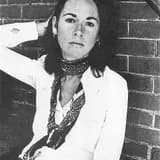
Glück's debut poetry collection, Firstborn, was published, establishing her as an emerging American poet.
In October 1968, Louise Glück published her first collection of poems, Firstborn, with New American Library. The book, written in a tight, formal style influenced by poets such as Robert Lowell and Sylvia Plath, introduced readers to Glück's early preoccupations with family, identity, and psychological interiority.
Though later regarded by Glück herself as stylistically immature compared to her mature work, Firstborn was a critical debut that announced a rigorous new voice in American poetry. The collection received attention for its controlled, often startling imagery and its unflinching engagement with personal pain, themes that would recur and deepen throughout her six-decade career.
This first publication came after a period of personal difficulty, including Glück's struggle with anorexia as a teenager and her subsequent psychoanalysis, which she credited with sharpening her capacity for self-examination and precise language. The publication of Firstborn marked her entry into the American poetry establishment and set her on a path that would eventually lead to the Pulitzer Prize, the National Book Award, and the Nobel Prize in Literature. It remains a foundational text for understanding the evolution of her voice from formalist beginnings to the mythic, distilled style of her later masterworks.