← All women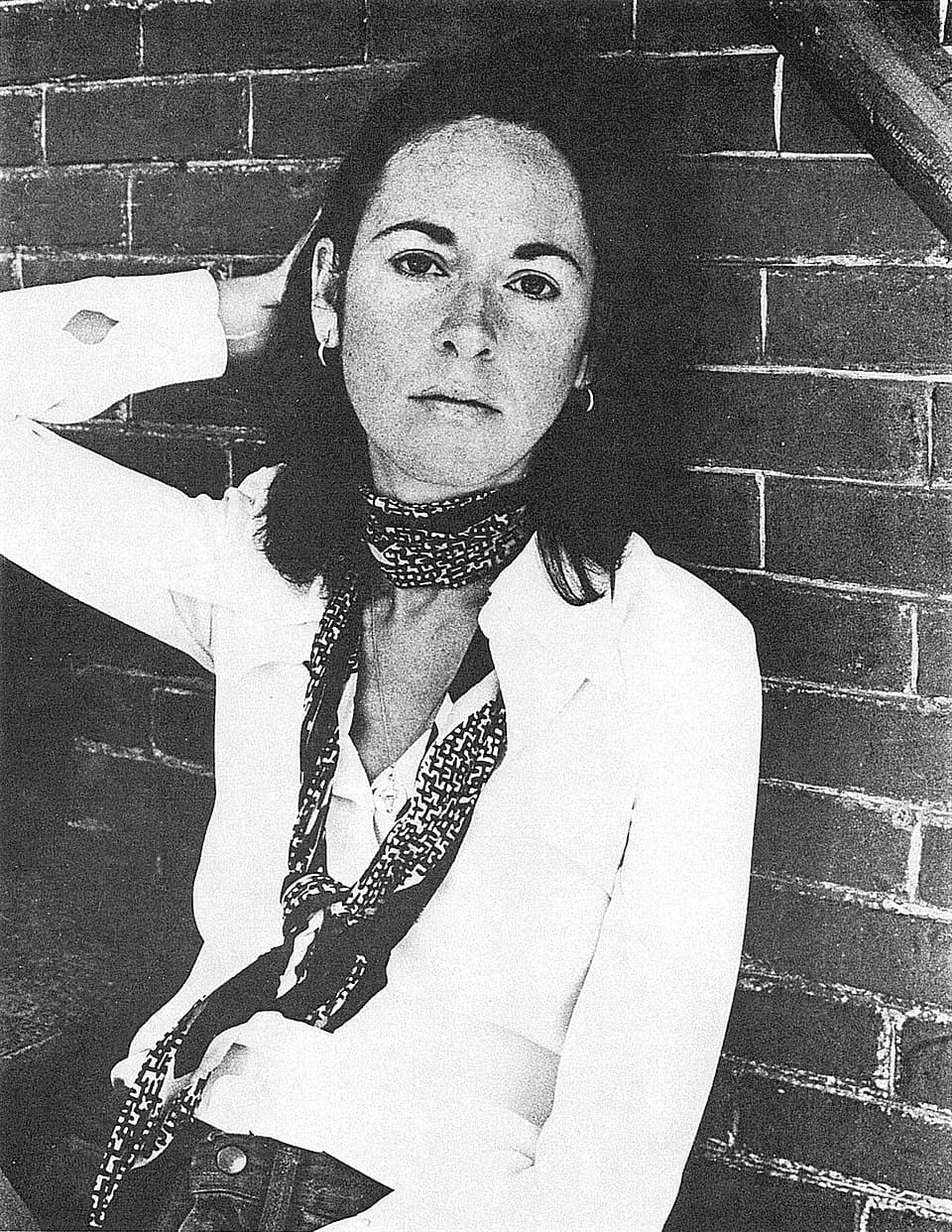
American · Literature
Louise Glück
April 22, 1943 – October 13, 2023
Early Life and Background
Louise Elisabeth Glück was born on April 22, 1943, in New York City, New York.[4][6][8][11] She grew up on Long Island in a Jewish family of Hungarian heritage, an identity that would inform but not dominate her later work.[4][7][12] Her father, Daniel Glück, was a businessman who had aspired to be a writer and helped invent the X-Acto knife; her mother, Beatrice, was a homemaker whose family background included experiences of migration and loss, shaping the emotional register of the household.[4] Glück later described herself as a solitary child whose deepest satisfactions came from reading.[12]
Glück attended George W. Hewlett High School in Hewlett, New York, graduating in 1961.[7] During adolescence she developed anorexia nervosa, a serious eating disorder that led to years of psychoanalytic treatment.[4][12] She has spoken of this period as formative both psychologically and artistically, forcing a confrontation with mortality and the limits of the self that would recur as themes in her poetry.
After high school, Glück studied at Sarah Lawrence College and later at Columbia University, though she did not complete a bachelor’s degree.[1][4][7][12] Instead, she immersed herself in the literary world through intensive private study and writing. She studied poetry with Stanley Kunitz, one of the major American poets of the twentieth century, whose mentorship helped refine her technical skills and sense of poetic vocation.[10]
Career Beginnings and Development
Glück’s early career was marked by both precocity and struggle. She began publishing poems in literary magazines in her twenties while working various jobs to support herself. Her first major milestone came with the release of her debut collection Firstborn in 1968, published in October of that year.[2][4][13] The volume introduced readers to a voice that was stark, emotionally intense, and formally disciplined, often confronting family conflict and psychic pain.
The reception of Firstborn established Glück as a promising, if austere, new poet. Yet she experienced a period of creative crisis afterward, publishing relatively little and reassessing her approach to poetry. This interval of self-scrutiny resulted in a deepened commitment to precision and a movement away from explicitly confessional modes toward a more mythic and allegorical register.
Her second collection, The House on Marshland (1975), marked a new phase, employing symbolic landscapes and intimate yet oblique narratives.[4][1] Subsequent books such as The Garden and Descending Figure continued to refine her lyric idiom. Throughout the 1970s and 1980s she supported herself in part through teaching positions at institutions including Goddard College and later Williams College, sharing her developing aesthetic with students while building a body of work recognized for its severity and clarity.[4][1]
Major Works and Artistic Trajectory
Glück’s breakthrough to broader recognition came with The Triumph of Achilles, published in the mid-1980s.[3][4] This collection engages classical myth—particularly the figure of Achilles—to examine vulnerability, love, and mortality. It cemented her reputation as a poet who could use mythic frameworks to illuminate psychological realities. On March 12, 1985, she received the National Book Critics Circle Award for Poetry for this volume, a major critical affirmation of her work.[3]
Her next landmark collection, Ararat (1990), is often seen as one of her most directly autobiographical books, probing family relationships, grief, and the legacies of parents. It earned the Rebekah Johnson Bobbitt National Prize for Poetry from the Library of Congress, further elevating her standing.[3] In Meadowlands (1996), Glück braided the story of a dissolving marriage with the Odyssey, exploring betrayal, endurance, and the passage of time through a mixture of irony and gravitas.[4]
The collection that arguably stands at the center of her achievements is The Wild Iris, published in 1992.[3][4] Structured as a conversation among a gardener, a deity, and flowers, the book meditates on suffering, renewal, and the conditions of spiritual address in a secular age. On April 13, 1993, The Wild Iris received the Pulitzer Prize for Poetry, bringing Glück the nation’s most prestigious poetry award and confirming the book’s status as a modern classic.[4][6][13]
In the late 1990s and early 2000s, Glück continued to experiment. Vita Nova (1999) explores rebirth after loss and won the Boston Book Review’s Bingham Poetry Prize and The New Yorker’s Book Award in Poetry.[3] The Seven Ages (2001) considers memory, aging, and the retrospect of a life in art. Her collection Averno (2006) revisits the Persephone myth to investigate the border between life and death and was a finalist for the National Book Award.[3][4]
Glück’s later work shows a continued willingness to change her methods. A Village Life (2009) broadens her scope to a quasi-European village setting, while Faithful and Virtuous Night (2014) adopts more narrative, prose-like forms to explore aging and the artist’s self-conception. The latter volume won the National Book Award for Poetry, underscoring her continuing innovation in late career.[3][4]
Awards, Honors, and Recognition
Glück’s career is distinguished by an exceptional array of awards and honors. Beyond the Pulitzer, NBCC Award, and National Book Award, she received numerous fellowships and prizes that recognized both individual books and her lifetime achievement.
Early in her career, she was awarded a National Endowment for the Arts fellowship in poetry in 1970 and a Guggenheim Fellowship in 1975, followed by a second Guggenheim in 1987.[4][1] These grants provided crucial support during years of artistic development. In 1986, she won the Sara Teasdale Memorial Prize at Wellesley, and in 1999 she received the Lannan Literary Award for Poetry, reflecting strong recognition from philanthropic and academic institutions.[4]
Her standing in the scholarly community was affirmed by election to the American Academy of Arts and Sciences in 1993 and to the American Academy of Arts and Letters in 1996.[4] She also received an honorary doctorate from Middlebury College in 1996, acknowledging her influence on the broader humanities.[4]
In 2000, Glück was awarded the MIT Anniversary Medal (the School of Humanities, Arts, and Social Sciences 50th Anniversary Medal), celebrating her contributions to literature.[4] The same era saw her winning the Bollingen Prize in Poetry in 2001, with Yale University announcing the award on March 27, 2001.[2][13] In 2007, she received the L.L. Winship/PEN New England Award for Averno, and in 2008 the Wallace Stevens Award from the Academy of American Poets, honoring mastery in the art of poetry.[3][4]
Her international recognition expanded with the Griffin Poetry Prize (International) in 2009 for A Village Life, followed by another Griffin-related finalist recognition in 2010.[4] In 2012, she won the Los Angeles Times Book Prize for Poetry for Poems 1962–2012, a volume that consolidated her work across fifty years.[4]
Glück’s institutional prominence was further underscored by her appointment as the 12th Poet Laureate Consultant in Poetry to the Library of Congress for the 2003–2004 term, announced on August 29, 2003.[4] In 2014, she was elected to the American Philosophical Society, one of the oldest learned societies in the United States.[4] On September 10, 2015, the American Academy of Arts and Letters awarded her its Gold Medal for Poetry, one of its highest honors.[3]
On September 22, 2016, she received the National Humanities Medal from President Barack Obama during a White House ceremony, honoring her "probing poems" that capture "the quiet drama of nature and the persistence of myth."[10] In 2020, she received the Tomas Tranströmer Prize, further cementing her international stature.[4]
The pinnacle of her recognition came on October 8, 2020, when the Swedish Academy announced that she had been awarded the Nobel Prize in Literature "for her unmistakable poetic voice that with austere beauty makes individual existence universal."[2][8][13] She was living in Cambridge, Massachusetts, at the time and received the prize as sole laureate for that year.[8]
Teaching Career and Professional Roles
Alongside her writing, Glück had a significant career as a teacher of poetry. She held positions at institutions such as Goddard College, Iowa, and Williams College, where she influenced generations of students.[4][1] Her teaching style emphasized close reading, technical rigor, and honesty about the emotional stakes of writing.
Later, she became a professor of English at Yale UniversityStanford University and Boston University in visiting roles.[4][13] At Yale, she served as a key figure in the creative writing program, mentoring many emerging poets. Her dual identity as both a major poet and a respected teacher extended her impact well beyond her books.
Her appointment as U.S. Poet Laureate in 2003–2004 formalized her role as a public representative of poetry, during which she advised the Library of Congress and promoted poetry nationwide.[4] She also participated in readings, lectures, and editorial work, helping shape contemporary poetry discourse.
Personal Life
Glück’s personal life, while often guarded in public, is relevant to understanding her work. She was married and divorced twice, experiences that inform the marital disillusionments depicted in books like Meadowlands.[4] She had one son, whose presence and absence in various poems attests to the centrality of motherhood and family relationships in her imaginative world.[4][11]
Much of her adult life was spent in New England, especially in Vermont and Massachusetts. She eventually settled in Cambridge, Massachusetts, which became a primary base for both her writing and teaching.[8][13] Friends and colleagues often described her as both exacting and generous: rigorously critical in her literary judgements yet deeply committed to supporting younger writers.
Her struggles with anorexia in youth, and ongoing engagement with themes of illness and mortality, contributed to a body of work that does not shy away from pain. Psychoanalysis played a role in her recovery and influenced her interest in the unconscious and the structures of family memory, evident in poems that probe buried grievances and unspoken desires.[4]
Poetic Style, Themes, and Influence
Glück’s poetry is widely praised for its technical precision, austere lyricism, and psychological depth.[1][6][8] She often writes in a pared-down, clear language that eschews ornament. Critics have noted that her work combines aspects of confessional poetry with a more impersonal, mythic framework, using figures from Greek and Roman mythology—such as Persephone, Dido, and Achilles—to refract contemporary experience.[4][8]
Major themes in her writing include motherhood, family conflict, marriage and separation, intimacy, the body, death, grief, and natureThe Wild Iris and A Village Life.
Glück has stated that personal experience is an important touchstone for her work, but she resists simple identification of speaker and author.[8] She frequently employs dramatic monologue and shifting personae, enabling her to explore multiple perspectives on a single situation. Her use of daily spoken language, combined with rhetorical severity, has made her work both accessible and demanding.
Among her influences, Glück has cited the English-language poetic tradition, including figures such as Eliot and Stevens, as well as classical mythology.[8] Critics also place her in conversation with contemporaries in the American lyric tradition, though her voice is often described as unusually pure and uncompromising.
Her influence on later poets is substantial. Many younger writers, particularly women, look to her work as a model for how to treat domestic and intimate material with seriousness, how to incorporate myth without grandiosity, and how to combine emotional intensity with formal restraint. Her teaching extended this influence directly, creating ripple effects through the careers of her students.
Legacy and Historical Impact
Glück’s legacy is multifaceted. She is widely considered one of the most important American poets of the late twentieth and early twenty-first centuries.[1][4][6] Her work helped redefine the possibilities of the lyric, showing that short, intensely focused poems can address philosophical and spiritual questions without abandoning the particularities of family and personal life.
In the context of women’s literary history, Glück’s career marks a significant shift. She emerged at a time when women poets were gaining visibility but still faced skepticism regarding their capacity for major, canonical work. By accumulating the Pulitzer Prize, National Book Award, Bollingen Prize, National Humanities Medal, Gold Medal for Poetry, and ultimately the Nobel Prize in Literature, she demonstrated that a woman poet could be recognized at the highest levels across multiple institutions.[4][6][8][13]
Her poems give shape to experiences often relegated to the margins—motherhood, domestic conflict, female bodily vulnerability—while insisting on their universal significance. This insistence has influenced how later critics and anthologists conceive the scope of "major" themes in poetry, contributing to a more inclusive canon.
Glück’s impact extends globally. The Nobel Prize brought renewed international attention, leading to translations and new readers beyond the Anglophone world.[8][13] Scholars now place her in dialogue with world poets and compare her work to other Nobel laureates, including women such as Wislawa Szymborska. Her poetics of austerity—stripped-down language, cool tone, intense feeling—has become a reference point in discussions of contemporary lyric modes.
Institutions where she taught, especially Yale, continue to highlight her role in their creative writing programs, emphasizing her contribution to cultivating new talent.[4][13] Her essays on poetry also shape critical discourse, offering insights into craft, voice, and the ethics of writing.
Later Life and Death
In her later years, Glück lived primarily in Cambridge, Massachusetts, while maintaining teaching ties with Yale and other institutions.[8][13] She continued to write and publish, including later collections that further explored memory, aging, and the nature of perception.
On October 13, 2023, she died of cancer at her home in Cambridge at the age of eighty.[4][6][7][3] Obituaries in major newspapers, including The New York Times, emphasized her "severe lyricism" and her position as one of America’s most influential contemporary poets.[6] The Nobel Prize organization and poetry institutions such as the Academy of American Poets and the Poetry Foundation published tributes recounting her achievements and distinctive voice.[1][3][8]
Her death fixed her oeuvre as a completed body of work, prompting renewed critical and scholarly attention. Posthumous assessments continue to examine her role in reshaping the lyric and the place of women in the literary canon. For readers and writers, her poems remain a touchstone for confronting grief, desire, and the search for meaning with unsparing honesty.
Glück’s historical significance lies not only in the honors she received but also in the way her poems altered expectations of what women’s voices in poetry can do—how far they can go in exploring darkness, how rigorously they can interrogate the self, and how centrally they can figure in national and international conversations about art and human experience.
Dated achievements
11 indexed.
- Apr221943Science
Birth of Louise Glück
Louise Glück was born in New York City, New York, United States.
View details Louise Glück - Wikipedia - Oct011968Science
Publication of Debut Collection "Firstborn"
Glück's debut poetry collection, Firstborn, was published, establishing her as an emerging American poet.
View details