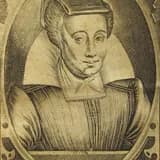
A third volume of Bourgeois's obstetric writings appeared in 1626, completing a widely circulated three-volume work translated into Dutch, German, and English.
In 1626, Louise Bourgeois published a further volume of her obstetric writings, completing what became known as the three-volume sequence of Diverse Observations. This final installment built upon the foundation established in 1609 and expanded in 1617, further consolidating her body of clinical knowledge into a comprehensive reference work.
The completed three-volume work achieved remarkable international circulation for a text authored by a woman in this period, being translated into Dutch, German, and English and read across European medical and midwifery communities. This breadth of translation and distribution was virtually unprecedented for a female medical author of the seventeenth century and reflects the genuine practical value practitioners found in her documented case observations.
By this point, Bourgeois had firmly established herself as an authority whose work was consulted not only by midwives but increasingly cited in broader medical discourse, despite ongoing professional rivalries and skepticism from segments of the male medical establishment who resented the encroachment of a female practitioner into the domain of published medical literature.
The completion of this three-volume work represents the mature culmination of Bourgeois's decades of clinical practice and represents one of the most historically significant bodies of medical writing by any woman prior to the modern era, providing scholars today with an invaluable primary source into early modern childbirth practices.