← All women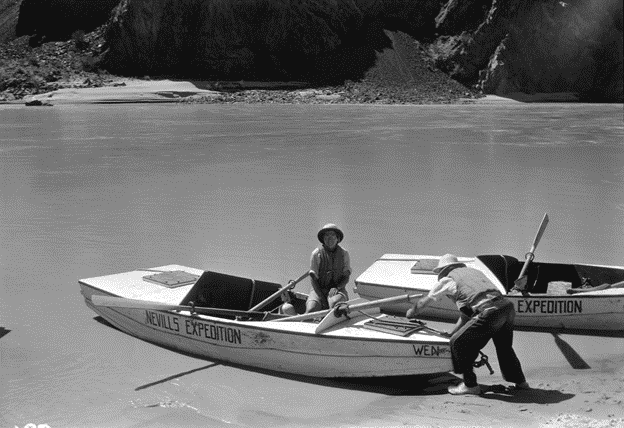
American · Science · Exploration
Lois Jotter
March 11, 1914 – April 30, 2013
Early Life and Family Background
Mary Lois Jotter was born on March 11, 1914, in Weaverville, California, to Ernst and Artie May Jotter.[4][1] She grew up in a family that valued education and curiosity, an orientation that helped support her eventual path into scientific research. Little is recorded in public sources about her childhood in detail, but obituary notices confirm her California birth and identify her brother, Walter Lomb Jotter, as part of the immediate family.[4] Her early years coincided with a period of significant social change for women in the United States, including the lead-up to women’s suffrage in 1920, which would later frame her life in science against a backdrop of expanding, though still constrained, opportunities for women.
From a young age, Jotter showed an interest in science and botany, gravitating toward the natural world and plant life.[1] This interest eventually guided her educational choices and gave her the foundation to pursue a career in academic botany at a time when relatively few women earned doctorates in scientific fields.
Education and Formative Scientific Training
After completing her secondary schooling, Jotter enrolled at the University of Michigan, one of the leading American institutions in botanical research during the early 20th century.[1][4] There she pursued a bachelor’s degree, studying botany and biology. Her undergraduate work placed her within an active community of plant scientists and exposed her to field-based research traditions that would become central to her career.
At Michigan, she came under the mentorship of Elzada Clover, a botanist and professor known for her expertise on desert plants of the American Southwest.[2][5] Clover’s influence proved decisive. When Clover began planning an ambitious expedition down the Green and Colorado Rivers to conduct a botanical survey of the Grand Canyon region, Jotter—then a 24‑year‑old graduate student—was invited to join the team.[2] The collaboration between the senior scientist and her younger colleague became a defining relationship in Jotter’s life and career.
Jotter continued her studies at the University of Michigan after the expedition and completed a Ph.D. in botany in 1943.[1][4][3] Her doctoral training solidified her scientific credentials and positioned her to pursue both research and teaching in botany and biology. Earning a doctorate in botany during World War II placed her among a relatively small number of women with advanced science degrees, reflecting both her determination and the supportive academic environment fostered by mentors like Clover.
The 1938 Grand Canyon Expedition: Scientific and Cultural Breakthrough
In 1938, Elzada Clover organized a scientific expedition to survey and collect plant species along the rivers that cut through the Colorado Plateau.[2] The team planned to travel from Green River, Utah, down the Green River, past its confluence with the Colorado River, and through the entire length of the Grand Canyon, a distance of more than 600 miles through largely uninhabited desert.[2] The expedition was led by river runner Norm Nevills, who provided boats and navigational expertise on waters that were, at the time, among the most dangerous whitewater rivers in North America.[2][5]
Clover and Jotter’s goals were explicitly scientific: they intended to collect and catalog plant species along the river corridor and produce the first systematic botanical survey of the canyon’s riparian and desert flora.[2][5] Prior to their work, the plant life of the Grand Canyon’s river margins had not been comprehensively studied, and existing records were sparse. As they moved downstream, the botanists collected thousands of specimens, documenting where species occurred along gradients of elevation, moisture, and geology. Later accounts emphasize that they discovered and described several cactus species and mapped plant communities that would soon be altered by large-scale water infrastructure.[2][5]
Media coverage at the time, however, focused less on the scientific ambitions than on the presence of two women on such a perilous journey. Newspapers framed the expedition as a daring adventure and sometimes questioned whether women should be allowed to undertake such risks, echoing broader social anxieties about gender and physical danger. Nonetheless, on August 2, 1938, Clover and Jotter finished the river run, becoming the first women to boat the Grand Canyon and the first botanists to complete a full botanical survey of its river corridor.[1][2][5]
According to later summaries by the U.S. Geological Survey and the National Park Service, Clover and Jotter were the first women (specifically, the first non-Native women) to successfully run the Colorado River through the Grand Canyon by boat and to document its flora scientifically.[2][5] Their collections created an ecological baseline, capturing the state of plant communities before major dam projects—including the construction of Hoover Dam and, later, Glen Canyon Dam—transformed the river’s hydrology and sediment regimes.[2][5] This work has continued relevance for ecologists and conservationists seeking to understand long-term environmental change in the region.
The expedition also had symbolic significance. By completing the journey and delivering robust scientific results, Clover and Jotter challenged widespread assumptions that such exploration and field science were inherently male domains. Later historians and science writers have highlighted their 1938 trip as a landmark in both women’s history and the history of river running.[5][9] The story has been revisited in books and articles, such as Melissa L. Sevigny’s Brave the Wild River: The Untold Story of Two Women Who Mapped the Botany of the Grand Canyon, which emphasizes their role in both science and adventure culture.[5][9]
Academic Career and Teaching
After completing her Ph.D. in 1943, Jotter pursued an academic career while maintaining her identity as both a botanist and a veteran river runner. Obituary notices and institutional records indicate that she eventually joined the faculty of the University of North Carolina at Greensboro (UNC‑G), where she worked as an assistant professor of biology from 1963 until her retirement in 1984.[4] In this role, she taught courses in biology and likely introduced many students to botany and plant ecology, though specific course titles are not detailed in publicly available sources.
Her teaching career spanned more than two decades during a time of rapid expansion in American higher education and growing numbers of women students entering science programs. As a woman with a doctorate in botany, a significant field experience record, and an appointment in a university biology department, Jotter contributed to the gradual normalization of women’s presence in scientific faculties. Students and colleagues remembered her enthusiasm for gardening, reading, and travel, interests that complemented her professional focus on plant life and natural environments.[4]
While there is limited documentation of her specific research projects after the 1938 expedition, her continued engagement with botany, combined with her teaching responsibilities, helped keep the story of the river journey and its scientific findings alive within academic circles and among her students.
Personal Life and Marriage
At some point after her early career, Lois Jotter married Dr. Victor M. Cutter Jr., adopting the name Lois Jotter Cutter used in later records and obituaries.[4] Victor Cutter’s own professional background is not extensively detailed in the sources cited, but he is mentioned as predeceasing her.[4] The couple’s life together likely encompassed shared academic or intellectual interests, given the reference to "Dr." in his title, though specific details about their relationship and any children are not reported in the available sources.
Outside her professional activities, Jotter enjoyed gardening, reading, bridge, and travel.[4] Gardening, in particular, resonates with her botanical training and suggests a continuity between her scientific work and her personal pursuits. These interests reflect a life that combined rigorous scientific engagement with leisure activities rooted in observation, community, and curiosity about the wider world.
Recognition, Memory, and Honors
For many years after the 1938 expedition, Clover and Jotter’s contributions were largely known within specialized scientific and river-running communities rather than to the broader public. Historians have noted that while they were celebrated briefly in the press at the time, their story later faded from popular memory, overshadowed by male-centered narratives of Grand Canyon exploration.[5][6]
In the late 20th and early 21st centuries, however, their achievements began to receive renewed attention. The John Wesley Powell River History Museum and related river-running organizations have recognized Elzada Clover and Lois Jotter as pioneers, and they were highlighted as River Runners Hall of Fame inductees among early Utah river-running figures.[2][7] The museum’s materials describe them as the first women to run the entire length of the Colorado River through the Grand Canyon and emphasize that their scientific work expanded understanding of desert landscapes.[2][7]
Modern articles and essays—for example on platforms like Bunk History, Orion Magazine, and heritage initiatives—frame their expedition as both a scientific and feminist milestone.[5] These accounts underscore how their botanical survey provided baseline data for the region and how their presence on the river challenged gender conventions. The publication of Brave the Wild River further amplified their story, portraying them as central figures in the history of Grand Canyon science.[5][9]
Later Life and Return to the River
After retiring from UNC‑G in 1984, Jotter remained active in her interests and maintained ties to the river-running and scientific communities that had shaped her earlier life. In the 1990s, she returned to the Colorado River on an "Old Timers" or "Stanton Photo‑match" trip, an excursion designed to revisit and document changes to the Grand Canyon after the construction of Glen Canyon Dam.[8]
A long-form interview filmed in 1994 captures Jotter in the Grand Canyon reflecting on her experiences during the 1938 expedition and offering eyewitness testimony about how the river and its ecosystem had changed in the intervening decades.[8] She served as an informal expert on these ecological transformations, drawing on her knowledge of plants and river conditions before the dam and comparing them with the altered flows, sediment patterns, and vegetation she observed in the 1990s.[8] This return to the canyon, more than half a century after her first journey, symbolized the continuity of her engagement with the region and its science.
Accounts of the "Old Timers" trip emphasize her advanced age and continued vitality, noting that she rafted a section of the river again around age 80 and contributed observations on botanical change.[8][5] Although the specific dates of that trip are not fully documented in the available sources, it represents an important moment in her later life: a chance to reconnect with a landscape she had helped to document and to see firsthand the impacts of large-scale water management on the river ecosystem.
Death and Posthumous Legacy
Dr. Lois Jotter Cutter died at her home in Greensboro, North Carolina, on April 30, 2013, at the age of 99, as a result of congestive heart failure.[4][3][1] Obituaries in the Arizona Daily Sun and on national memorial platforms emphasized her role in the 1938 expedition, describing her as the last surviving female member of the Grand Canyon, Green, and Colorado Rivers expedition and one of the first women to survive running the Colorado River.[3][4]
These notices also highlighted her academic contributions, noting her decades of teaching biology at UNC‑G and her enjoyment of gardening and travel.[4] At the time of her death, interest in the historical significance of the 1938 expedition was growing, bolstered by work from historians and science journalists. Her passing thus coincided with—and arguably helped spur—renewed efforts to place her and Clover’s story within the broader narrative of women in science, river-running history, and environmental change on the Colorado River.
In subsequent years, museum exhibits, articles, and books have increasingly recognized Lois Jotter as a key figure in the intersection of science and exploration. The National Park Service, U.S. Geological Survey, and various heritage and conservation organizations now regularly cite Clover and Jotter as the first women to boat the Grand Canyon and the first botanists to catalog its flora.[2][1] Their botanical collections remain part of the scientific record, providing data for understanding long-term vegetation patterns in the Grand Canyon region.
Historical Significance and Legacy
Lois Jotter’s historical significance rests on two intertwined pillars: her role in pioneering scientific exploration of the Grand Canyon’s plant life, and her contribution to shifting cultural perceptions about women’s capabilities in high‑risk field science and adventure. By serving as both a rigorous botanist and a river runner on the 1938 expedition, she helped demonstrate that women could occupy spaces previously reserved for men—both literally, in the boats and camps along the Colorado River, and figuratively, in the scientific narratives of exploration.
Her work with Elzada Clover on the botanical survey remains important for contemporary ecology and conservation. Their collections and field notes document plant communities before major alterations to river flow, sediment transport, and riparian habitat. As water management, climate change, and tourism continue to reshape the Grand Canyon, Jotter’s contributions provide a historical baseline against which change can be measured.[2][5]
In the realm of women’s history, Jotter’s life exemplifies the challenges and possibilities faced by women scientists in the mid‑20th century. She navigated graduate training, fieldwork, and an academic career during decades when women’s representation in science faculties was limited. Her story, recovered and retold in recent years, helps correct earlier omissions in the historiography of Grand Canyon exploration and demonstrates how women’s scientific labor has often been underrecognized.[5][6]
As contemporary historians, journalists, and institutions continue to highlight her achievements, Lois Jotter stands as a figure who bridged botany, exploration, and education. Her legacy persists not only in herbarium specimens and academic records, but also in the growing recognition that women have long played central roles in the scientific understanding of some of the world’s most iconic landscapes.
Dated achievements
3 indexed.
- Mar111914Science
Birth of Lois Jotter
Lois Jotter, botanist and Grand Canyon river pioneer, was born on March 11, 1914.
View details Lois Jotter - Wikipedia - Aug021938Exploration
First Women to Boat the Grand Canyon and First Botanists to Catalog Its Flora
Lois Jotter and Elzada Clover became the first non-native women to boat through the Grand Canyon, and the first botanists to document its plant life.