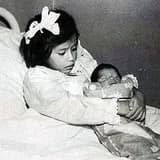
At age five years, seven months and 21 days, Lina Medina gave birth via caesarean section to a son, Gerardo, in Lima, Peru — the youngest confirmed motherhood on record.
On May 14, 1939, in Lima, Peru, Lina Medina underwent an emergency caesarean section performed by Dr. Gerardo Lozada, delivering a healthy 2.7 kg baby boy she named Gerardo after the attending physician. At the time, Lina was just five years, seven months, and twenty-one days old, making her the youngest confirmed mother in recorded medical history — a record that remains unbroken to this day.
Lina's case first came to medical attention months earlier when her parents brought her to a hospital in Pisco, believing she had a large abdominal tumor. Physicians instead discovered she was approximately seven months pregnant. Because of her extraordinarily narrow pelvis, a caesarean delivery was deemed medically necessary to save both mother and child. The case was documented extensively by Dr. Edmundo Escomel, who published findings in the journal La Presse Médicale, and X-rays of Lina's bone development were used to help verify her age and physiological maturity, given widespread public disbelief.
The case became a landmark in the study of precocious puberty, as Lina had begun menstruating at age three. It sparked global medical fascination and controversy, raising profound ethical questions about child protection, the identity of the father (who was never definitively identified or prosecuted), and society's failure to safeguard a child from sexual abuse. Lina's story remains a somber touchstone in discussions of child exploitation, endocrinology, and the limits of medical ethics in the early twentieth century.