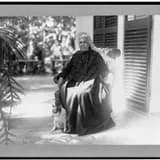
Liliʻuokalani ascends the throne as Hawaiʻi’s first and only reigning queen and last sovereign monarch.
On January 29, 1891, following the death of her brother King David Kalākaua while on a visit to San Francisco, Liliʻuokalani took the official oath of office and ascended the throne as Queen Liliʻuokalani of Hawaiʻi.[1][2] The ceremony, conducted in Honolulu before cabinet ministers and justices of the kingdom’s Supreme Court, marked her formal accession as sovereign.
With this act, Liliʻuokalani became the kingdom’s first and only reigning queen (queen regnant) and its last sovereign monarch.[1][2][13] Unlike a queen consort, she held the crown in her own right, exercising constitutional powers in a period of intense pressure from foreign business interests and U.S. expansionists.
Her accession was historically transformative. She inherited a government constrained by the 1887 "Bayonet Constitution," which had stripped the monarchy of much authority and disenfranchised many Native Hawaiians.[1][15] From the outset, she pledged to restore political power to her people, strengthen education and infrastructure, and protect Hawaiian lands.
Liliʻuokalani’s reign, though brief, became a global symbol of a small island kingdom resisting imperial encroachment. Her status as the first woman to rule Hawaiʻi as monarch, and the last to govern it as an independent state, has made January 29, 1891, a sentinel date in women’s political history and in the story of Pacific sovereignty.[2][7][13]