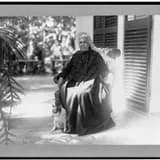
Liliʻuokalani is released from ʻIolani Palace imprisonment and moved under house arrest to Washington Place.
On September 6, 1895, after several months of confinement, Liliʻuokalani was released from imprisonment in ʻIolani Palace and allowed to reside under a form of house arrest at her Honolulu home, Washington Place.[1] Her sentence was commuted as part of the political settlement following the suppression of the 1895 uprising.
Though no longer held within palace walls, she remained under close observation and restrictions, symbolizing the republic’s continued effort to control the former monarch and limit her political activities.[1] At Washington Place, she resumed writing, composing music, receiving visitors, and quietly advocating for Hawaiian rights.
The transfer marked a shift from overt incarceration to more subtle forms of constraint. It allowed her greater physical freedom and the ability to re-engage with community life, while underscoring that the struggle over Hawaiian sovereignty was far from resolved.
For historians, September 6, 1895, demonstrates Liliʻuokalani’s enduring resilience. Despite imprisonment and abdication, she continued to frame her experiences in terms of justice, faith, and love for her people. Washington Place would later become closely associated with her memory and the broader story of Hawaiʻi’s transition from kingdom to U.S. territory.[1][7]