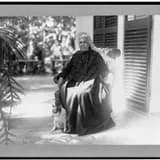
U.S.-aligned insurgents overthrow Queen Liliʻuokalani; she is deposed as sovereign and a provisional government is proclaimed.
On January 17, 1893, Queen Liliʻuokalani was overthrown and deposed as sovereign of the Hawaiian Kingdom in a coup orchestrated by the Committee of Safety, a group of U.S.-aligned businessmen and residents in Honolulu.[1][2] U.S. Minister John L. Stevens landed Marines from the warship USS Boston, whose presence effectively supported the insurgents.
Facing the risk of bloodshed, Liliʻuokalani yielded her authority under protest, stating that she did so to avoid violence and expected the United States to later restore her constitutional rights.[1][2] A provisional government led by Sanford B. Dole was proclaimed the same day.[1]
This event was pivotal not only for Hawaiʻi but for the global history of imperialism. It ended the rule of an internationally recognized sovereign monarchy and initiated a rapid transition toward U.S. annexation.[2][17] Contemporary and later investigations, including the Blount Report, confirmed that U.S. officials had improperly involved themselves in the overthrow.
For women’s history, the deposition of Liliʻuokalani highlights how a woman head of state confronted foreign military and corporate power with remarkable restraint, choosing nonviolent protest over civil war. Her dignified response and subsequent activism transformed her from monarch into a symbol of indigenous resistance and legal advocacy, remembered widely as Hawaiʻi’s last queen.[1][2][7]