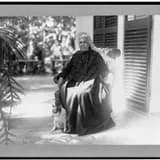
Liliʻuokalani files Liliuokalani v. United States in the U.S. Court of Claims, seeking compensation for seized crown lands.
On December 2, 1909, Liliʻuokalani filed Liliuokalani v. United States in the U.S. Court of Claims, seeking compensation for the loss of Hawaiian crown lands following the overthrow and annexation.[1] In this lawsuit, she argued that the crown lands were her personal property and that their seizure without compensation violated legal principles.
The case represented a significant attempt by a deposed monarch to use the American judicial system to challenge the economic consequences of colonial expansion. Liliʻuokalani’s pleadings drew on her unique position as former sovereign and highlighted the distinction between government lands and crown lands historically associated with the monarch.[1]
While the suit focused on property rather than restoration of political sovereignty, it contributed to a broader discourse about the illegality of dispossession and the rights of indigenous rulers under U.S. law. It required federal courts to confront, at least indirectly, the circumstances surrounding the overthrow of the Hawaiian Kingdom.
For women’s and legal history, December 2, 1909, marks Liliʻuokalani’s entry into U.S. litigation as a tool of resistance. Her willingness to engage the Court of Claims demonstrated a sophisticated understanding of law and an enduring commitment to securing some measure of justice for the Hawaiian people, even after annexation was complete.[1][17]