← All women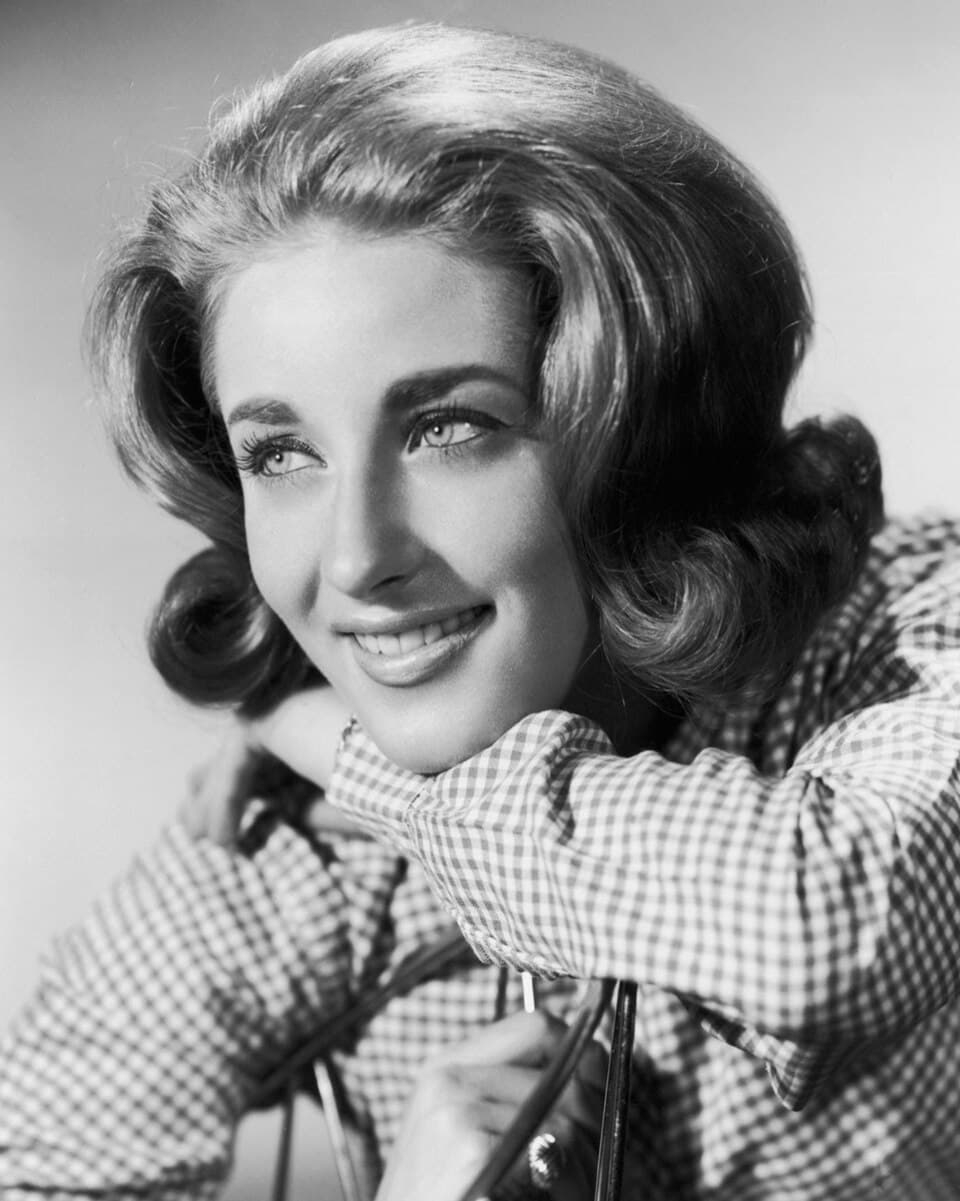
American · Arts
Lesley Gore
May 2, 1946 – February 16, 2015
Early Life and Background
Lesley Gore, born Lesley Sue Goldstein on May 2, 1946, in Brooklyn, New York, was the daughter of Leo Goldstein and Ronny Leona Gore.[1][6][9] Her family was Jewish, and sources note that they changed their surname from Goldstein to Gore shortly after her birth, a decision often linked to concerns about antisemitism and assimilation in mid-20th-century America.[5] She grew up primarily in Tenafly, New Jersey, a suburban environment that would shape her adolescence and early musical development.[1][9][12]
Gore’s upbringing was middle-class and relatively stable, providing access to formal education and extracurricular activities. She attended the Dwight School for Girls in Englewood, New Jersey, an institution that offered a college-preparatory curriculum and opportunities for arts participation.[13] From around age 15, she began formal vocal training, demonstrating both her family’s support for her musical ambitions and her own seriousness about developing her craft.[9] This early training gave her a technical foundation unusual for a teenage pop aspirant in the early 1960s.
Her Jewish identity and suburban New Jersey background placed her within a generation of postwar American youth who were beneficiaries of expanding educational and cultural opportunities. At the same time, being a young woman pursuing a career in popular music required negotiating gendered expectations about respectability and ambition. These tensions would inform both the content of her songs and the public narratives surrounding her career.
Career Beginnings and Breakthrough
Lesley Gore’s professional career began while she was still a high school student. During the early 1960s, she performed locally, including with a cousin’s band, where her talent attracted attention.[9] She was eventually noticed by Irving Green, president of Mercury Records, who saw potential in her as a teen vocalist.[9][12] Green arranged for Gore to work with producer and arranger Quincy Jones, then already a respected figure in jazz and pop. Their collaboration would become central to her early success.
In 1963, at the age of 16, Gore recorded "It’s My Party", a pop single crafted around a narrative of adolescent heartbreak.[1][3] The song was released by Mercury Records and quickly gained traction on American radio. By June 1963, "It’s My Party" had become her first No. 1 hit on the U.S. Billboard Hot 100, making Gore a national sensation.[1][7][9] The single’s success was particularly striking given her youth and the relatively short period between discovery and chart dominance.
On June 29, 1963, "It’s My Party" reached No. 1 on the Billboard Hot 100, cementing her status as a teen pop star and establishing the song as her signature hit.[1][3] The record’s success positioned Gore as one of Mercury Records’ most lucrative artists and demonstrated Quincy Jones’s effectiveness in producing youth-oriented material that still bore his sophisticated arranging style.[1] The song’s melodramatic lyrics and memorable hook made it emblematic of early 1960s teen pop, capturing both the intensity and vulnerability of adolescent emotion.
Gore’s breakthrough extended beyond radio and record sales. On October 13, 1963, she made her first appearance on The Ed Sullivan Show, performing "It’s My Party" and "She’s A Fool."[4] The Ed Sullivan Show was among the most-watched programs in America, and appearing on it provided a crucial imprimatur of mainstream acceptance. Gore’s performance reached millions of viewers and solidified her public image as the era’s quintessential teen singer. Her poise and strong stage presence presented a young woman articulating her own emotional story on national television.
1960s Career Development and Major Works
Following the success of "It’s My Party," Lesley Gore released a series of singles that maintained her presence on the Billboard charts. Tracks such as "Judy’s Turn to Cry", "She’s a Fool," and "Sunshine, Lollipops, and Rainbows" all reached the U.S. Top 40, reinforcing her reputation as a reliable hit-maker.[1][6][7] These songs continued the thematic focus on teenage romance, betrayal, and resilience, often told from a female point of view that foregrounded emotional complexity rather than simple idealization.
On November 1, 1963, Mercury released her second studio album, "Lesley Gore Sings of Mixed-Up Hearts", which built on the momentum of her debut and offered a broader selection of material about love and adolescence.[1] The album demonstrated that her career could extend beyond single hits, and it helped shape the concept of teen-oriented LPs focused on emotional themes rather than adult sophistication. Within the competitive landscape of early-1960s pop, Gore’s work stood out for its consistent centering of girl protagonists and their subjective perspectives.
Perhaps the most enduring of her songs is "You Don’t Own Me", released in 1963.[1][10] While precise day-of-release documentation is limited, the record quickly became recognized as a powerful statement of female autonomy. Sung from the perspective of a young woman rejecting male control, "You Don’t Own Me" was strikingly assertive for its era. Over time, it has been widely interpreted as a feminist anthem, celebrated for its challenge to traditional gender roles and its insistence on personal freedom.[1][10] Gore herself described it as her signature song and expressed pride in its message.
Throughout the 1960s, Gore continued recording and performing, though the advent of the British Invasion and changing musical tastes made it increasingly difficult for early-1960s pop singers to sustain chart dominance.[1] She nonetheless maintained a presence in the industry, touring and releasing material while also pursuing education. Gore enrolled at Sarah Lawrence College, a liberal arts institution known for its progressive environment, where she studied and developed an interest in songwriting.[1] Balancing college with a music career required careful negotiation of priorities, underscoring her seriousness about both intellectual and artistic growth.
Acting, Television, and Songwriting for Film
In addition to her singing career, Lesley Gore ventured into acting and television. She appeared in the 1960s television series Batman, portraying one of Catwoman’s sidekicks, a role that added a pop-cultural dimension to her public persona.[1][13] This appearance linked her image to the campy, comic-book-inflected aesthetics of 1960s TV and demonstrated her versatility as a performer beyond the recording studio.
Gore’s most notable work as a songwriter came later, through her collaboration with her brother, composer Michael Gore, on the 1980 film Fame. Together, they co-wrote the song "Out Here On My Own", a ballad dealing with solitude, ambition, and self-reliance.[1][3][10] The song, performed in the film and on its soundtrack, resonated with audiences and critics for its introspective lyrics and emotional depth. In 1983, "Out Here On My Own" received an Academy Award nomination for Best Original Song, a recognition that affirmed Gore’s stature as a serious songwriter and not only a former teen idol.[1][3][13]
The success of "Out Here On My Own" extended Gore’s legacy into the realm of film music and linked her work to the narratives of striving and self-discovery that defined Fame. For a woman whose career had begun with songs about teenage heartbreak, co-writing a widely acclaimed piece about personal resilience and artistic ambition demonstrated her creative evolution.
Awards, Honors, and Recognition
Lesley Gore’s early career was marked by significant commercial recognition. "It’s My Party" was her only No. 1 U.S. hit, but she accumulated approximately ten additional Top 40 singles on the Billboard charts, including "Judy’s Turn to Cry", "She’s a Fool", "Sunshine, Lollipops, and Rainbows", and "You Don’t Own Me."[1][7][10] These chart achievements positioned her among the most successful female solo artists of the early 1960s.
Later in her career, she received critical recognition through nominations for major awards. As noted, her co-authorship of "Out Here On My Own" led to an Academy Award nomination in 1983 for Best Original Song.[1][3] She has also been associated with Grammy Award nominations, reflecting the industry’s acknowledgment of her artistic contributions.[13] While not all these recognitions can be precisely dated at the day level from available sources, they collectively mark her broader impact on American popular music and film.
Beyond formal awards, Gore’s work—especially "You Don’t Own Me"—has received ongoing cultural recognition. The song has been used in public service announcements, political campaigns, and films such as The First Wives Club, where it was performed by Bette Midler, Diane Keaton, and Goldie Hawn in 1996, introducing it to new generations.[10] This continued circulation underscores her enduring influence.
Personal Life and Identity
Lesley Gore’s personal life is significant in both women’s and LGBTQ history. She was a lesbian and maintained a long-term relationship with jewelry designer Lois Sasson that lasted more than three decades.[1][13][14] While Gore did not position herself as a public activist during the height of her pop fame, she later spoke more openly about her sexuality and participated in LGBTQ media projects.
In interviews, Gore discussed the challenges of being a queer woman in the music industry, particularly during an era when open acknowledgment of same-sex relationships could jeopardize a career.[5] Her decision to live authentically in her personal life, while navigating the constraints of mainstream entertainment, reflects broader patterns of queer visibility and invisibility in mid- to late-20th-century American culture.
Gore’s Jewish background also informed her identity. Sources emphasize that she was a "vibrant and proud" Jewish lesbian, situating her at the intersection of religious, ethnic, gender, and sexual identities.[5] This layered identity is important for understanding both the social context she navigated and the communities that later claimed her as a symbol of resilience and representation.
Later Career, Activism, and Media Work
In her later years, Lesley Gore shifted her focus toward songwriting, selective performing, and media work connected to LGBTQ issues. During the 2000s, she hosted several editions of the public television series In the Life, an LGBT-oriented program that highlighted stories about queer communities, politics, and culture.[1] Her role as host indicated her willingness to use her public profile in support of greater visibility and understanding of LGBTQ experiences.
Gore continued to record and perform into the 21st century, releasing albums and appearing in concerts that often revisited her classic hits while introducing new material.[1][14] She also engaged with contemporary reinterpretations of her work. "You Don’t Own Me" experienced renewed popularity through cover versions and its use in political and feminist contexts, underscoring the song’s adaptability as a statement of autonomy.
Her song catalog has been preserved and promoted by various labels and archives, including ECR Music Group, which has served as a steward for her later recordings.[14] Music historians and critics have revisited her collaborations with Quincy Jones, highlighting the sophistication of the arrangements and the significance of their partnership in shaping the sound of early-1960s pop.[7] Retrospective articles emphasize that Gore’s music prefigured later feminist and queer themes by giving voice to young women’s emotional lives and desires.
Legacy and Historical Impact
Lesley Gore’s legacy rests on multiple, overlapping contributions to culture. In the most immediate sense, she is remembered as one of the definitive voices of early-1960s teen pop. "It’s My Party" remains a canonical example of the genre, instantly recognizable and frequently referenced in discussions of adolescent-themed music.[1][3] Its chart-topping success demonstrated the commercial viability of songs centered on young women’s experiences.
More profoundly, "You Don’t Own Me" has secured her place in the history of women’s rights and feminist cultural expression. The song’s declaration of independence from male control—"Don’t tell me what to do, don’t tell me what to say"—has been interpreted as a proto-feminist anthem, anticipating later waves of feminist activism.[1][10] It has been used in campaigns, films, and public events that explicitly reference women’s autonomy and empowerment, thereby transforming a 1963 pop single into a lasting political and cultural symbol.
Gore’s co-writing of "Out Here On My Own" for Fame extended her impact into narratives about artistic struggle and self-definition, themes resonant with both women and queer audiences.[1][3] Her later work with In the Life further entwined her legacy with LGBTQ media history, highlighting her commitment to visibility and representation.[1]
From a historical perspective, Gore occupies an important position in the genealogy of women in popular music: a young, Jewish, queer woman who navigated the male-dominated music industry of the 1960s, achieved chart success, and later used her platform to support messages of autonomy and equality. Scholars and activists have increasingly recognized her as a figure whose work bridges mainstream pop and emerging feminist and queer discourses.[5][12]
Later Life and Death
In her final years, Lesley Gore lived in New York City and continued to be involved in music and media projects at a selective pace. She maintained her long-term relationship with Lois Sasson and remained connected to artistic communities.[13] Although her public profile was less intense than during her teenage peak, she retained a devoted fan base and was regularly cited in retrospectives on 1960s music and women’s cultural history.
On February 16, 2015, Gore died of lung cancer in New York City at the age of 68.[1][3][2] Her partner, Lois Sasson, confirmed her death, and obituaries appeared in major outlets, emphasizing both her early hits and her later contributions to film music and LGBTQ media.[3][13] Commentators reflected on the span of her career—from a 16-year-old recording "It’s My Party" to a mature artist involved in socially engaged projects.
Gore’s death prompted renewed interest in her recordings and a wave of appreciation for the ways her songs had articulated themes of heartbreak, resilience, and independence. For many listeners and scholars, she is not only a nostalgic figure from the early 1960s but also a pioneering woman whose work helped carve out space for female and queer voices in popular music and media.
Dated achievements
5 indexed.
- May021946Science
Birth of Lesley Gore
Lesley Sue Goldstein was born in Brooklyn, New York, later becoming pop star Lesley Gore.
View details Lesley Gore Biography - Biography.com - Nov011963Science
Release of Second Album "Lesley Gore Sings of Mixed-Up Hearts"
Gore released her second studio album, "Lesley Gore Sings of Mixed-Up Hearts," on November 1, 1963.