← All women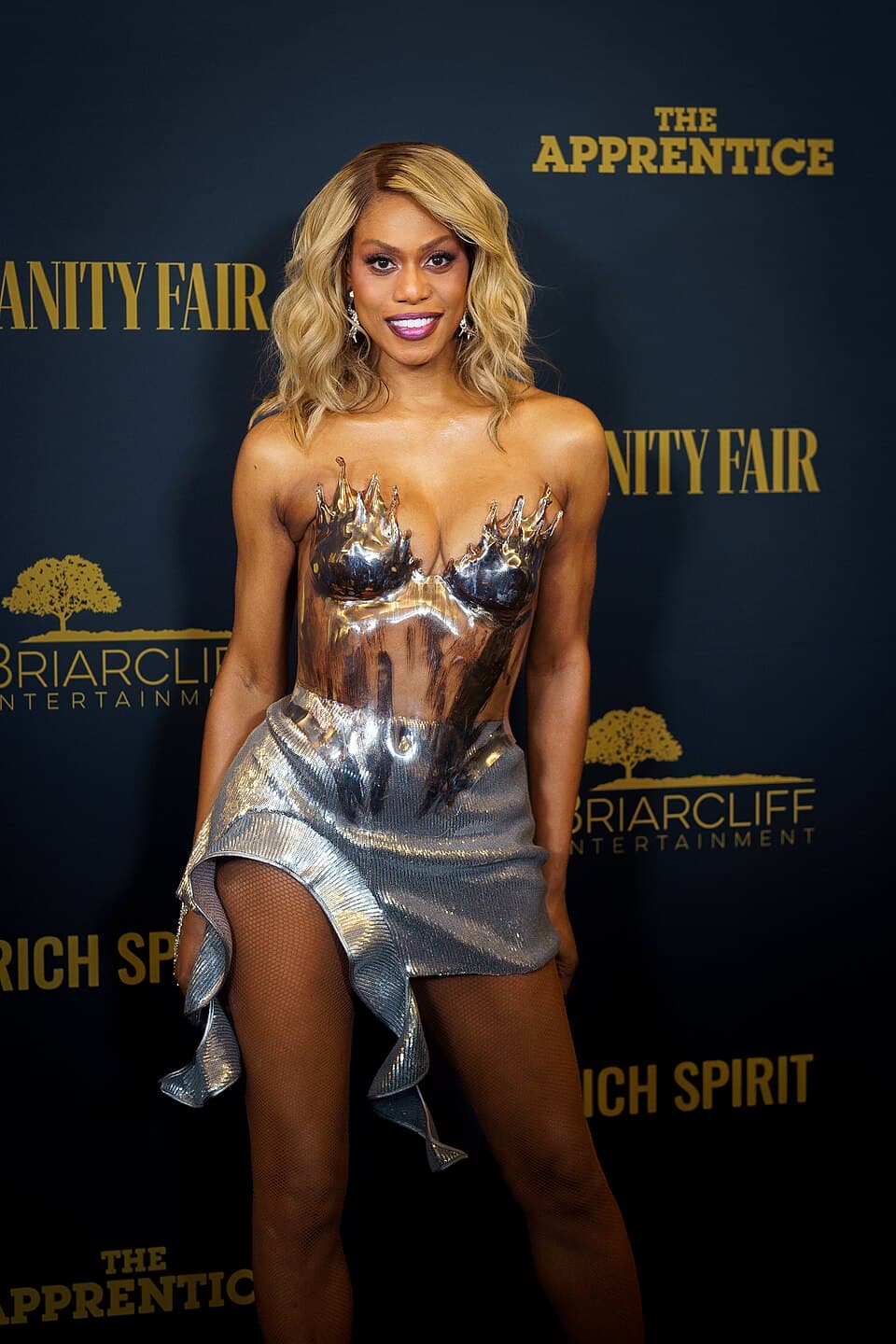
American · Activism · Arts
Laverna Cox
May 29, 1972 – present
Early Life and Background
Laverne Cox was born on May 29, 1972, in Mobile, Alabama, United States
Cox has spoken about being drawn to femininity from an early age and facing intense bullying and shame related to gender nonconformity.[4] As a child, she contemplated self‑harm, an experience she has shared publicly to highlight the stakes of rejecting or policing gender variance. Her mother encouraged artistic expression, and Cox gravitated toward performance, especially dance and theatre, as outlets for her creativity and feelings of difference. She attended the Alabama School of Fine Arts, where she studied dance, and later continued her education at Indiana University and Marymount Manhattan College in New York City.[1][2][16] In college she immersed herself in classical ballet and performance, and it was during these years that she began to identify and live more consistently as a woman.[16] The move from Alabama to New York exposed her to queer and trans communities, as well as to a wider range of artistic and intellectual influences, reinforcing her sense that she could build a life around both performance and her authentic gender identity. After relocating to New York, Cox worked as a dancer and appeared in off‑Broadway productions, independent films, and minor television roles.[1] She took on bit parts in series such as Law & Order and Law & Order: Special Victims Unit, slowly building a résumé in an industry that provided few opportunities for openly transgender performers.[11] Her early breakthrough in reality television came when she appeared as a finalist on VH1’s competition series I Want to Work for Diddy in 2008.[2][8] Media coverage described her as the first African‑American transgender woman to appear on an American reality show, a milestone that brought her to national attention and demonstrated that trans women could participate visibly in mainstream unscripted formats. Building on that momentum, Cox co‑created, co‑produced, and starred in the VH1 makeover series TRANSform Me, which premiered in 2010.[2][8] The show featured a team of transgender stylists helping women transform their lives and appearances. Cox’s role in developing and fronting the series is widely noted as making her the first African‑American transgender woman to produce and star in her own television show, an early indicator of her insistence on creative control and representation behind the camera. During this period, she continued to audition for scripted roles and to speak publicly about transgender issues. Although many of her parts were small, they allowed her to hone her craft and establish relationships within the industry, laying the groundwork for the more prominent role that would define her career. Cox’s major breakthrough came with the Netflix original series Orange Is the New Black, created by Jenji Kohan and released in 2013.[1][4][8] She was cast as Sophia Burset, a transgender woman incarcerated in a women’s prison, whose storyline explores family dynamics, systemic discrimination, and the difficulties of accessing gender‑affirming healthcare while incarcerated. The series rapidly became a cultural phenomenon, and Cox’s nuanced portrayal of Sophia drew extensive critical praise.[1][4] Commentators highlighted the significance of a transgender actress playing a transgender character in a mainstream, ensemble drama, with substantial screen time and emotional depth. Her performance brought a visibility to transgender women of color that had been largely absent from U.S. television. Through Orange Is the New Black, Cox became widely cited as the first transgender woman of color to have a leading role on a mainstream scripted television series
The critical and commercial success of Orange Is the New Black led to a series of historic recognitions for Cox. On July 10, 2014, the Television Academy announced that she had been nominated for a Primetime Emmy Award for Outstanding Guest Actress in a Comedy Series for her work as Sophia Burset.[2][8] This nomination made her the first openly transgender person ever nominated for a Primetime Emmy Award in an acting category, and the first transgender person nominated for any Emmy since composer Angela Morley in 1990.[1][2][7] Media outlets and advocacy organizations such as GLAAD hailed the nomination as a landmark in television history, emphasizing how long transgender performers had gone without recognition from major awards bodies.[2] The nomination demonstrated that a trans actress could not only be cast in a significant role but be honored at the highest levels of the industry for her work. Shortly before the Emmy announcement, Cox achieved another milestone in mainstream media representation. On May 29, 2014, she was revealed as the first openly transgender person to appear on the cover of TIME magazine, for the June 9/16 issue titled "The Transgender Tipping Point".[1][3][4] The cover story positioned her as a leading figure in an era of increasing visibility for transgender people and explored the social, legal, and cultural battles around gender identity in the United States. The combination of the TIME cover and Emmy nomination in 2014 marked Cox as a central symbol of a broader cultural shift. Her presence on one of the world’s most influential magazine covers and in the Emmy nominations list communicated to millions that trans issues and trans artistry belonged firmly within mainstream discourse. Beyond acting, Cox has built a significant career as a documentary producer. On April 30, 2015, Logo TV’s documentary special Laverne Cox Presents: The T Word won the Daytime Emmy Award for Outstanding Special Class Special.[2][8] As executive producer, Cox thereby became the first openly transgender person to win a Daytime Emmy, a milestone recognized by outlets including Britannica and major news organizations.[2][13] The T Word centers the experiences of young transgender people, exploring issues such as bullying, family rejection, school policies, and personal resilience. Cox’s involvement reflected her commitment to using her growing influence to amplify the voices of others within the trans community, particularly youth facing the kinds of challenges she had experienced in her own childhood. In subsequent years, Cox continued to engage in documentary work. She served as executive producer and on‑screen contributor for the documentary Disclosure, released on Netflix in 2020, which examines the history of transgender representation in film and television.[13] The film, though outside the temporal scope of some sources, is widely noted for its critical analysis of the ways trans characters have been portrayed and for its inclusion of multiple trans voices discussing how media images have affected their lives. Through these projects, Cox has positioned herself not just as subject but as creator and curator of trans narratives. Her work in documentary production has been central to her impact on public understanding of transgender issues and on the push for more accurate, empathetic representation. Alongside Orange Is the New Black, Cox has taken on a variety of roles in television and film that expand the range of transgender and Black women’s representation. In 2016 she appeared in Fox’s television remake of The Rocky Horror Picture Show: Let’s Do the Time Warp Again, playing Dr. Frank‑N‑Furter, a role historically associated with gender and sexual ambiguity.[1] Her casting in this cult classic further underscored her capacity to inhabit complex, iconic characters. On February 15, 2017, the CBS legal drama Doubt premiered, featuring Cox as Cameron Wirth, a transgender defense attorney.[8] This made her the first transgender person to portray a regular, recurring transgender character on a U.S. broadcast network television drama.[8] Although the series was short‑lived, her role was widely covered as a groundbreaking instance of trans representation on broadcast television, which historically has been more cautious than cable or streaming platforms. Cox has also had roles in films such as Grandma (2015) and in series including The Mindy Project, Dear White People, and Inventing Anna, among others.[1][14] These appearances demonstrate her versatility and the increasing willingness of creators to cast a transgender actress in diverse parts, including characters whose stories are not limited to their gender identity. In addition to her artistic work, Cox is a prominent advocate for transgender rights and broader LGBTQ+ equality. She has delivered keynote addresses at universities, conferences, and community events, often weaving her personal story with broader analysis of structural discrimination.[8][13] Her speeches emphasize intersectionality, focusing on how race, class, gender, and sexuality intersect to shape the experiences of trans people, particularly Black trans women. Cox has worked with organizations such as GLAAD to challenge media misrepresentation and to promote more inclusive storytelling.[2] She has frequently appeared on news programs and talk shows to respond to policy debates, including discussions of bathroom access, healthcare, and anti‑trans legislation, offering a human face to issues often framed abstractly. Her advocacy also includes using social media to share resources, elevate other trans voices, and respond to instances of violence against trans communities.[8][14] Cox has repeatedly emphasized that visibility alone is insufficient unless accompanied by systemic change, pushing audiences to consider how legal protections, economic opportunities, and cultural narratives must shift to ensure trans people’s safety and dignity. Cox’s barrier‑breaking work has brought numerous honors. On June 26, 2014, she received the Stephen F. Kolzak Award at the 25th Annual GLAAD Media Awards in Los Angeles, recognizing her contributions to promoting LGBTQ visibility in media and combating homophobia and transphobia.[2] The award placed her in a lineage of activists and artists whose work has significantly shifted cultural perceptions. Her TIME cover and Emmy nomination in 2014 are frequently invoked as twin milestones in the history of transgender representation.[1][3][4] In 2015, her Daytime Emmy win as executive producer of The T Word added another institutional recognition, this time honoring her influence behind the camera.[2] On June 26, 2015, she became the first openly transgender person to have a wax figure at Madame Tussauds, when the San Francisco location unveiled a likeness of her in a red gown.[5] This honor symbolized mainstream cultural acceptance and commemorated her status as a public icon. Cox has also been celebrated through inclusion in lists of influential people and through coverage in major outlets such as The Guardian, which has profiled her experiences navigating fame and advocacy in contemporary America, and Oprah Daily, which has compiled key facts about her life and work.[13] These recognitions, while not all tied to specific dates, contribute to her standing as a central figure in 21st‑century women’s and LGBTQ+ history. Cox has been relatively private about certain aspects of her personal life, focusing public attention on her work and activism. She has spoken candidly about her relationships in interviews, including the challenges of dating as a high‑profile transgender woman, but detailed information about long‑term partnerships is limited in major reference sources.[1][13] She has discussed close relationships with family, including her twin brother Lamar, who has appeared on Orange Is the New Black as a pre‑transition version of Sophia Burset in flashbacks.[1] Cox credits her mother and grandmother with supporting her artistic ambitions even as they struggled to understand her gender identity, and she has emphasized the importance of family acceptance for trans people. Cox has no publicly documented children, and much of her personal narrative focuses on psychological and emotional journeys—moving beyond shame, embracing authenticity, and negotiating the pressures of visibility—rather than traditional family milestones.[1][13] By the 2010s, Laverne Cox had become one of the most recognizable transgender women in the world, and her legacy is closely tied to the transformation of media landscapes regarding gender and sexuality. As an actress, she has proved that trans performers can anchor critically acclaimed series and films; as a producer, she has demonstrated that trans‑centered documentaries can win major awards; and as an advocate, she has helped shift public discourse toward more nuanced, intersectional understandings of trans lives. Her multiple "firsts"—including being the first openly transgender person nominated for a Primetime acting Emmy, the first to win a Daytime Emmy as an executive producer, the first openly trans person on the cover of TIME magazine, and the first to be honored with a Madame Tussauds wax figure—are landmarks in the institutional recognition of transgender people.[1][2][4][5][8] Cox’s impact extends beyond these symbolic achievements. By insisting on authentic casting, combating stereotypes, and foregrounding the experiences of Black trans women, she has influenced industry practices and inspired a generation of artists and activists. Her work is frequently cited by scholars in gender and media studies as illustrative of broader shifts in representation and of the tensions between visibility and vulnerability for marginalized communities. In women’s history, she occupies a critical place as a Black transgender woman who has reshaped expectations of who can be a leading actress, producer, and public intellectual. Her career demonstrates how gender, race, and sexuality intersect in the struggle for recognition and rights, and illustrates the potential of popular culture to drive social change. As of the mid‑2020s, Cox remains active in entertainment and advocacy.[1][8] She continues to act in film and television, produce documentaries, and speak publicly on issues including anti‑trans legislation, violence against trans people, and the importance of affirming healthcare. On May 29, 2022, her 50th birthday was marked by a profile in a major U.S. outlet, which reflected on her journey and enumerated her historic firsts, including the creation of a Barbie doll in her likeness.[13] The piece situated her work within the ongoing fight for transgender rights and underscored her enduring relevance in cultural conversations. Cox’s official website presents her as a "four‑time Emmy‑nominated actress, Emmy‑winning producer, and prominent equal rights advocate and public speaker," summarizing the breadth of her career and signaling her intention to continue engaging both artistic and political spheres.[8] With no publicly reported date of death and ongoing projects in multiple media, Cox’s later life is characterized by sustained influence. She stands as a living figure in women’s and LGBTQ+ history, whose evolving body of work continues to impact debates about representation, equality, and the power of storytelling.Career Beginnings and Development
Breakthrough: Orange Is the New Black
Historic Emmy Nomination and TIME Cover
Award‑Winning Producer and Documentary Work
Other Television and Film Roles
Advocacy, Public Speaking, and Writing
Recognition, Awards, and Honors
Personal Life
Legacy and Historical Impact
Later Life and Continuing Work
Dated achievements
8 indexed.
- May291972Arts
Birth in Mobile, Alabama
Laverne Cox is born in Mobile, Alabama, later becoming a groundbreaking actress and transgender rights activist.
View details Laverne Cox | Biography, Emmy, Time, & Facts | Britannica - Jul102014Arts
First openly transgender Primetime Emmy acting nominee
Cox becomes the first openly transgender person nominated for a Primetime Emmy in an acting category, for Orange Is the New Black.