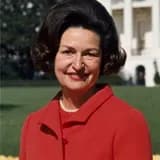
Lady Bird Johnson began a four-day, 1,628-mile whistle-stop train tour through the South advocating for LBJ's election and civil rights, without the president.
On October 6, 1964, Lady Bird Johnson boarded a train dubbed the Lady Bird Special to begin a historic four-day, 1,628-mile whistle-stop campaign tour through eight Southern states, making dozens of speeches on her own—without her husband present—in support of his 1964 presidential campaign and, pointedly, in defense of the recently passed Civil Rights Act of 1964.
This tour marked the first time a First Lady (or presidential spouse) had conducted an independent, sustained political campaign of this scale. Traveling through a region resistant to civil rights reforms, Lady Bird faced hostile crowds, hecklers, and even threats, yet delivered dozens of speeches at whistle-stops, drawing on her Southern identity and personal warmth to make the case for her husband's policies to skeptical white Southern audiences.
Historians consider the tour a landmark moment demonstrating that a First Lady could function as an independent political operative and effective surrogate campaigner rather than a purely symbolic companion. It demonstrated political courage, given the volatile racial politics of the Deep South in 1964, and helped secure Southern electoral support while reinforcing the administration's civil rights commitments. The tour is frequently cited as a template for the modern political spouse's campaign role.