← All women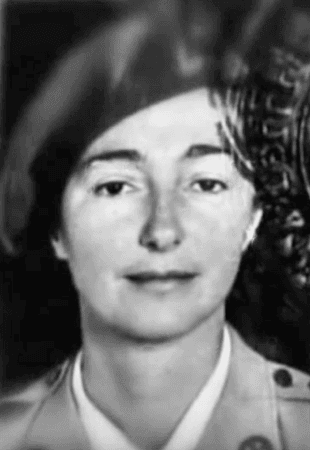
Polish, British · Exploration · Politics · Law
Krystyna Skarbek
May 1, 1908 – June 15, 1952
Early Life and Background
Maria Krystyna Janina Skarbek was born on 1 May 1908 in Warsaw, then part of the Russian Empire, into a family that straddled two very different worlds. Her father, Count Jerzy Skarbek, belonged to the Polish landed aristocracy, a family proud of its heritage but by the early twentieth century increasingly impoverished. Her mother, Stefania Goldfeder, came from a wealthy, assimilated Jewish banking family whose fortune helped sustain the Skarbek estate. This dual heritage — aristocratic Polish Catholic on one side, prosperous Jewish bourgeoisie on the other — gave young Krystyna both social standing and, later in life, a personal understanding of the antisemitic prejudices of the era, particularly after Nazi Germany's rise to power.
Krystyna grew up on the family estate and in Warsaw, developing early passions for skiing, riding, and the outdoors, alongside a fierce, independent spirit that often put her at odds with convention. She was educated in a convent school, though she was reportedly expelled at one point for burning a priest's cassock, an early sign of the rebellious streak that would define her later career. She became an accomplished skier, competing in Zakopane, the mountain resort that would later become strategically significant during her wartime missions across the Tatra Mountains.
In the years before the war, Krystyna married twice; her second husband, Jerzy Giżycki, a diplomat and writer, was posted to British East Africa, and the couple were in Kenya when the Second World War broke out in September 1939. This position abroad, combined with her fluent English and connections, positioned her uniquely to offer her services to British intelligence at the very outset of the conflict.
Career Beginnings: Recruitment into British Intelligence
Following the German invasion of Poland on 1 September 1939, Krystyna made her way to Britain, where she proposed an audacious plan to British intelligence officials: she would travel to neutral Hungary and then ski across the Carpathian Mountains into occupied Poland, gathering intelligence and smuggling support to the nascent Polish resistance. Her plan was accepted, and she began operating as an agent even before the Special Operations Executive (SOE) was formally created in July 1940. This makes her, by most historical accounts, Britain's first female special agent of the Second World War, and she would go on to become its longest-serving agent, male or female, by the war's end.
Adopting the English pseudonym Christine Granville, she began a series of daring missions that would come to define her legend. Throughout 1940, she made repeated illegal crossings of the High Tatras between Hungary and German-occupied Poland, carrying microfilm, propaganda, and messages between the Polish government-in-exile, resistance networks, and British intelligence. She traveled with fellow agent Andrzej Kowerski (later known as Andrew Kennedy), with whom she formed both a professional partnership and a long romantic relationship.
Arrest, Interrogation, and Escape
In 1941, Krystyna's activities drew the attention of the Gestapo, and she was arrested in Hungary along with Kowerski. In one of the most celebrated episodes of her career, she reportedly bit her own tongue until it bled to feign the symptoms of tuberculosis during interrogation, convincing her captors that she was too ill to be a threat and securing her release, according to several biographical accounts — though details of this episode vary between sources. This combination of psychological resourcefulness, physical courage, and sheer nerve became a hallmark of her wartime reputation and cemented her legend among fellow agents and later biographers.
Middle East and North Africa: 1943
As the war progressed and the situation in Central Europe grew more dangerous for Allied operatives, Krystyna was transferred to Cairo in 1943, where she worked for British intelligence across the Middle East and North Africa. While details of her specific operations during this period remain less documented than her earlier and later missions, this posting placed her within the broader Allied intelligence apparatus supporting operations against Axis forces in the region, further building her reputation as a versatile and trusted operative.
France, 1944: The Height of Her Wartime Heroics
Krystyna's most celebrated wartime exploits occurred in 1944, when she was parachuted into occupied France to work with the French Resistance in the Alps, particularly in the Vercors region. There, operating under extreme danger, she played a critical role in persuading Polish conscripts serving involuntarily in German garrison units to defect to the Allied side, weakening German defensive positions ahead of the Allied advance through southern France.
In perhaps her most famous single act of wartime bravery, Krystyna learned that three fellow Allied agents — including her colleague Francis Cammaerts — had been captured by the Gestapo and were scheduled for execution. Acting with characteristic audacity, she approached the Gestapo commander responsible and, through a combination of bribery, bluff, and sheer force of personality, persuaded him to release the prisoners hours before their planned execution. This act, still cited today as one of the most remarkable individual feats of the SOE's wartime operations, saved three lives and became central to her legend as one of the most fearless agents of the war.
Awards and Honors
Krystyna Skarbek's wartime service was formally recognized in the closing months of the war in Europe. On 15 May 1945, she was awarded the French Croix de Guerre for her contributions to the resistance and intelligence operations in France. Ten days later, on 25 May 1945, her appointment as an Officer of the Order of the British Empire (OBE) was gazetted in the London Gazette, alongside the award of the George Medal for acts of great bravery — a rare dual honor reflecting both the breadth of her service and the specific, documented acts of courage that distinguished her career. She is widely reported to have been regarded by Winston Churchill as his favorite agent, though this claim, repeated in numerous popular accounts, is difficult to verify definitively in primary archival sources.
Despite these honors, as a Polish citizen rather than a British subject, Krystyna was denied a number of the pensions and benefits afforded to British-born agents after the war, a source of financial hardship in her final years.
Personal Life
Krystyna Skarbek was married twice before the war: first to Gustaw Gettlich, and later to diplomat Jerzy Giżycki. Neither marriage survived the pressures of her wartime career and her frequent, extended absences on dangerous missions. Her most significant wartime relationship was with fellow agent Andrzej Kowerski, with whom she shared both operational partnership and romantic involvement over several years. She was known throughout her life for her striking looks, charisma, and fierce independence, qualities that made her a compelling and, at times, controversial figure among her British and Polish colleagues.
Postwar Struggles and Death
Like many former SOE agents, Krystyna found the transition to peacetime civilian life extremely difficult. Denied a permanent role in British government service and facing financial precarity as a stateless Polish citizen in postwar Britain, she took on a series of low-paying jobs, including work as a shop assistant, waitress, and finally as a stewardess aboard ocean liners. It was in this last position that she met Dennis George Muldowney, a ship's steward who became fixated on her and whose romantic advances she repeatedly rejected.
On 15 June 1952, Muldowney confronted Krystyna in the lobby of the Shelbourne Hotel in South Kensington, London, and fatally stabbed her. She was 44 years old. Muldowney was arrested, tried at the Old Bailey, and on 24 June 1952 was found guilty of her murder and sentenced to death. He was executed by hanging at Pentonville Prison on 30 September 1952, reportedly expressing a belief that death would reunite him with his victim.
Legacy
Krystyna Skarbek's death, however tragic and abrupt, could not diminish the extraordinary record of courage and service she compiled during the Second World War. For decades after her murder, her story remained relatively obscure outside specialist historical and intelligence circles, overshadowed both by wartime secrecy surrounding SOE operations and by the sensational nature of her death. This began to change with renewed biographical and journalistic attention in the late twentieth and early twenty-first centuries, most notably Clare Mulley's 2012 biography The Spy Who Loved: The Secrets and Lives of Christine Granville, which brought her story to a new generation of readers.
On 17 May 2013, a memorial service was held at St Martin-in-the-Fields church in London, attended by representatives of both Poland and Britain, formally commemorating her life and service. Further recognition followed in subsequent years, including press coverage on 9 May 2017 that highlighted her status as Britain's first female special agent of the Second World War and its longest-serving agent overall — a designation now widely accepted among historians of British intelligence.
Krystyna Skarbek is frequently cited as one of the inspirations for the character of Vesper Lynd in Ian Fleming's James Bond novels, reflecting her enduring cultural resonance decades after her death. She has since been the subject of museum exhibitions, including at Britain's National Portrait Gallery, documentaries, and continued scholarly interest, cementing her legacy as one of the most remarkable, if long under-recognized, secret agents of the Second World War — a woman who repeatedly risked her life for the causes of Polish and Allied freedom, only to meet a tragic end in the peace she had helped secure.
Dated achievements
10 indexed.
- May011908Exploration
Birth of Krystyna Skarbek in Warsaw
Maria Krystyna Janina Skarbek was born in Warsaw, then part of the Russian Empire, to Count Jerzy Skarbek and Stefania Goldfeder.
View details Krystyna Skarbek - Wikipedia - Sep011939Exploration
Recruited as Britain's first female special agent of WWII
After Germany invaded Poland, Skarbek fled to Britain and proposed a daring plan to enter occupied Poland via Hungary, beginning her service as a secret agent.