← All women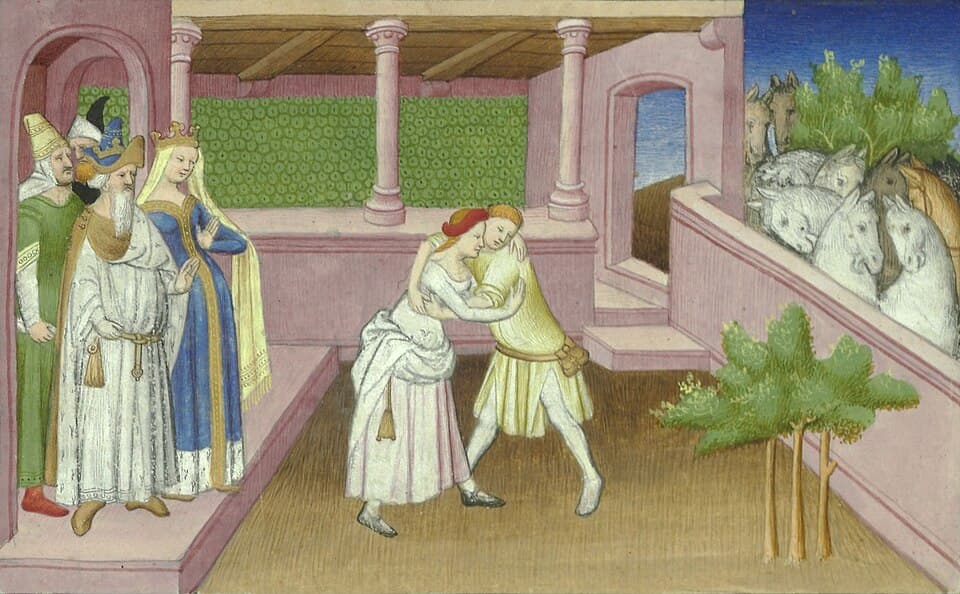
Mongol · Sports · Exploration
Khutulun
1260 – 1306
Early life and background
Khutulun was a Mongol noblewoman born around 1260 into one of the most politically important families of the Mongol Empire. She was the daughter of Kaidu, a powerful Chagatai prince and a major rival of Kublai Khan, and she was a descendant of Genghis Khan. Historical sources identify her by several names, including Aigiarne, Aiyurug, Khotol Tsagaan, and Ay Yaruq. Later retellings often emphasize her legendary beauty and strength, but the historical core of her story is that she belonged to a ruling nomadic elite whose women could ride, hunt, and sometimes participate in political life more visibly than many women in sedentary societies.
The Mongol imperial world of the 13th century was shaped by dynastic warfare, succession disputes, and the struggle between different branches of the family of Chinggis Khan. Khutulun grew up during this turbulent period and was closely associated with her father’s military and political activities. Accounts preserved by later writers describe her as exceptionally skilled in horsemanship, archery, and wrestling. These abilities were not merely ornamental; they matched the martial ideals of the steppe, where physical strength, mobility, and strategic judgment were valued forms of power. Her life offers rare evidence of a woman who moved within the highest level of Mongol politics while also gaining a reputation as a fighter in her own right.
Rise as a warrior and political figure
Khutulun became famous for riding and fighting alongside her father’s forces. Sources describe her as accompanying Kaidu on campaigns and as becoming a respected presence in the army. Some later accounts claim that soldiers believed her presence made the army invincible, a sign of the legendary status she acquired in oral tradition and historical memory. Even where the surviving evidence is difficult to separate from embellishment, the consistent portrait is of a woman who was not confined to an indoor court life but instead participated in a martial culture that valued battlefield competence.
Her political importance also came through her position within her father’s household. As the daughter most closely associated with Kaidu, she appears to have been part of the inner circle around his rule. In the fractured world of Mongol succession politics, elite women often served as dynastic symbols, marriage alliances, and trusted advisers. Khutulun’s later fame shows that she was remembered not simply as a princess but as an active participant in the authority of her family. The combination of military reputation and noble lineage made her unusually prominent in accounts by Persian, Venetian, and later European writers.
Wrestling and the marriage challenge
Khutulun’s most famous legend concerns her refusal to marry any suitor who could not defeat her in wrestling. According to the best-known versions of the story, she demanded a wrestling match and accepted marriage only if the challenger won. No suitor succeeded, and the defeated men were said to have to pay horses as a forfeit. In some tellings, she accumulated a herd of 10,000 horses. Whether every detail is literal history or part of a heroic tradition, the story was clearly attached to her already in medieval and early modern narrative sources.
The wrestling episode is historically significant because it reveals how Khutulun became an emblem of female autonomy in a patriarchal world. Marriage among ruling families was generally a matter of politics, diplomacy, and inheritance, yet Khutulun’s story recasts that expectation into a public test of skill and agency. Her refusal to submit to a husband unless he could beat her on equal terms has made her a lasting symbol of bodily self-mastery and self-definition. It also reflects the place of wrestling in Mongol culture, where combat sports were closely tied to prestige, masculinity, and public honor. Khutulun’s legendary undefeated record helped preserve her as a figure of extraordinary athletic distinction.
Sources and literary legacy
Khutulun is known from a mixture of historical reporting and literary transmission. She appears in the broader tradition of Mongol history associated with writers such as Marco Polo and Rashid al-Din, though the details of what each source knew firsthand remain debated by modern historians. Because the surviving evidence is fragmentary and filtered through later interpretation, scholars often treat parts of her story cautiously while still recognizing that she was a real and significant person. Even when exact details are uncertain, the consistency of the tradition across cultures suggests that Khutulun made a strong impression on contemporaries and later audiences.
Her reputation eventually traveled beyond Mongol and Persian histories into European literary imagination. Khutulun is widely considered one of the figures who helped inspire the character of Turandot, later famous in Giacomo Puccini’s opera. That afterlife matters because it shows how her image crossed cultures: a steppe warrior princess became a global symbol of female strength, mystery, and resistance. This literary legacy sometimes obscured the historical woman behind the legend, but it also ensured that her name survived long after the Mongol Empire’s political landscape changed.
Later life and death
Khutulun’s later years are less securely documented than her rise to fame. Historical sources generally place her death around 1306, but the exact date is not established in the surviving record. By that time, the struggle between Kaidu’s branch of the family and the Yuan court had entered a later phase, and the political world that had made her famous was changing rapidly. Her death marks the end of a life that had already become semi-legendary in the accounts of historians and storytellers.
Although many details of her final years are unclear, the broad outline is enough to show her historical importance. She was not remembered simply as a daughter of a ruler or as a romanticized princess. She was remembered as a martial woman whose physical prowess, family status, and refusal to accept conventional female roles made her exceptional in the memory of the Mongol world. That memory endured because it spoke to broader themes in steppe history: mobility, combat skill, and the possibility of female participation in power.
Legacy
Khutulun’s legacy lies in the combination of history and symbol. She is one of the best-known women of the Mongol Empire because her life challenged easy assumptions about gender in medieval Eurasia. In modern portrayals, she is often described as a warrior princess, but that label can obscure the more serious historical point: she was remembered as a woman with real martial authority and a strong place in the political culture of her time. The surviving traditions around her show that she was exceptional even within a society where women sometimes had more public roles than in many other medieval cultures.
For historians of women’s history, Khutulun matters because she demonstrates the range of possibilities available to elite women on the Mongolian steppe. Her story reveals how athletic ability, dynastic politics, and reputation could combine to create a lasting public identity. She also stands as an important early example of a woman whose name survived not through a formal office or written constitution, but through the force of memory, story, and repeated retelling across centuries.
Dated achievements
3 indexed.
- Jan011260Science
Born a Mongol princess of the Ögedeid line
Khutulun was born around 1260, daughter of Kaidu Khan, a great-grandson of Genghis Khan who ruled the Chagatai/Ögedeid Khanate in Central Asia.
View details Khutulun - Wikipedia - Mar011260Science
Recorded participation in military campaigns alongside Kaidu Khan
Khutulun regularly accompanied her father on military campaigns, reportedly charging into enemy ranks and seizing captives with her bare hands, according to Marco Polo's account.